Game Review: Diablo 3

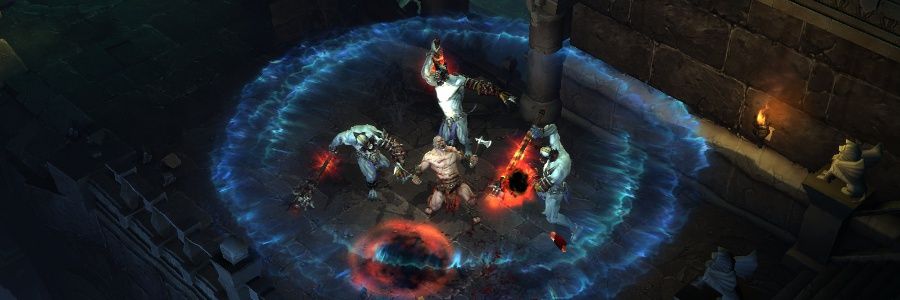
Diablo 3 is out. But is it a game? Or is it the most brilliant money making scam in internet history?

Movie Review: The Avengers

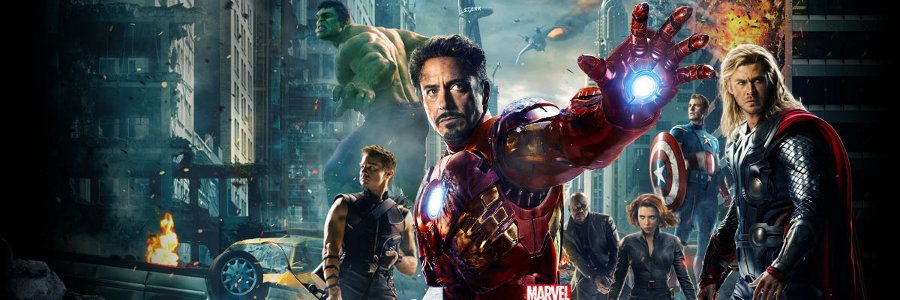
Okay, okay, I posted my Avengers review. Get off my back already, geez.

The Most Important Comic Book You've Never Heard Of

Action Comics #1. Detective Comics #27. Why is All-American Men of War #89 as important as these great comics -- and why have you never heard of it?.

Tales From the Vault: Lois Lane #93

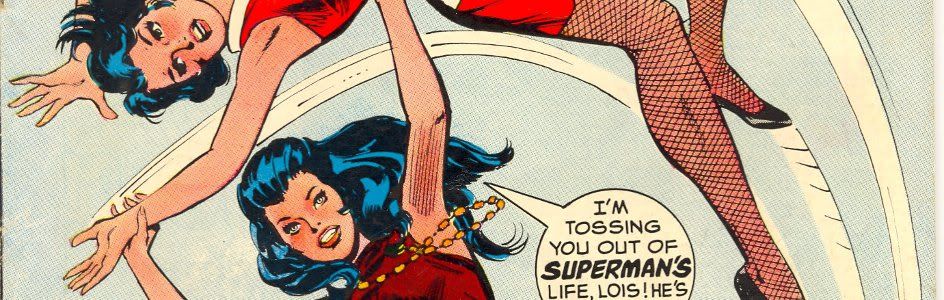
If you thought Superman was a total tool before, you ain't seen nothing yet.

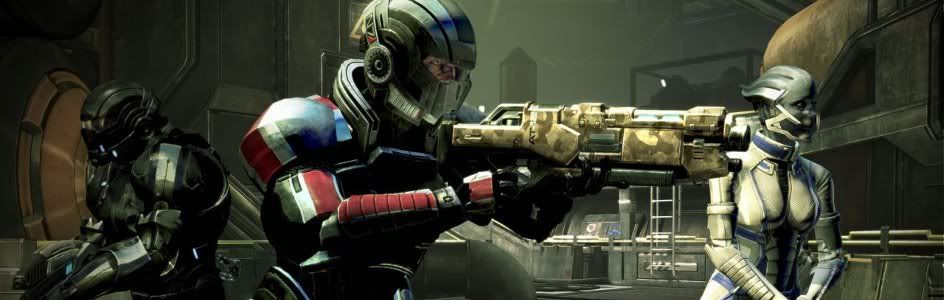
Mass Effect 3: The Official Review

Mass Effect 3 isn't the end of the world, it just portrays it.

Showing posts with label Ask the Vault. Show all posts

Thursday, May 24, 2012

May Answers From the Vault

Welcome back to a very special edition of Answers From the Vault. Why is this edition even more special than all previous special editions? Well, it's because these questions were pretty much all unsolicited. Don't worry, though, they aren't so much of an annoyance that I won't answer them. Let's get right to it and help expand your mind!

Why would my 17-year-old students be involved in a bordering-on-scathing battle about the ending of ME3? - Professor Chesley Wendth

Thanks for the question, Chesley. The basic answer is simple: Because anyone who plays Mass Effect 3 is obligated to get in an argument about the ending. It's one of the unwritten rules of the internet, at least, it was until I just wrote it. 

I covered this briefly in my review of Mass Effect 3, but basically, the entire series is designed around the premise that the player's actions dictate the story, so whatever you decide has major ramifications on how everything plays out. However, while there are technically something like 16 different endings to Mass Effect 3 -- and thus to the entire series -- they are all almost entirely identical. So some angry gamers feel the ending betrays the entire premise of the series and invalidates their 100+ hours of gameplay.

On the other hand, I didn't mind the ending. It may be nit picking to the point of semantics, but the choices you make at the end do drastically effect the Mass Effect universe, you just don't get to actually see it. At the end you have three choices, each of which determines the fate and future of the entire universe in very different ways. For whatever reason, though, BioWare doesn't actually show the ramifications of that choice. Which is annoying and weird. But even though the game plays out as if your choice didn't make a difference, I still feel like the ending upholds the spirit of the story. Affecting the future of the universe is about as big a choice as you could make, after all.

I can understand why some people are pissed, though, as it doesn't provide the kind of clarity fans are used to. It's kind of like the ending of Inception; something big happens, but you have to decide what it was yourself.


Why can Superman shoot lasers out of his eyes? - Avery Houle

Thanks for the question, Avery. Superman, as you may know, is from a planet called Krypton, which is on the other side of the galaxy. Unlike our world, Krypton had a red sun instead of a yellow sun. When Superman arrived on Earth, he discovered that the energy from a yellow sun gives him super powers, which is why he can fly, lift heavy objects and do everything else Superman does.

Because he gets his powers form the sun, Superman is essentially a living solar battery. Just like solar panels on a house, Superman absorbs sunlight and turns it into energy. And since lasers are basically focused beams of light and energy, Superman's heat vision is actually the one power of his that makes the most sense; he's simply channeling all the solar energy he collected and shooting it out of his eyeballs.


After watching Justice League Doom the other day I have a late question for The Vault: Because Bane's exposed rubber tubes make him the most vulnerable super villain in the DC Universe, why doesn't he cover them up with a metal case or something? The whole setup seems kinda stupid. - Rob Lettrick

Good question, Rob. I'd like to say it's because Bane is a moron, but he's actually portrayed as being a super genius. So why doesn't he use his big brain to come up with a better outfit? I'd say because he arrogant enough that he doesn't much care if his tubes get yanked out. The tubes, after all, just feed him the venom drug that gives him his super powers. Without those, however, he's still a genius who has trained his whole like in fighting and other disciplines -- in other words, if his tubes get pulled, he becomes Batman. And Batman does okay.

In the comics, before New 52 erased everything, Bane had apparently stopped using the drug a while ago, meaning the tubes no longer do anything at all. So that's another reason I guess.

I would say that Bane isn't the most vulnerable supervillain in DC, though. That honor probably goes to the Doom Patrol's arch-nemesis The Brain, who is literally just a human brain in a glass jar.


Other then Nick Fury has any other character gone through a race change and did Marvel ever address it? - Ben Milton

This is a timely question, Ben, so thanks. There have been a number of characters who have had race changes similar to Nick Fury's and most have them have happened the same way: In an alternate or new universe. DC, for instance, recently added some ethnic highlights to some of its established characters in the New 52 universe, while Marvel has tweaked other classic characters in their Ultimates universe, much like Nick. Most of these don't really need much explanation other than "it's a different universe."

There are two other types of race changes that happen in comics, though, First, there's the type where a character is replaced by someone of a new race. Examples of this include Blue Beetle at DC (who was killed and replaced by a new Hispanic Blue Beetle) and Ultimate Spider-Man (who again was killed and replaced by a Hispanic kid). it's not really the same thing, of course, as it's a whole new character, but it happens fairly regularly as comic companies try to add diversity without actually coming up with new ideas.

The more interesting -- and by interesting I mean horribly hilarious -- type of race change is when an established character suddenly changes races as part of a storyline designed to highlight "race issues." Sort of a cross between Black Like Me and Batman; maybe you could call this Black Lightning Like Me syndrome. This has happened at least a coupe times I can think of off the top of my head. Punisher, for instance, had a storyline where he went under cover as a black dude, mainly as a way to try out a new street-thug version of Luke Cage.

That was embarrassing. On the other hand, the most famous story like this, from Lois Lane #106, was trying to actually seriously explore racial issues in the early 1970's. They ended up putting Lois in a machine that turned her black for 24 hours, where she then discovered the plight of the African American and delivered some timely lessons on racism to the reader. It's just as bizarre as it sounds, topped off by the amazing fact that the story is called "I Am Curious Black," which of course is a reference to one of the most famous pornos of all time.

The 70's!!!


Thursday, April 19, 2012

April Answers From the Vault

Welcome back to another edition of Answers From the Vault. You may recall that last week I canvassed the vast Vault community for questions, queries and general mysteries of the comic book world, all in the name of providing you with the most kick-ass clump of knowledge ever to be dumped in your grill. After receiving over ten trillion questions, though, I narrowed it down to just two worthy of answering. So without further ado, let's all embiggen our brains and get some fresh Answers From the Vault.


Can you think of a creative team's run that would have worked better if attached to another project? For instance, I liked Karl Kesel's Daredevil run, but it might have been better as a Spider-Man run. Erik Larsen's Defenders run was pretty bad, but might have worked better if he was doing it attached to the revamped Heroes for Hire book. And actually, come to think of it, that HfH run (was it an Ostrander book?) would probably have worked better in the Defenders. -- Mark

Thanks for the question Mark. The answer is no, I can't think of any. Next question!

No, just kidding. The funny thing these days is that mainstream superhero comics have become so self-referential that a lot of writers seem to be writing archetypes more than actual characters. Maybe that's just the influence of Alan Moore and Watchmen, but because of this, there are a lot of books that could pretty much have the characters completely swapped without any real effect on the stories at all. And that's not even getting into characters that are specifically created as proxies for other characters, such as Planetary.

Plus, with DC's New 52 and the constant shakeups at Marvel, characters are being reinvented so frequently that it's hard to really figure out what stories make sense for a character anymore anyway. For instance, in terms of traditional Marvel, there's no question that Bendis' New Avengers would have made more sense as a Defenders series, specifically post-Civil War. At that point the team was underground, doing either street level stuff or combating secret menaces the rest of the superhero community was ignoring, with a roster comprised of Wolverine, Spider-Man, Luke Cage, Iron Fist, Dr. Strange and Hawkeye. That's the Defenders, people, even if it has an Avengers logo on the front in order to boost sales.

But having said all that, I'll say that while I absolutely love Ed Brubaker's Captain America, it really reads more like a modern day SHIELD series than a traditional Cap superhero story. I can't say it would have worked better as a SHIELD story per se, since it worked so darn well as it was, but it would arguably have worked about the same if the lead was Nick Fury instead of Cap.

What are the 5 Worst Resurrections in comics? I would have to think Aunt May's return would have to top the list. Is there a worse one? -- David Wright

Thanks for the question, David. At this point, death is essentially meaningless in mainstream superhero comics, to the point where it's pretty hard to narrow it down. Off the top of my head, though, here are a few really egregious examples, including Aunt May:

1. Aunt May -- Officially killed the concept of development in comics, specifically in the Spideyverse. Good buy character progress, hello neverending stasis.

2. Captain Marvel -- This gets a special mention, because his return fromt he dead was retconned away before they even explained it. During Civil War, Captain Marvel showed up, suddenly alive again even though The Death of Captain Marvel is one of the most famous, acclaimed and beloved comics of all time. But no matter, even that can't stand up to the fact that Marvel has to publish a comic called Captain Marvel every so often to retain their trademark. so they came up with this asinine story where Captain Marvel was transported forward through time from before the moment of his death, meaning he was now alive in the present only knowing he would eventually have to go back and die.

The worst thing about this, though, was after hyping this up as some kind of giant event -- Mar-Vell is back!!! -- and publishing a one-shot to return him from the grave, a couple months later they just said, "oh, that was a skrull. Just kidding." It was hands down the most blatantly manipulative scam Marvel's ever run, because they knew in advance that this story wasn't his return at all, but they hyped it up anyway to sell a bunch of comics. Just a complete fraud perpetrated on the comics community. An all-time low point for Marvel. The comic itself sucked, the idea sucked, the reasons for publishing it sucked and the liars and con men who called themselves Marvel's editorial staff sucked most of all. What a joke.

3. The Green Goblin -- Hey, there goes three decades of continuity out the window. Because Spidey doesn't have any other good villains they could use instead, right?

4.  Mockingbird -- Okay, this is maybe just me. But Bendis spent years putting Hawkeye through the ringing, killing him off, resurrecting him in an alternate universe, leaving him somewhat morose and dealing with existential angst. It's not where I would go with the character, but it at least opened the door for some new character development. And then, after all that set-up, instead of exploring any of that they instead brought back Mockingbird in Secret Invasion so they could try and revert to a mid-80's status quo that nobody was a fan of anyway! Except for one guy who happened to be a writer at Marvel. It's just asinine.

5. Barry Allen -- See above. Don't get me wrong, I like Barry, but he was dead for a quarter of a century and nobody under the age of 55 wanted him back. Wally West is one of the most popular and successful "replacement" superheroes in comics history and is still much more popular than Barry Allen. I have to think they did this because of some kind of future movie tie-in. But then again, the fact that they made such a big deal about this to the point of building entire crossover events around his return, only to scrap the entire DCU before the story was even finished, kind of shows how little direction anybody at DC has these days.

You'll note the absence of two characters from this list, namely Jean Grey and Bucky. I don't think Jean Grey should have been brought back form the dead and in many ways her return is the key moment where death stopped having any meaning in comics for all time. But I still have to give her a bit of a pass because she was, after all, the Phoenix. Returning form the dead is an inherent part of being the Phoenix. Bucky, on the other hand, gets a pass because the story has totally been worth it. I know, it surprised me too, but Winter Soldier has become one of my favorite Marvel characters and Burbaker continues to do great stories with him. And that's what it's all about after all.

Friday, April 13, 2012

Ask the Vault!

I have failed you, oh, my people. I know that for the last year and a half you have had questions, many questions, about comic books, movies, video games and whatever the hell else. Burning questions that only I can answer. And yet, I have been unavailable, leaving you in the dark, forced to fumble along like so many blind fish at the bottom of an ancient aqueduct.

But no more! Yes, it's the moment you've been waiting over a year and a half for: the return of Ask the Vault!

Here's how it works: You cask me any question you can think of and once I have accumulated all the queries, I will answer them all, or at least those that allow me to sound pithy.

So if you have any questions, pose them now, either by posting in the comments section of on my Facebook feed. Because the dark age of ignorance is over -- and the age of answers has at last arrived!

Wednesday, October 6, 2010

Ask the Vault!

We haven't done this for awhile, so why not? Yes, it's time for the latest edition of the mind-expanding sensation that is sweeping the world, Ask the Vault! As always, the rules are pretty simple: you ask me any question you want, anything at all (though preferably about comics), and I provide the most comprehensive and intelligent answer you've ever heard in your whole damn life.

Of course, some questions have already been asked and answered, so before you submit your query, check out this list to see what kind of knowledge has already been dropped. But otherwise, the door is now open, so get your thinking caps and step through it metaphorically. Once I have accumulate enough questions, I'll answer them all with my usual flurry of timely activity.

Ready? Okay, ask away.


Bookmark and Share

Wednesday, June 16, 2010

June Answers From the Vault part 2

Welcome back to part two of June Answers From the Vault, where we provide another batch of questions and another slew of incisive answers designed to entertain, inform and, most of all, give you a way to waste ten minutes of your workday. And today we have a special theme episode, as all of our movie-related questions have been provided by former Marvel Bullpen stalwart Robert Lettrick. So take a moment to familiarize yourself with our last round of questions and answers (displayed here) and dig in with both grubby hands.

Okay, let's go!


1). Which new characters should Nolan bring in for the third Batman movie and who should play them?

This is a pretty tricky question. I'm tempted to say NKVDemon and Bat Mite, but... no. What makes this a bit more difficult than maybe some other comic book movies is the fact that a) the third movie not only comes on the heels of an indelible performance by heath ledger but also has to deal with a specific setup left by the end of the second movie and b) unlike most other comic book franchises, Nolan has figured out that audiences are familiar enough with the trope now that he can just focus on telling good stories.

A lot of studios still haven't figured this out. They think that audiences need origin stories to convince them that characters this crazy can exist. But we don't because we've had two decades of comic book movies to set things up. We get it. And that means that Nolan doesn't have to waste a bunch of time setting up characters like Joker, he can just drop them into the story and count on the fact that audiences will accept him. And that in turn explains why, almost alone among comic franchises, Nolan's Batman stories can handle multiple villains without being overloaded, as we've seen both with Joker and Two-Face in the second film and Scarecrow and Ra's al Ghul in the first movie.

So, with that said, and considering how the second movie ended -- with Batman taking the fall and becoming outcast -- what I would do for the third movie is show what happens to Gotham without Batman to protect it. Specifically, I'd have the city be the site of a gang war situations where different supervillains are trying to take over. This would allow the use of all sorts of Batman villains without needing to really spotlight, explain or overuse any specific ones, meaning we can get guys like Clayface and Killer Croc and even Penguin, who I have to say I'm not a huge fan of (in terms of movies anyway), among the combatants.

The lead villain, though, has to be Riddler, but I would use the really brilliant setup DC recently used for Ridder's reappearance in Detective Comics over the last couple years, which is to have him appear not as a villain but as a media-hungry detective who provides more competition to Batman that opposition. I'd have him be a shady, secretly villainous but publicly clean media darling who steps into the gap left by Batman's departure to become the next big thing in Gotham, using his skills to take down crime lords like Killer Croc in order to get more accolades and attention from a grateful city that's he's bilking behind everyone's back. While Batman, of course, does the real legwork to save the town and expose Riddler as a fraud.

Now that I've supplied Warner Bros. with a plot (you're welcome), I guess we have to cast the movie. Riddler is a tough one, as he has to have a certain physical appearance to go with a bounty of style and panache along with cunning and intelligence. A lot of online people are pushing for Joseph Gordon-Levitt, which seems hard to fathom since Riddler is supposed to be a grown-ass man. Others are pushing for Johnny Depp, which would be a better choice, if maybe a bit dangerous in terms of putting together a coherent movie. But my choice would probably be David Tenant, who has the brains, the charisma and, I think it's fair to say, a touch of the madcap to boot.

I'd also bring in a real, honest-to-god mature love interest in the person of the incomparable Silver St. Cloud who I guess I would have played by Cate Blanchett; she's maybe not quite as sexy as Silver, but she seems like an adult and that's the really important thing.


2). Why does Nic Cage continuously lobby to taint every super hero movie made with his stink?

Ah, good ol Nic Cage. Actually, I don't blame him for wanting to be in comic book movies, even though I do blame him for sucking in pretty much all of them. Ghost Rider was abysmal and Kick-Ass was a letdown as well. And just think what would have happened if he had been able to get Warner Bros. on board his version of Superman. Yikes.

Still, as I'm sure you know, Cage is without a doubt the highest profile comic book geek in the world. Not only did he name himself after a comic book character (taking the stage name Cage in honor of Luke Cage when he decided to distance himself from the Coppola brand), he also named his son Kal-El after Superman. Now that's dedication. And he also once owned one of the premiere comic collections in the world, including copies of Action Comics #1 and Detective Comics #27, before he was forced to sell his comics due to a robbery. Which is probably for the best, as otherwise they would have been seized by the government during his current bankruptcy woes.

So the answer to your no doubt rhetorical question is that he does this because he loves comics, which I can respect. Why his comic book movies suck so hard, though, I'm not really sure. For his sake -- and ours -- I hope that his next comic book film (which may be, believe it or not, a sequel to Ghost Rider) manages to break the cycle.


3). What are your thoughts on Chris Evans being cast as Captain America? And don't go easy on him because he's from Framingham.

Actually, this may surprise you, but I like it.

For those of you who don't know, Chris Evans is no stranger to comic book movies; in fact, his career no doubt has Nic Cage Hulking out in a jealous rage. Not only did Evans play the Human Torch in both Fantastic Four movies, he also provided voice work for the recent animated Teenage Mutant Ninja Turtles feature, played Jensen in the adaptaion of the Vertigo Comics title The Losers, and stars as one of the seven evil exes in the upcoming comic flick Scott Pilgrim vs. The World. And that's all before being cast as Captain America for what is likely to be a whole raft of Marvel movies.

So he's got that going for him, which is nice, but nothing in that group suggests for one hot second that he has the chops to play Captain America. So why do I like it? Well, it's because of his role in the almost entirely forgotten 2007 sci-fi thriller Sunshine, which was directed by Slumdog Millionaire honcho Danny Boyle. In that movie, Evans played a no-nonsense soldier named Mace who was selected to lead a desperate expedition to re-ignite the sun before ti went out and destroyed the Earth. I had the pleasure of catching the last half of this movie on TV several months ago and my actual comment during the movie was "boy, they should hire Chris Evans to play Captain America."

Mind you, I couldn't believe I was saying that either considering his portrayal of Human Torch, but apparently the folks at Marvel also saw Sunshine because sure enough, there it is. I understand the skepticism and I still share some of it (specifically, I'm not sure how he will fare when he has to go up against Robert Downey Jr's Tony Stark in Avengers) but I urge you to check out Sunshine, because it's really cool (kind of like Alien without the alien) and because Evans gives a real eye-opening performance in it.


4). Why is the Punisher listed as being in Captain America AND Avengers, according to IMDB?

This is a very good question and the answer is, I don't know. The listings, which have since been removed, first appeared just a couple days before your question and showed a dude by the named of Craig Fairbrass as being in both films. I checked around with my numerous industry contacts, but nobody was quite sure why those listings existed, which probably explains why they were taken down.

Which isn't to say that it's out of the realm of possibility. Unlike X-Men or Fantastic Four, the two Punisher films done by Lionsgate were in conjunction with Marvel Studios, meaning that, like Hulk, it's possible that marvel could include him in their own films depending on the language of the agreement between the two parties. Of course, Captain America takes place in World War II, while Avengers takes place in the present day, which would complicate things. However, we've also seen that Marvel has become pretty good at teasing things at the end of each movie in a weay that leads into the next, so here's my guess on how this could happen: Frank Castle would be introduced into the new film Marvel Universe as an agent of SHIELD, rather than as a run of the mill war veteran. He would then appear in a post-credits sequence in Captain America showing SHIELD working on finding the iceberg Cap is frozen in, which would lead into Avengers where Castle would reprise this role in another iceberg related cameo. Thus we end up with "Punisher" in both films, even if not yet in costume -- a decent way to introduce the concept to a broader audience before springboarding him into a rebooted franchise done by Marvel.

We'll have to wait a while longer to see if that actually happens, though.


Okay, that's it for this round of Answer From the Vault. As always, thanks for your questions and keep reading them there comic, y'all.


Bookmark and Share

June Answers From the Vault part 1

Welcome back to another edition of Answers From the Vault, the semi-regular feature where you ask the questions and we pump your brain full of knowledge until it cries out for mercy. This time around we received such a bounty of questions that we're going to split the answers into two batches. That's going to take up a lot of grey matter, so if you need to subject your mind to gamma radiation in order to absorb these answers, now is your last chance.

Ready? Okay, here we go.


What's the best use of weather in a superhero comic that doesn't involve characters with weather-wielding powers? -- Mark

Thanks for the question, Mark. Boy, that's a really tough one. As you note in your extended version of this question, weather is usually used solely for noir/horror effect (in books like Batman, Daredevil and Tomb of Dracula) or for plot points that involve weather being controlled by people like Thor or Storm and/or by villains intent on destroying Earth through giant tidal waves or whatever. Weather just for the sake of having some variety is extremely rare, which makes you wonder just how sunny the DC and Marvel universes are. Maybe that's why those realities have so many superheroes.

But to answer your question, there are a few nice uses of weather that stand out to me. Mike Grell's Green Arrow was set in Seattle, one of the few DC books to take place in a real city, and he frequently used rain, fog and in the winter months, snow, to give the series a real sense of both place and time that few other superhero books have had. Similarly, on a much smaller scale, one memorable scene for me takes place in Avengers #197, where some boys heave snowballs at Captain America while he is having a heart to heart chat in the garden behind Avengers Mansion; it's a great little throw-away sequence that somehow ended up being more memorable than perhaps all the stories that surrounded it, in large part due to the use of weather.

Still, for my money, there can be only one choice -- Avengers #257. Now, everyone knows I am a huge Avengers fan, and this two part battle against Terminus is the first Avengers story I ever read, so there's certainly some nostalgia involved. But the end of this story still sticks with me: after terminus destroys the weather regulation system that allowed the Savage Land to exist, the Antarctic weather comes raging in, destroying the tropical paradise. In a raging blizzard, the Avengers battle Terminus until all sides are overcome by the elements. Only Hercules is able to stand up to the storm; he destroys Terminus's armor, revealing the immobile alien stuck inside it, and then leaves the beast to freeze to death in the ever growing drifts of snow that cover and finally bury him in a grave of his own making. A great ending to a powerful story. And speaking of Avengers, you had a follow-up question:


And is Avengers 185 the only issue of the run where it's raining on the cover?

Nope, though you're right hat there aren't a lot. But besides the classic Avengers #185, there's an equally awesome if not as famous cover that features rain: Avengers #41. Usually I'm not a huge fan of Buscema's very early covers, as I think his early inking and the printing process at the time often end up muddying the finished product, but that's not an issue for a dark and moody cover like this one. Top work from a master in the making.


Why aren't comics fun anymore? -- Jim

Thanks for the thoughtful question, Jim. For me, there's a pretty basic reason: most comics aren't meant to be fun. And the reason for that, in my opinion, is a residual effect of fans becoming creators back in 70's and 80's.

Sure, there were plenty of fans-turned-writers/editors that still had a lot of fun with their comics, particularly those who both recognized and embraced the more absurd elements of the superhero genre. And some of these stalwarts can still be found today, doing what is now widely called "nostalgia" work, like Kurt Busiek and Mark Waid, for instance. What these guys are nostalgic for, though, isn't a specific time period or status quo, it's a mindset -- the mindset that comics are fun and that anything can happen in them.

But this isn't really the norm anymore, and the reason lies with the more "serious" fans-turned-creators -- the second generation of creators who, determined to prove that superhero comics could be a serious genre that should be taken seriously, decided to deconstruct the fun. Take it apart, prove how ridiculous it all is, dissect the genre like a pre-med student doing a thesis. In other words, take an essentially illogical genre and try to impose logic upon it. The result: grim, gritty, more realistic stories that certainly have been taken more seriously.

But have they been enjoyed as much? Are they fun? Or have have works like Watchmen led to second rate copycat works that just depress and turn off potential readers by draining all the wonder out of the genre? And just look at what DC is trying to do these days and you'll see how the current generation is still missing the mark: they're trying to combine grim and gritty with nostalgia by bringing back all the silver age heroes, but they've missed the boat on just what people are actually nostalgic for.

All of it goes back to the mid-70's, when the fans chafing at the lack of respect comics -- and by extension, they themselves -- had been getting became creators and set out trying to prove the merit of the genre. Well, now they have some of that respect. It just cost everything they loved about comics to begin with.


What happened to that Nagel-print that hung on Peter Parker's wall?

I have to admit I don't know the answer to this, but I have a pretty good guess -- I assume that like everyone else's Nagel prints, it's at a flea market somewhere with a $1 tag taped to it.


Next: A whole batch of questions from a former member of the Marvel Bullpen. I answer them all! That's how this thing works, homeslice.


Bookmark and Share

Thursday, June 10, 2010

Ask the Vault!

Welcome back to another edition of Ask the Vault! I know you're excited at the opportunity to ask the Vault your burning questions, so to reflect that excitement I've gone so far as to add an exclamation point to the title. Now that's pretty gosh darn exciting.

For those new readers who don't yet know the drill (and as you might guess, millions and millions of new readers are pouring in every single day) Ask the Vault(!) is a feature where you send in your questions about comics, movies or whatever the heck you want (but mostly comics) and I answer by dropping knowledge, answering trivia and educating the masses with massive heaps of wisdom.

Of course, this isn't our first merry-go-round, so you might want to brush up on some of our earlier Q&A sessions to make sure that your questions hasn't already been answered (for your convenience, I've collected those answers here, here, here and even here). So take a look around, collect your thoughts, formulate your query and then get off your lazy ass and ask me some questions already. You can do so either by emailing me, posting here int he comments or, like, whatever man. Send me a carrier pigeon if you need to. Just get it done.

Ask the Vault!


Bookmark and Share

Tuesday, March 9, 2010

March Answers From the Vault

Welcome back to another round of Answers From the Vault. Earlier this week I threw open the gates of inquiry and you, my loyal readers, flooded through, cramming my inbox with literally trillions of questions. Most of these I will answer in full through private correspondence, so keep sending me questions, but a select few I have decided to post here for the wider internet world to see so that all mankind may benefit from this exchange of knowledge. As always, previous questions and answers can be found here, here and here.

And now, on with the answerings.


So I just learned that the Haunted Tank's nemesis was Attila the Hun. What's up with that? -- Pat B.

Thanks for the question, Pat, it's a good one. For those of you at home who may not be familiar with the comic in question, the Haunted Tank was a feature that ran in DC's classic war anthology G. I. Combat from 1961 until the series was canceled in 1987. It followed the crew of a World War II tank which was haunted by the ghost of Confederate general J. E. B. Stuart, who stood watch over his namesake tank commander by issuing vague and mostly useless platitudes and cryptic prophecies.

But while the Haunted Tank was usually dealing with regular ol Nazis and whatnot, Pat is spot on, as their arch-enemy was none other than Attila the Hun. The reason is fairly simple as these things go: during World War I and to a lesser extend World War II, Germans were referred to as Huns in Allied slang. This was in (very small) part because of the historical link between the Germans and the tribes of the Hun, who way back in the day of Attila did speak some Germanic, but was mostly due to the Hun-like appearance of the German spiked helmets during WWI and Kaiser Wilhelm II's Boxer Rebellion speech comparing his army to the Huns while exhorting them to show no mercy in their dealings with the Chinese. From these things, Allied speakers, including most notably Winston Churchill, often called the German army "the Hun".

So if our boys could have a ghostly protector, then wouldn't it make sense for the Nazis to have their own ghostly avatar? And who better to watch over "the Hun" than the original Hun himself, Attila?

I'm guessing the logic was more apparent to audiences in the early 1960's than it is to today's readers.


Why were the Defenders the greatest super hero team of all time? -- Rob L.

Thanks for the insightful question, Rob. I should start by saying that I don't really agree with your central premise here, as I have to admit I've never been a fan of the Defenders. And I say this as someone who has probably read over a hundred issues of the original series, so I'm not just blowing smoke out my Hellstrom. The series just always seemed flat and uncompelling to me.

However, there are certainly a lot of people who have a soft spot for Defenders and who probably agree with you, so I'll answer the question from the assumption that you're correct.

The main reason the Defenders were the best super hero team ever was their basic premise: the non-team. This, of course, was dictated by the fact that the original members (Namor, Hulk, Silver Surfer and Dr. Strange) were all loners. There wasn't really any logical reason they should want to be in a team or work well in a team, so Marvel just said: okay, it's not a team. It's just a group of heroes that happens to help each other out on a monthly basis.

This flexibility was a perfect fit for the 70's and let the book really flow, as characters would leave, or join or not or whatever with basically no rhyme or reaspn to it. In other words, it was a writers playground, where you could pretty much just go nuts without having to fit your ideas into the more logical structures that titles like Avengers or Fantastic Four demanded. This allowed people like Steve Gerber and Doug Moench (who, as Pat B. correctly points out, didn't technically write Defenders even though the series has his stink all over it) to go crazy with weird ideas (Elf with a Gun, anyone?) crossovers (Guardians of the Galaxy?) and events (such as "Defender for a day," when over twenty Marvel heroes showed up to help on one case and ended up creating some of the most unlikely and chaotic team-ups ever).

Personally, I think this lack of structure played a little too much into the tendency of the time towards self-indulgent navel gazing and that a little more editorial structure could have made for better stories (plus the rotating cast too often was stuck with second stringers and obscure pet characters). But if there's any reason why Defenders can stake a claim to the title of best super hero team ever, this is it.


In your opinion, who are the three most powerful earth-born characters in comic book history? -- Rob L.

This is a classic fanboy type of question, Rob, which I heartily approve of. After all, if we can't debate whether Superman or Thor would win in a fight, what's the fun of comics? Although in that case there's not really any debate as the answer is obviously Thor.

Your question is a little trickier, though, mainly because of the Earth-born clause. That, of course, eliminates Superman and other cosmic powers such as Silver Surfer, but it also puts a few favorites on iffy ground. Thor, for example, was probably born on Earth since his mother is actually Gaea herself. Wonder Woman, on the other hand, wasn't born at all but was formed out of clay that the gods then animated, meaning she is made of Earth but not born on it.

Just to make things plain, then, I'm going to disqualify anybody who has questionable backgrounds like Thor and Wonder Woman. I'm also going to DQ people like Phoenix, since the Phoenix-force wasn't born on Earth even though her host form was; and pet character wankfests like the Sentry, who has been inflated to godlike powers as an on-page manifestation of Bendis's ego.

So who does that leave? Well, for my first choice I'm going to go with the original Captain Marvel from the folks at Fawcett, who was given the abilities of the pantheon but who isn't actually a god himself. Secondly, I'll give a shout out to the nerdy FF villain Molecule Man, whose powers were enough to rival The Beyonder at times.

The third one, though, is a bit of a puzzler. The most obvious choice would probably be Hulk, but he has certain weaknesses that I think render him a little too one-dimensional in terms of his powers, which makes sense considering he's the most one-dimensional comic character of all time. Likewise, Dr. Strange is usually overpowered, but is he more powerful than, say, Dr. Fate?

Anyway, at the risk of parsing continuity and going against my own self-imposed rules, I've decided to go ahead and give slot number three to the Silver Age Spectre. I have to specify Silver Age because DC's continuity is so messed up at this point that there's really no telling what version is appearing these days -- the Golden Age, the Silver Age, the post-CoIE, the Hal Jordan, the post-Infinite Crisis version... whatever, guys. Honestly. But while some of the newer versions have added layers of goofiness to the backstory that would otherwise disqualify Spectre from the competition (i.e. he's actually an angel cast out of Heaven or some other Evanescence-level goth nonsense), the traditional version was both born on and died on Earth.

So there's the answer: Captain Marvel, Molecule Man and Spectre. Three guys you probably don't want to mess with.


Bookmark and Share

Saturday, March 6, 2010

Ask the Vault: March Edition

Sometimes, in the course of human events, people have questions about things. Many times, those questions have no answers. But when they do, luckily for everyone, there's a single, central place of wisdom and learning you can turn to to get those answers: me.

Yes, it's time for the latest edition of Ask the Vault. It's been about three months since our last go-round (you can check out our previous answers here, here and even here of all places), and I figure that the questions are probably bubbling up inside all of you by this point, so it seemed like the right time to throw open the gates of inquiry.

As usual, the rules are simple: ask me anything at all (but mostly comic book stuff) and when I have accumulated enough questions, I'll pop back on here to provide you with the answers you seek. You can ask the questions be responding to this post, emailing me or through facebook. So what are you waiting for?

Knowledge is just a click away.


Bookmark and Share

Saturday, December 5, 2009

December Answers From the Vault part 2

Welcome back to part two of this month's Answers From the Vault. Yesterday we fielded questions about the dearth of female supervillains, the lack of Image discussion at the Vault and why more superheroes don't wear pants. as hard as it is to believe, though, we have an even more exciting pile of queries today, so put on your thinking caps and let's jump right to the questions.

Or, actually, let's not. Before we get to them, we do have a little addendum from yesterday. Fervent comic book lover Chesley was wondering if we might be able to provide pictures of female supervillains Cheetah, Moonstone and Mist for her, and since we aim to please, here they are. Both Cheetah and Moonstone have gone through a number of costumes, but I went with this slightly savage but not outright feral version of Cheetah, while for Moonstone I decided to go with her classic original costume. And, of course, Mist only looks like this when she is using her powers; otherwise she's just a slightly butch goth girl who could be serving you lattes at the corner Starbucks. Hey, if her archenemy Starman doesn't wear a costume, why should she have to either?

Click on this to make it slightly larger:


Okay, now on to the questions.


Why is Mary Jane the hottest chick in comics? -- Ben


Well, I'm not sure I agree with you, but I don't necessarily disagree with you either, so I'll just answer the question under the assumption that Mary Jane Watson is the hottest chick in comics. I think the reason she is the hottest is because she's not just hot, she's also cool. She's accessible. She seems like someone who would be fun to hang out with and would accept you for who you are. In other words, even though she should way out the reader's league, she's not some unattainable ideal.

This goes hand in hand with the popularity of Spider-man himself. He became an icon because he's just an average nerd with average nerd problems; he could be you or me, but more probably you, because I'm a little cooler than that pencil-neck Peter Parker. Yet, Mary Jane still dug Peter; and if we could be Peter, then by extension, Mary Jane could fall for us.

But of course, if we're Peter, then our relationships will likely be erased because we sealed a deal with Satan to destroy them. So that equation isn't necessarily all positive.


What's the best issue of What If? -- Ben


For those not familiar with What If?, the Marvel series told hypothetical stories about what would have happened if key moments in Marvel history had gone differently. For example, what if the Fantastic Four hadn't defeated Galactus in Fantastic Four #50, or what if Phoenix hadn't died in X-Men #137? It was a cool series, though slightly limited by the fact that you had to already be familiar with the original story for the new ones to mean anything. Because of this, in the second What If? series, they eventually started just creating alternate realities that didn't necessarily have a jumping on point in continuity, making them more accessible but less meaningful.

Ben's fellow reader Rob pitched in with his own pick, which is What If? #29, featuring "What If the Avengers Defeated Everybody?", which spins out of the classic Avengers story in Avengers Annual #2, which itself is already an alternate universe tale. As an Avengers fan, I have to say that's a fine choice, though I would probably go with What If? #3 as the best issue, which tells the story of "What If the Avengers Had Never Been?", which shows what would have taken place if the Avengers had disbanded in Avengers #3.

But for sheer WTF purposes, my actual choice is going to be What If? #14, featuring the tale of "What If Sgt. Fury Had Fought World War II in Outer Space?", which is a strange blend of Nick Fury's WWII adventures with Star Wars for reasons that still escape me.

I strongly suspect, though, that each person's individual favorite issue of What If? will be strongly influenced by which original stories they liked the most, so this is a hard question to objectively answer.


Why doesn't Aquaman get any respect? -- Rob

Thanks for the question, Rob. Another fellow reader, James, also jumped in to answer this question, suggesting that it might be worth the time to check out this anti-Aquaman rant, which does, in fact, go a long way towards explaining why Aquaman doesn't get much respect.

But, as it happens, I think there's a simpler reason: he's not Namor the Sub-mariner. Namor, you may or may not know, first debuted in 1939, while Aquaman didn't appear until two years later, in 1941's More Fun Comics #73. What was more fun about it? Well, that issue also is the debut for Green Arrow, meaning there was, in fact, another character in the comic that was more fun than Aquaman. But the point is that comics already had a big name hero that had underwater powers; and, more to the point, Namor was also granted a truly unique and interesting personality among superheroes, being the original anti-hero, which led to compelling battles against other heroes (like his opposite number, the Human Torch) and character development.

Aquaman, conversely, didn't have any of that; he's basically a bland, whitebread version of Namor. He's not as visually compelling either. So while some fine writers and artists have done their best over the years, and there is a dedicated but small fan base for the character, Aquaman's main crime is that he is not, and will never be, Namor the Sub-mariner, no matter how many times DC tries to grit him up to make him more like the original.


Can I call you Brother Power the Geek? What is your favorite riddle? Who are you voting for on December 8? -- Lance

Thanks for the questions, Lance. For those of you who don't know, Lance is a hardcore comics fan, so he probably already knows the answers to all his actual comics related questions. Still, I'm happy to answer these as well.

1) I'm afraid that Brother Power the Geek is still copyrighted by DC Comics, which likely also has a side agreement with legendary creator Joe Simon, who developed Brother Power the Geek for DC back in the late 60's. I'm sure it would be a fine nickname, but for legal reasons, it wouldn't be advisable.

2) I actually don't care for riddles. Sorry, Edward Nigma! For the most part, I think riddles are kind of annoying. About the only one I can think of off the top of my head is the old "what walks on four legs in the morning..." groaner. By default, I guess that would be my "favorite," which is a bit misleading since it implies that I don't find it trite and annoying. Because I do.

3) Lance is referring to the Massachusetts Democratic primary on December 8 to fill the Senate seat made vacant by the death of Edward "Nigma" Kennedy. There are four candidates; three of them are viable and one is Steve Pagliuca. As you can guess, I won't be voting for ol' "Money Pags," because he's such an empty shirt that he actually makes Mitt Romney look like a man of substance, which is almost boggling to contemplate. Hey Steve: you can buy name recognition, but you can't buy competence.

That leaves Michael Capuano (who seems competent but also irritable, angry and petty in many of his debate appearances); Alan Khazei, who has a lot of social programs and interesting ideas and details plans and positions on every major issue and thus, as you might expect, is badly trailing in every poll and has no chance of being elected; and Martha Coakley, the Attorney General of the state, who has had solid debate performances as she sits back and grins while the others blow themselves up on stage.

So who am I going to vote for on Tuesday? Well, if it looks like Coakley has a big enough lead in the polls, I might vote for Khazei just to bump up his numbers for future races. Otherwise I'll have to vote for Coakley to make sure she gets in. Not that Capuano would be a disaster, but why take a chance.


Okay, that wraps it up for this month. We'll be throwing the doors of learning open to the internet public again some time next month, so if you didn't get your answers this time, don't worry. We'll get to it sooner or later.


Bookmark and Share

Friday, December 4, 2009

December Answers From the Vault part 1

Welcome back to this month's edition of Answers From the Vault. Yesterday we threw open the doors of knowledge to the general public and the result was a torrent of queries. The reading public has an insatiable appetite for information and we here at the Vault are happy to oblige that noble quest. So, after carefully winnowing down the literally quadrillions of questions we received yesterday, here are the answers to the select few that made the cut. Don't worry, though, if your question isn't answered today, we'll probably cover it tomorrow, because this batch was so big we had to split it into two parts!

So are you ready to get your brain enlarged?


Following up the occasionally heated discussion of how women are portrayed in comics, can you identify your favorite villainous female character in comics (in spite of criticisms to the way said character may have been drawn)? And how might said appearance attract or detract from the character herself (or does it at all?)? -- Chesley

Wow, Chesley, that's a mouthful. But we'll give it a go. Strong female supervillains are about as rare -- or even rarer -- than strong female superheroes. When you think of the pantheon of great supervillains, pretty much none of them are women. For instance, when IGN did their NCAA bracket-style battle of the super-villains a few years ago, only six of the 64 contestants were women and of those six, most of them weren't necessarily villains per se. It's an interesting point to note: very few women in comics are really allowed to be full-on evil. Most female supervillains have a softer, more sympathetic side to go along with more ambiguous motivations. This often ends up with the villain becoming a hero or anti-hero or at least someone who the main heroes sometimes identify with or team-up with.

You're not going to see that happen a whole lot with, say, Joker or Dr. Doom, but it happens all the time with female supervillains. Probably the most famous female supervillain is Catwoman, but she's hardly a villain. Heck, she's Batman's main love interest. The six so-called villains who did show on on the IGN list also included Dark Phoenix (deranged alter-ego for X-Man Jean Grey, thus only sort of a villain), Elektra (Daredevil's girlfriend and not really a villain) and the White Queen (sometimes a villain, sometimes a member of the X-Men). The only true villains on the list were Harley Quinn and Poison Ivy, neither of whom are quite A-listers, though I guess Poison Ivy is fairly close. Other examples of this include some of the most prominent female villains at both Marvel and DC, such as the Enchantress (who teams up with Thor as often as she opposes him and is no longer considered a villain by most), Scarlet Witch (who was so popular and sympathetic when she debuted as a villain that Marvel quickly turned her into a hero) and Star Sapphire (usually Green Lantern's girlfriend, Carol Ferris).

So why aren't there more good (or, to be more precise, evil) female villains? I'm not entirely sure. I suspect it might have something to do with the traditionally male readership (and creator pool) and the assumptions and stereotypes that have come along with that. In some ways it's the flip side of the sexulization issue -- comics might have their heroines be overly sexed up, but they also don't want their women to be too mean, so many of the villains end up having softer, more sympathetic portrayals. In other words, the idea of femininity doesn't necessarily match well with being a supervillain. Perhaps because of this, relatively fewer female villains seem to be (consistently) depicted in an overtly sexual fashion compared to their heroic counterparts (Harley Quinn, Catwoman and Poison Ivy did get a mention in my essay, but Gotham Sirens treats them as protagonists rather than villains).

The only major female villain that comes to mind who has an overtly sexual nature is White Queen, but for her, I think it works because it fits in with her manipulative personality. She uses her sexuality as just another tool to control people, which makes it fitting, I think, for her to wear an altered dominatrix costume, because that's kind of her whole schtick; she just usually does it through telepathy and mind control rather than physically.

Anyway, I haven't technically answered your question because I'm not sure I have a favorite villainess in comics. There are some solid female villains who break some of the stereotypes I mentioned; DC's Cheetah is probably the best known of these, while Marvel also has Moonstone as an intelligent and mostly evil woman (though even she sometimes plays a good guy when it suits her). Another well done female villain was the Mist in James Robinson's Starman (more on Starman in a later answer). But a favorite? Hm. Well, Mystique would probably have been my choice back in the 80's when she was still a real villain, but nowadays she seems to just be Magneto's moll thanks to the X-Men films. Hela is great in Thor when they bother to use her, and Sin has been turned by Brubaker from a footnote into a legitimately evil and fun character. Giganta has promise. But my favorite female supervillain is probably Viper (aka Madame Hydra), in part because she is the one female supervillain that is crazier, deadlier and more downright evil than just about any other.


What about some Image coverage? How has the creation of that company and titles affected the big two and the industry in general if at all? -- Ben

Well, Ben, the answers to your questions actually go hand in hand. There isn't a lot of Image coverage on the Vault mainly because I don't like Image. I know that will come as a shock to some of you (as I know there are some ardent Image fans reading this) but it's true. That, in turn, means I don't know too much about what is going on in their books or with their characters. And one of the reasons I've never cared for Image is because I think the creation of the company had a negative impact on both the big two (especially Marvel) and comics in general.

Now, to be honest, a lot of the problems that came up because of the founding of Image were caused by Marvel, so there's plenty of blame to go around. But essentially, the creation of Image (and the hype that guilt up around the Image founders prior to their defection from Marvel) was the height of the speculation era. Millions of copies of books by hot artists were flying off the shelves, being bought up by speculators who figured they could sit on the books for awhile and then turn them around for a big profit on the secondary market. Because of these artificial sales figures, both Marvel and the artists began believing in an art first idea, where the storytelling was secondary to the kewl pictures. This was exemplified by Marvel's decision to dump Chris Claremont off of X-Men after nearly 20 years on the title that he had taken from nothing into the biggest book on the market, all because Marvel wanted to placate their new hot artist Jim Lee by giving him creative control. The big problem here is that a) most of these sales were to speculators, not fans, and thus weren't a fair assessment of what was actually popular or artistically successful and b) those new fans that were being brought in by the hype were receiving sub-par products because all the good writers had been dumped in order to let the artists write everything.

Now, there are plenty of artists who are fine writers, but as Marvel and DC chased the golden goose and began having all of their artists ape the Image style at the expense of story and storytelling, fans began fleeing in droves. The product just sucked. For a few years there in the early 90's it did seem that the industry as a whole would still be okay, because a counter movement began, with self-published books booming like never before, to the point where they actually were commanding a pretty large part of the marketplace (something like 15-20% at the peak if I remember correctly). This actually kind of mirrors the rise of grunge and alternative rock as an antidote to the processed pop and hair metal being put out by the major labels during that same time period. But then Marvel decided to buy out all the major distribution companies, which in effect shut out all their smaller "competitors", with the result that the entire market crashed and burned, Marvel went bankrupt and comics have never recovered. With no indie alternatives to the mainstream rubbish being put out by Marvel, Image and DC, fans just left comics entirely.

Obviously, not all of that can be laid at the door of Image, but some of it can, and more importantly, I've never enjoyed any of their titles. I read Spawn for awhile but that was more out of habit and a feeling of obligation than out of real enjoyment. Plus, the company rarely seemed to live up to it's own premise; it was supposed to be a haven for artists to control their own properties, but it seemed instead to only be a haven for the select few big names that had the box office clout already to get into Image's exclusive club.

And then a lot of the creators ended up farming out their titles to freelance employees anyway, like McFarlane with Spawn, meaning they hadn't created a revolution at all, they had just built their own version of Marvel. Sort of like the Pilgrims coming to America for "religious freedom" and then persecuting the Quakers for worshiping differently. Here comes the new boss, same as the old boss.

To be honest, for me, Image ended as an entity years ago even though they still put out books. After all, some of the founders ended up taking their titles to other places (Jim Lee's Wildstorm went to DC, for instance) for reasons that still escape me, meaning that the Image imprint seems to be little more than a distribution plot; there's no cohesion to the line, it's just a bunch of random, unconnected studios putting out whatever they want and slapping the Image logo on it. Which makes it even more difficult to review, because you are in effect talking about a bunch of separate companies. While Invincible is supposed to be one of the best hero books on the market, is it really fair to lump it in with Youngblood?

Tell you what, though. If Image ever does anything I like or that is newsworthy, I'll discuss it here.


Are there any decent super heroes that don't wear spandex and why don't more heroes realize that a pair of jeans can go a long way as far as durability goes. For that matter who are their tailors? -- Ben

Good question, Ben. To answer the last part first, the creation of superhero costumes has been handled a number of different ways over the years. Marvel in particular has highlighted the ways their costumes come about, with various explanations. For instance, most costumes are made from unstable molecules, invented by Reed Richards, which allows them to stretch and get burnt and whatever without just falling apart like normal fabrics. As for the design, different costumes have different designers. Some people got new costumes, for example, during Secret Wars thanks to an alien costume generator. On the lower tech side of things, Spider-man and Kitty Pryde were both shown in their early days struggling to hand-make their own costumes, while the Wasp's alter-ego of Janet Van Dyne is a noted designer in the Marvel universe and not only made all of her own costumes but frequently designed costumes for other heroes.

But I think you were more curious about the jeans thing. Well, there have been some notable heroes who wore their jeans into battle. One of my favorite Golden Age heroes, Crimebuster, had perhaps the simplest and most utilitarian costume in comics history, as his "costume" was actually his high school hockey jersey, except with a cape. Over the course of time he eventually even dumped most of that; in order to impress a girl, in Boy Comics #50 Crimebuster ended up ditching the cape and his hockey pants, meaning that for the rest of his long career, he fought crime wearing jeans and his hockey shirt, something that a number of rappers would later more famously emulate.

Another case of a hero duking it out in his denims is, of course, Luke Cage. It's not entirely clear in some of his early appearances whether his pants are jeans or spandex... or fleece... but that's mostly due to the presence of his giant buccaneer boots. These days, there's no doubt that Cage is wearing his jeans into battle; this cover from New Avengers #49, for instance, apparently shows Cage just as he's about to go out on patrol with his group of fellow gigolos.

But probably the best example of what you are looking for would be Jack Knight in Starman. Knight was the younger son of the original Golden Age Starman and was a bit of a black sheep. Rebelling against his father's superhero ways, and dismissing all that superhero stuff as juvenile nonsense, Jack was understandably out of place when he was suddenly forced by circumstance to become the new Starman. So he decided to keep true to his style and, rather than adopt the classic Starman red spandex, he got a pair of vintage flight goggles to shield his eyes when flying, threw on a leather jacket for warmth and protection against body blows, and fought crime just like that. His outfit was suitable for either crime fighting or catching the Smashing Pumpkins down at the local civic center. Fittingly, Jack ended up retiring for good after being active only a few short years, deciding to live a normal life rather than deal with the craziness of the superhero world. His protege, Stargirl, fights crime the old fashioned way: in colored pajamas. (By the way, Starman also was arguably the best superhero title of the 90's and is more than worth the time to read).


Tomorrow: The next batch of questions and answers. Aquaman! Mary Jane! What If?! And Brother Power the Geek! Be there!


Bookmark and Share

Thursday, December 3, 2009

Giant-Size Ask the Vault

Welcome to another edition of the internet sensation that's sweeping the nation, Ask the Vault. Yes, our first issue of Ask the Vault (the answers of which can be read here) was such a smashing success that we thought it was high time for another go-round.

The rules, of course, are simple: you ask us here at the Vault anything you want about anything (but mostly comics) and we will strive to provide you with the types of answers that crappy services like wikipedia or the library can't possibly manage. And if we somehow fail to come up with an answer for you? Well, in that case, you get a special bonus prize; us telling you to stop being so obtuse.

So what are you waiting for? Send us your questions, either by posting in the comments here, on facebook or via email and once we have rounded up a suitable batch we'll bring you the answers faster than a Superman/Flash race. But space is limited, so get your question in first; after all, you don't want to spend the rest of your life wondering what happened to Brother Power the Geek #3, now do you?

Don't ask the Freemasons, ask the Vault!


Bookmark and Share