Game Review: Diablo 3

Diablo 3 is out. But is it a game? Or is it the most brilliant money making scam in internet history?

Movie Review: The Avengers

Okay, okay, I posted my Avengers review. Get off my back already, geez.

The Most Important Comic Book You've Never Heard Of

Action Comics #1. Detective Comics #27. Why is All-American Men of War #89 as important as these great comics -- and why have you never heard of it?.

Tales From the Vault: Lois Lane #93

If you thought Superman was a total tool before, you ain't seen nothing yet.

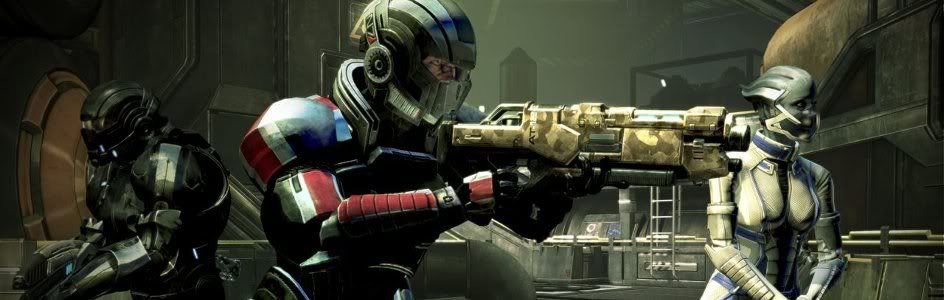
Mass Effect 3: The Official Review

Mass Effect 3 isn't the end of the world, it just portrays it.

Showing posts with label Sgt. Fury. Show all posts

Thursday, March 11, 2010

Lettercolumn Classics: Tell It to Fury

Hey folks, welcome to the first edition of another semi-regular feature, Lettercolumn Classics. You may recall that yesterday, I announced my quest to earn the coveted title of Fearless Front Facer. I haven't yet heard back from Marvel, but our friends over at Comics Should Be Good were kind enough to give us a shout out, so hopefully Marvel will take notice soon and I'll have an update. In the meantime, through a quirk of fate, the thread on CBR about my quest has included some talk about old timey lettercolumns, which is a handy coincidence considering I was actually working on this new lettercolumn feature when I came up with the idea for my quest.


It's no surprise people are talking about lettercolumns, though, because while the advent of the Internet has mostly signaled the end of the printed lettercolumn (though a few upright souls such as Kurt Busiek and Astro City continue to fight the good fight), for any comics reader of a certain age, the lettercolumn is a source of excitement and nostalgia. Indeed, once upon a time, the lettercolumn was actually the backbone of the hobby, as budding comic book fans would get addresses of other enthusiasts and trade back issues and ideas via snail mail, a practice that eventually formed the comics fan community as we know it.

Beyond the importance lettercolumns have as the foundation of comic collecting, though, they also serve as both a permanent historical record of what readers at the time thought of the comics and as an occasional source of amusement. Not bad for a feature that began simply to satisfy postal regulations. Back in the day, you see, comics had to include at least two all-text pages in order to qualify for the special shipping rate offered by the post office. In long ago days, that requirement was satisfied by prose short stories, until someone had the brilliant thought that simply publishing letters to the editor would be faster and cheaper.

The result? Classic lettercolumns like "Sock It to Shellhead", "Let's Rap with Cap" and "Let's Level with Daredevil" were born. Okay, so the late 60's were weird even in the world of lettercolumns, but it's no exaggeration to say that they served not just as a means of fan expression but also as an important launching point for the careers of many pros. Busiek himself first came to Marvel's attention through his letters, for example, while Mark Evanier's letter to Stan Lee suggesting ceremonial titles for fans ended up published in Stan's Soapbox and led to the classic blurb, "Know Ye These, The Hallowed Ranks of Marveldom" that ran throughout the company line and inspired my quest for the F.F.F. honorific. And sometimes romance even bloomed; future Elfquest creators Wendy and Richard Pini, for example, first met through the Silver Surfer lettercolumn.

Lettercolumn Classics, then, will be taking a look at some of the letters, great and not-so-great, that have graced the pages of comic books over the past 60 years or so, presenting slices of life from a bygone age. Today we kick off our feature with a look at a couple letters from one of the more interesting lettercolumns of the day, Sgt. Fury.

Though all of Marvel's titles in the 60's were known for having comparatively more progressive exchanges between the readers and the editors than their competitors, Sgt. Fury in particular was a lightning rod for controversial letters, which on some levels is to be expected considering our nation's involvement in the Vietnam War began (and eventually ended) during the title's long run. But before that there was another, much more surprising controversy that raged for years within the lettercolumn of Sgt. Fury as readers continually wrote in to complain about the treatment of Germans in the comic.

That's right. Hard as it is to believe now, in the early-to-mid 60's, a significant portion of the fan base was upset at the fact that German soldiers were being depicted as the bad guys in a World War II comic! Specifically, many of these letters were defending the average German soldier as compared to the Nazis. These letters would typically go along these lines: all Germans weren't Nazis; therefore it's wrong to depict them all as evil; and even worse to show them as being incompetent; so Marvel should show some good German soldiers just doing their duty defending their homeland.

Of course, to modern sensibilities (such as mine) this is kind of boggling considering most of the "defending" was taking place on occupied land taken by German aggression. Yet, though Stan in particular often shot these ideas down with some vigor in the lettercolumn (often using a variation of the line "If the Germans want to publish a war mag where they are the good guys they can, but as long as we're publishing them, the Americans will be the good guys"), Marvel was sensitive enough to the fan viewpoint that Roy Thomas eventually introduced Eric Koenig, a good German soldier who, rebelling against the Nazis that had taken political control of his home, defected to the Allied side and joined the Howling Commandos (and later SHIELD). Here's a typical example of one of these letters and Stan's response:


The most amazing episode of this heated debate, though, came after Koenig's debut (and ironically in the same issue, #35, where Koenig defected to join the Howlers). In the lettercolumn of that issue, another voice weighed in on the debate, but this time from a unique perspective. Because this writer, you see, happened to actually be a former S. S. officer!

Here's the letter and Marvel's response:


While Marvel sidestepped this landmine, other readers were eager to take up the argument, and in Sgt. Fury #40 Marvel published the following letter from another reader, which we suspect was selected because it probably came closest to Marvel's own thoughts on the matter. It also happened to express those ideas in a particularly eloquent manner:


For all intents and purposes, the introduction of Koenig and this spirited exchange in the lettercolumn spelled the end of the debate over Marvel's characterization of German troops during World War II. Of course, the times being what they were, this was in part because by this point America's involvement in Vietnam had become significant and the letters increasingly turned to focus on Vietnam instead.

But while there are plenty of interesting letters about Vietnam not just in Sgt. Fury but in all war comics of the time -- indeed, I suspect someone could write an interesting book about the topic and how changing attitudes towards war comics shaped the industry and eventually led to war comics almost disappearing entirely as a genre -- those letters will have to be the subject of a future episode of Lettercolumn Classics.


Next Time: From a literal war to a culture war, we shift gears, as the next installment of Lettercolumn Classics takes a look at The Cat and how readers responded to Marvel's version of Women's Lib. Be there!


Bookmark and Share

Friday, February 26, 2010

Black History Month Top Ten: Part Two

Welcome back to our countdown of the top ten moments in black comics history. Last time, as part of our celebration of Black History month, we took a look at five important moments, characters and titles that helped shape the industry. Today we close out our list with the top five events so far in the black comic experience. And at number five on that list is one of the most popular comics and milestones in all comics history, Spawn #1.


5) Spawn #1

In 1991, Todd McFarlane, indisputably the most popular creator in comics at the time, left Marvel Comics to form Image Comics alongside other hot artists of the day like Jim Lee. The fledgling company's flagship title? McFarlane's Spawn, which sold an amazing 1.7 million copies of the first issue, which detailed the origin of the demonic hero Spawn, who happened to be African-American. Not only was Spawn #1 one of the best selling comics in the history of the medium, it was also notable for the fact that the character's ethnicity was incidental to the comic -- he wasn't Black Spawn, he was just Spawn, a hero who happened ot be black. The fact that he became so popular with mainstream audiences, eventually spawning (no pun... okay, who am I kidding) a cartoon series and a live action film, was indicative of how the industry -- and society at large -- had progressed since the early days of the medium.


4) All-Negro Comics #1

By 1947, comic books had become one of the most popular forms of entertainment in America, selling over a hundred million copies a month to readers of all ages. Yet there still was almost no African-American presence on the printed page. New reporter Orrin Evans decided to change that by putting together his own comic, aimed at black readers, featuring black characters and created entirely by black writers and artists. The result was All-Negro Comics #1, featuring strong depictions of African-American heroes like hardboiled detective Ace Harlem. Unfortunately, though material was completed for the second issue, it was never to be published; newsprint distributors, apparently strong-armed by other publishers, refused to sell any paper to Evans. With no means of printing the second issue, the enterprise was doomed. But its existence was still an important milestone in comics history and eventually paved the way for black creators and characters alike.


3) EC Comics Faces "Judgment Day"

In the mid-50's, EC Comics waged a public battle against both good taste and the American government, as their over the top horror comics ran afoul of McCarthyist censorship in a series of highly publicized public hearings. But while EC eventually lost the battle, with the Comics Code Authority taking over and gutting the industry, publisher Bill Gaines and his team of creators, who numbered among the best talents working in the medium, continued to push the envelope even after the crackdown. And the frequent focal point of their war with authority came over their repeated anti-racism stories. Arguably the most famous story EC ever published, and still one of the best known comic stories ever, was Judgment Day, a sci-fi cautionary tale about a human emissary sent to gauge whether the planet Cybrinia is ready to join their version of the Federation. After inspection, he discovers that the plane,t which is populated by robots of different colors, is too racist to join; the story ends with the revelation that the Earthman, who up to this point has been hidden beneath his giant spacesuit, is African-American.

The story (which you can read here)debuted to acclaim in 1953 before the code went into effect, but when Gaines tried to reprint it in 1956, this was too much for the Comics Code, who demanded that the lead character be changed to a white protagonist, a move that would have undermined the entire story. When Gaines drew a line in the sand and refused to change one word or picture, threatening to sue the CCA, they relented, and EC Comics ran the story in Incredible Science Fiction #33, the last comic the company would ever publish. The company's stand -- and the message of the story -- remains a central moment in comics lore.


2) The Black Panther Debuts

As we've seen, black characters were few and far between over the first four decades of comics; and outside short-live groundbreakers like All-Negro Comics and Lobo, positive portrayals were even rarer. By 1966, though, the superhero revival was in full effect, with upstart Marvel Comics changing the way superhero comics and comics in general were thought of. And Marvel's flagship title was Fantastic Four, which, behind the legendary creative team of Stan Lee and Jack Kirby was in the midst of an unprecedented run of classic comic stories. Fresh off their work on the Galactus trilogy (FF #48-50) and perhaps the most famous story the two ever wrote, "This Man, This Monster" (FF #51) the time was right to once again change the way comics did business. Fantastic Four #52 introduced the Black Panther, a noble African king who, in his iconic black costume, fought evil wherever it was found. This wasn't the first noble African prince Lee had helped bring to the market -- in 1954, as editor in chief, he oversaw the publication of Jungle Tales, which featured one of the first heroic black comic protagonists, Waku, Prince of the Bantu. But while that was a short term (though notable) effort, the introduction of Black Panther as the first black costumed hero paved the way for everything that has been done with black superheroes since. And while the folks at Dell had given it a good shot with Lobo a year earlier, Lee and Marvel by this time had the clout to do whatever they wanted, meaning distributor protests couldn't keep them from making Black Panther a major star in the world of comics.


1) The Falcon and The Civil Rights Movement

As we've seen, Stan Lee was a key figure in the development of black comics, which makes sense considering he was the editor-in-chief, head writer and later publisher of one of the country's largest comic book companies for over 30 years. And his contributions in many ways echoed the development of the country as a whole. As a teenager, one of his first published efforts included the creation of the racially offensive stereotype Whitewash Jones, which mimicked the widely popular minstrel characters of the time. A decade later, the more mature Lee introduced Waku, one of the earliest black heroes in comics, though detractors would point out that while Africans were now portrayed as heroic, it was still part of the noble savage stereotype rather than a modern African-American being given the same positive treatment.

But by the early 60's, when Lee decided to throw caution to the wind and write from his heart in his new line of Marvel Comics, he and the times had both changed again. In Sgt. Fury #1 (1963), Lee created what in many ways was a forebear to the later successful rebooting of the X-Men: the Howling Commandoes were carefully designed to represent each major ethnic group in America, including Italian-Americans, Irish-Americans, Southerners and, in the person of Gabe Jones, a heroic African-American soldier (even though this decision created an anachronism, as the army wasn't actually integrated at the time the World War II stories were taking place).

And Lee didn't back down from the issues this created, often including racial commentary in the comics themselves. Avengers #33-34 (1966) introduced the Sons of the Serpent, a racist organization bent on cleansing the nation of all foreigners and African-Americans; the story, which introduced Bill Foster (who would later become Black Goliath), is one of the earliest instances of social (and racial) commentary in mainstream comics outside of EC's lightning rod efforts a decade earlier.

Meanwhile, over in Amazing Spider-Man, Lee introduced the always competent and level-headed African-American newspaper editor Robbie Robertson to act as a counterweight to the deranged J. Jonah Jameson. Lee and his collaborators, far more than any other comic creators or companies, embraced the events of the civil rights movement in the best way they could: on the page, by introducing real and realistic black characters -- sometimes villains, often heroes, always complex.

And while we've already covered one of the most famous and obvious effects of this policy, in the creation of Black Panther, the pinnacle is undoubtedly Lee's creation of The Falcon in 1969 (Captain America #117). The Falcon, who in his alter-ego of Sam Wilson was a Harlem social worker, was not only one of the first black superheroes period (and one of the only ones for a long time not saddled with the "Black" prefix), he also holds the distinction of being the first black superhero to star in his own book, starting with Captain America and The Falcon #134 (Feb. of 1971), where he would go on to share billing with one of the premiere comic characters in the world, Captain America, for the next 88 issues. Each of which would show a character not defined by his ethnicity (as the African prince Black Panther might be said to do) nor by new stereotypes (such as blaxploitation product Luke Cage) but simply by his actions as a man and hero. In many ways the creation of The Falcon could only have taken place at the specific time it did for, as we see with Luke Cage, just a handful of years later the civil rights movement had petered out to the point where the main message seemed to be "hey, we can make money off black people too."

For those reasons, and the lasting effect Stan Lee's decisions as writer, editor and publisher of Marvel during the 60's had on comics, the creation of The Falcon and Lee's response to the Civil Rights movement are number one on our list of the top moments in the history of black comics.


[Note: It should be mentioned that during this time DC did have a couple notable efforts as well, namely the introduction of African-American soldier Jackie Johnson in Sgt. Rock and the excellent, progressive stories folks like Joe Kubert and Robert Kanigher were turning out in their war department. Their more mainstream superhero books, on the other hand, not so much; even the introduction of eventual DC stalwart John Stewart in Green Lantern #87 (Dec. 1971) isn't enough to get them on the list, since it took another decade and a half for them to remember the character existed.]


Bookmark and Share

Thursday, February 25, 2010

Black History Month Top Ten: Part One

Over the past few months I've made a habit of celebrating holidays and special events with top ten lists, such as the ones that graced Thanksgiving, Pearl Harbor Day and Christmas. Most of the time these features consist of a list of covers, but for Black History Month I thought I would do something a little different and present a look at how the industry has handled African-Americans over the years with a list of the top ten key moments in black comics history.

Before I get into my list, I'd like to add that I'm not really an expert on this, so researching it has been very interesting. Though I've consulted a few different resources online and offline, I'd like to mention in particular Dart Adams and his Poisonous Paragraphs blog, which presented a far more detailed timeline of black comics history, which you can read here and here. It's worth a look, as is this examination of the subject by blogger Mercurie.

Okay, with that out of the way, let's jump right in with our look at the Top Ten most important events in black comics history!


10) Storm joins the X-Men

When the good folks at Marvel decided to re-imagine the failed X-Men franchise in 1974, they made the decision to recast the team as a global group, with representatives from a number of different ethnicities and nationalities. And among them was the African-American weather queen Storm. Not only has she become by far the highest profile black female character in comics (with almost no competition) but thanks to X-Men becoming the most popular comic in the country for over two decades -- and spawning a line of equally popular films -- she has become one of the most recognizable superheroes, period.


9) The Blade Movie Premieres

Unlike Storm, just about nobody outside of the most hardcore Marvel zombies had ever heard of the obscure supporting character Blade the Vampire Hunter when the first Blade film debuted back in 1998. But it went on to become a surprise hit, not only becoming one of the most successful comic adaptations made to that point but also one of the most successful action films to star an African-American lead. The film and its two sequels raised the profile and proved the viability of African-American superheroes in the mainstream marketplace.


8) Luke Cage, Hero For Hire #1

Despite what it claimed on the cover of Power Man #17, Luke Cage wasn't the first black superhero, nor was he the first African-American character to star in his own series. But there's no argument that Hero For Hire, which debuted in 1972, was the first major series to feature a black lead and gain widespread success; the comic ran for 125 issues before finally ending, while Luke Cage himself has become one of the key figures in the Marvel Universe thanks to his leadership of the company's flagship title Avengers throughout the last decade. All of it started with this comic, which proved that comic fans of all colors and creeds would buy a comic starring an African-American. (It should be noted, of course, that the characterizations were straight out of the blaxploitation handbook, which keeps this from placing higher on the list).


7) Fawcett Retires Steamboat

In the late 30's and early 40's, when comics were hitting their stride, the entertainment industry as a whole was rife with offensive stereotyping and superhero books were no exception. Picking up on the popular cliches perpetuated by characters like Buckwheat and Stepin Fetchit, publishers across the board began introducing their own versions, such as Timely's sidekick Whitewash Jones. At Fawcett, their version -- ironically and amazingly intended to appeal to African-American readers -- was named Steamboat. But while many of the creators working on the immensely popular Captain Marvel books were oblivious, fans weren't, and after a delegation of irate schoolchildren protested to editor Will Lieberson at the Fawcett offices. Lieberson, by his account, had come to his own conclusion that the character was racist and quickly complied with their demands, issuing an edict that Steamboat was henceforth banned from their books. Protests and actions like these helped end the popularity of these characters, and they soon vanished from comics, thankfully for good.


6) The Original Lobo

The first comic book debuted in 1934, yet, amazingly enough, it wasn't until 31 years later that an African-American character finally landed his own title. That book: 1965's Lobo, from Dell Comics, which followed the adventures of a black gunslinger in the old west. Unfortunately, even with three decades lead time, distributors were still unready for this level of equality: Dell was deluged with an unprecedented number of returns, many of them still in unopened bundles as stores and newsstands refused to sell the title. Because of this, the comic was canceled after the second issue, but it remains a milestone in comics publishing.


Tomorrow: The top five! Spawn! Black Panther! And much, much more! Be there, as Black HIstory Month rushes to its thrilling conclusion!


Bookmark and Share

Saturday, November 28, 2009

Great Moments in Comics: Sgt. Fury's Casablanca

Yesterday I had the good fortune to be able to watch the all-time film classic Casablanca on the big screen. Like most film fans, the scenes and lines form this movie have been ingrained in my mind for decades, even before I had actually seen the movie. Watching it up on the big screen with an enthusiastic crowd proved to be a far superior experience to huddling at home around the tube, and like most of us in attendance, I left the theater thinking about Bogart, Bergman and, of course, Sgt. Fury and His Howling Commandos.

Okay, so maybe not everyone was thinking about Sgt. Nick Fury and his ragtag crew of mismatched war heroes. But that's only because not everyone has had the unique (and perhaps dubious) pleasure of reading Sgt. Fury and His Howling Commandos #72 which features a storyline sure to be familiar to fans of Casablanca because it... er... is a complete rip-off of the plot of Casablanca.

Maybe rip-off isn't the right word, but even if you call it an homage, it's still a downright bizarre story, the strangest part of being that it doesn't actually star Sgt. Fury or his Commandos at all. Rather, taking the lead for this issue is Fury's commanding officer, Captain "Happy" Sam Sawyer. The story starts with Happy Sam and the Howlers enjoying a little R & R; a certain tune is played on the piano, sending Sam into a wistful flashback where he recounts an experience in Marrakesh from the early days of the war.

What follows is a heavily edited, but still painfully obvious, rehashing of the Casablanca storyline. Sam, it turns out, has been sent to rescue a defecting German scientist by the name of Professor Steubens who was stranded in Marrakesh. Arriving in the Saharan city, Sam makes his way to "Mike's Chicago Bar", where he meets Mike, an American ex-pat who has no interest in the war and is only out for himself.

Without Mike's help, Sam has to fend for himself, and soon is attacked by the shifty (and obvious Peter Lorre stand-in) Charly Ming, who was sent by his employer, Pasha Bey, to eliminate Sam. Sam escapes this trap, but is arrested by the local French police commandant, Eric Leroux, who mistakenly believes that Sam is actually in Marrkesh to rescue a certain Danish resistance leader by the name of Josef Van de Groot. Van de Groot, you see, is also stuck in Marrakesh, along with a female companion.

Well, to make a long (and really complicated) story short, Sam rescues Professor Steubens from Pasha Bey (who, I might add, is a double for Casablanca's Signor Ferrari), but the professor won't leave without also rescuing Van de Groot. Bey, switching sides when he sees a good deal, arranges to help Sam out by putting him in contact with Van de Groot. But there's a twist: it turns out that Mike, the owner of Mike's bar, is in love with Van de Groot's companion and so he also joins forces with Sam.

Just in time, too, because Leroux has decided to make a name for himself by bagging everyone at once. But Sam and Mike manage to turn the tables on the French captain and are able to help both Van de Groot and the Professor escape. Van de Groots companion, though, stays behind with Mike and we learn that she is, in fact, Van de Groot's daughter, not his wife.

THE END!!


Now, fans of the movie will notice some of the obvious differences, which are explained in a roundabout way by the credits for this issue. The art is, as usual, provided by the team of Dick Ayers on pencils and John Severin on inks, but instead of usual writer Gary Friedrich there's a note from editor Stan lee saying "Gary couldn't make it this time around, so practically the whole blamed Bullpen sat around workin' on this one!"

That, in fact, is only half true. Friedrich, you see, did write the original version of this issue, which is no surprise considering Friedrich was a well known Casablanca mega-fan; in 1972 he would end up writing "As Time Goes By" for an issue of Marvel's romance title My Love #16, where a girl is so in love with Bogart's Casablanca character that she can't be bothered with actual men. So it's pretty unlikely that he would not have been involved with this issue.

The truth, which was explored in some detail in Roy Thomas's fanzine Alter Ego, is that the original version of this issue was basically a scene-for-scene recreation of Casablanca, except with characters from Sgt. Fury written into it in minor roles. One problem: Marvel didn't have the rights to Casablanca, meaning this would be a pretty blatant copyright infringement. When Stan got a look at the finished product just a few days before it was to be sent to the publisher, he apparently hit the roof and ordered that the whole thing be re-written to cover their ass against a lawsuit. This is where the "whole blamed Bullpen" came in, as everyone feverishly worked to re-write the story over a weekend. Thus, while the story and characters are still obviously inspired by Casablanca, it's just different enough to keep the lawyers at bay.


Next up: A look at DC's version of It's A Wonderful Life starring The Spectre. Okay, just kidding, but that would be pretty cool, right?


Bookmark and Share

Tuesday, November 17, 2009

Presidents in Comics: The Golden Age of Politics

Welcome back to our week-long overview of American presidents in comic books. Yesterday we gave you just a tiny taste of some of the juicy excitement to come, but today we're ready to jump in with both feet as we start our examination right at the beginning -- with the birth of comics and the presidency of Franklin Roosevelt.

From the get-go, comics began featuring Roosevelt in cameo roles, dropping him into titles like Action Comics #15 (1939) and other patriotic themed books, such as Captain America (where he makes a blink-and-you'll-miss-it psuedo-cameo in #2 that was expanded years later in a long retcon that explained Cap's new round shield). In those early days, the president was as much a symbol as the heroes he was interacting with, such as when he formed the Justice Society, an event that, again, has been greatly expanded upon in the decades since. During the war years, when our nation's enemies such as Hitler and Hirohito were frequently appearing in comics as villains for the bad guys to defeat, appearances by Roosevelt were an obvious counter, with the president usually commending the heroes, bestowing some sort of thanks upon the hero for their good service or providing them orders for their next mission.

This kind of benevolent view of the president as the nation's paternal protector continued mostly unabated through the rest of the Golden Age and into the Silver Age, and in turn, the presidents themselves often used the popular medium as a way to speak directly to their constituents. Starting with Roosevelt, presidents and presidential candidates alike took to issuing comics depicting their life story and communicating their platform and record. Truman and Eisenhower, for example, both issued comics telling their life stories.

While Eisenhower perhaps lost a bit of popularity in the comic world thanks to the government inquiries that nearly destroyed the medium, comics still treated presidents as special, untouchable guest stars, almost always taking pains to show both the president himself and the presidency as a whole in a positive light.

Perhaps the most famous example of this, and probably the most famous appearance by a sitting president in comics history, took place in Action Comics #309, when John F. Kennedy showed up for a guest spot in the lead Superman story. In the story, not only does President Kennedy team up with Superman, he also becomes one of the only people in history to know Superman's secret identity. But, as Superman says, this is okay because "if I can't trust the president of the United States, who can I trust?"

That's a question that would become tinged with with irony less than a decade later, but at the time it was just par for the course. Also ironic (if that's the word), and the reason for this comic's lasting fame, is the fact that it hit newsstands a week after Kennedy's death; DC claimed that it was too far along in the distribution process to hold up release. Whether or not that is true, DC did hold back release of a planned physical fitness issue that the publisher had developed with the Kennedy administration, though they did finally issue it in the pages of 1964's Superman #170.

Following Kennedy's assassination, and thanks in part to the rise of Marvel, presidents began to take a larger role in comics. Kennedy's successor, Lyndon Johnson, appeared as his predecessor had in the pages of Action Comics among other places at DC. Over at Marvel, though, he was a bit more active than past presidents had been, issuing a full pardon for the Hulk in Tales of Suspense #88, for example, and personally calling together the legendary Howling Commandos for a special Vietnam missing in Sgt. Fury and his Howling Commandos Special #3.

Even then, though, and despite the growing clamor over Vietnam, the president still commanded respect, and these appearances hew pretty close to the established norm for presidents in comics. That would all change, though, in 1969 when a new supervillain appeared that would eclipse even Dr. Doom or the Joker: President Richard Nixon.


Tomorrow: Nixon! Has any other president ever been as influential in the comic world as Richard Nixon? From his appearances in Kirby's Fourth World to the commentary in Watchmen to his legendary appearance as a Captain America arch-villain, Nixon's the One... tomorrow!

Wednesday, November 11, 2009

Veterans Day Special: Top Ten Sgt. Fury Covers

Today we in America celebrate Veterans Day and honor the men and women who serve and have served in our armed forces. For most of the rest of the world, this is also Armistice Day, which commemorates the end of World War I at 11:11 AM on 11/11, 1918. In honor of our veterans, then, we at The Vault thought it would be appropriate to take a look at some of the many fine war comics that have graced shelves over the years. So without further ado, here's our list of the Top Ten Sgt. Fury Covers of all time.


10) Sgt. Fury #50

This cover from regular Sgt. Fury art team Dick Ayers and John Severin is one of the most iconic Sgt. Fury images ever; during the 60's, Marvel used it for promotion and turned it into a poster.


9) Sgt. Fury #9

Jack Kirby based much of his work in this series on his own experiences as a veteran of World War II. He didn't get to capture Hitler, but like the characters in Inglorious Basterds, he certainly would have liked to.


8) Sgt. Fury #100

In this star-studded anniversary special, Stan Lee emcees a post-war Howlers reunion that is interrupted when a sniper tries to assassinate Reb Ralston because of his work as a Senator in favor of civil rights.


7) Sgt. Fury #24

This gripping effort from Kirby is unusual in the sketchiness of the inking, which adds some pathos to this image of a worn down Fury facing a host of unseen adversaries.


6) Sgt. Fury #96

Published during the Vietnam War, this effort show the influence of contemporary concern in its depiction of a Japanese civilian caught in the crossfire. It doesn't take much to imagine that artist Gil Kane is instead depicting Vietnamese or Cambodian refugees.


5) Sgt. Fury #74

The inimitable John Severin returns with this classic solo effort.


4) Sgt. Fury #38

A great and evocative cover of Fury and the Howlers involved in a dangerous night drop behind enemy lines. I think this cover is from Dick Ayers, but I'm not entirely sure.


3) Sgt. Fury #16

Perhaps no war artist ever captured the exhaustion of the average soldier on the front lines as well as Kirby in this effort.


2) Sgt. Fury #13

Of course, this is a bit of a ringer, since it has Captain America on it; but as a character defined by World War II, it's somehow fitting that he star on this classic Kirby effort from the Silver Age.


1) Sgt. Fury #67

Again, Severin comes through, this time with an American Flag cover that is only matched by the unique color-coded panel and page layouts inside the comics. Seriously, it has to be seen to be believed.


Bookmark and Share