Game Review: Diablo 3

Diablo 3 is out. But is it a game? Or is it the most brilliant money making scam in internet history?

Movie Review: The Avengers

Okay, okay, I posted my Avengers review. Get off my back already, geez.

The Most Important Comic Book You've Never Heard Of

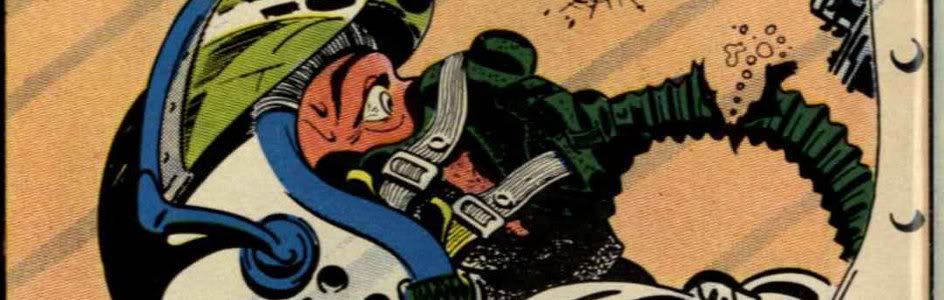
Action Comics #1. Detective Comics #27. Why is All-American Men of War #89 as important as these great comics -- and why have you never heard of it?.

Tales From the Vault: Lois Lane #93

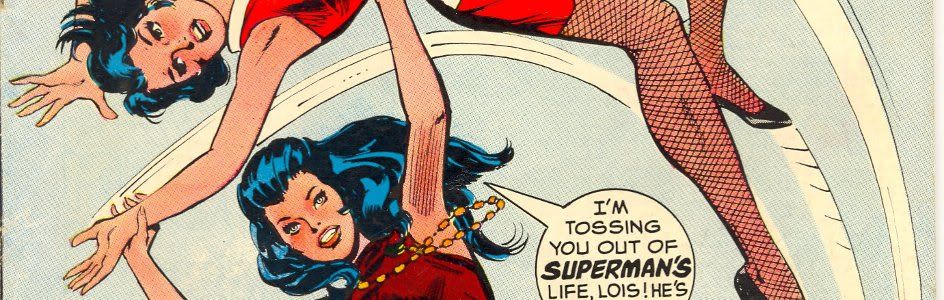
If you thought Superman was a total tool before, you ain't seen nothing yet.

Mass Effect 3: The Official Review

Mass Effect 3 isn't the end of the world, it just portrays it.

Showing posts with label DC Comics. Show all posts

Sunday, August 12, 2012

Breaking News: Joe Kubert Dead at 85

In recent years we've seen a lot of the great comic creators from the golden age pass into legend, but today's news hits particularly hard, as multiple sources are reporting that Joe Kubert has passed away.

He was 85.

Trying to sum up the career of Kubert is basically impossible, but suffice it to say that he began working in the 1940s and continued as a mainstay of the comic book industry right up until his passing. Best known for his great war comics, including Sgt. Rock and Enemy Ace, Kubert also turned in fantastic work on Hawkman, both in the Golden Age and the Silver Age, as well as titles like Tarzan and literally too many others to mention.

Beyond his unequaled production as a artist and writer, however, his most enduring legacy may be as a teacher and inspiration thanks to The Kubert School, which began training comic books artists and cartoonists beginning in the 1970's. Dozens if not hundreds of pros passed through his courses.

And Kubert's art legacy was also passed down in a much more literal fashion through his sons, Andy and Adam Kubert, who are considered by many fans to be two of the top comic book artists of the past quarter century.

On a personal note, Kubert's death saddens me as I missed his final visit to Boston in 2010 due to a scheduling conflict. I very much wanted to attend so I could speak with him about his work at Lev Gleason alongside Charles Biro and Norman Maurer on Boy Comics. Kubert is the only artist other than Biro to draw a cover for Boy Comics and I wanted to ask him how that came about. Sadly for me, that opportunity is now lost forever.

And sadly for comics, one of the five greatest artists in the history of the medium is gone forever as well.


Thursday, May 24, 2012

May Answers From the Vault

Welcome back to a very special edition of Answers From the Vault. Why is this edition even more special than all previous special editions? Well, it's because these questions were pretty much all unsolicited. Don't worry, though, they aren't so much of an annoyance that I won't answer them. Let's get right to it and help expand your mind!

Why would my 17-year-old students be involved in a bordering-on-scathing battle about the ending of ME3? - Professor Chesley Wendth

Thanks for the question, Chesley. The basic answer is simple: Because anyone who plays Mass Effect 3 is obligated to get in an argument about the ending. It's one of the unwritten rules of the internet, at least, it was until I just wrote it. 

I covered this briefly in my review of Mass Effect 3, but basically, the entire series is designed around the premise that the player's actions dictate the story, so whatever you decide has major ramifications on how everything plays out. However, while there are technically something like 16 different endings to Mass Effect 3 -- and thus to the entire series -- they are all almost entirely identical. So some angry gamers feel the ending betrays the entire premise of the series and invalidates their 100+ hours of gameplay.

On the other hand, I didn't mind the ending. It may be nit picking to the point of semantics, but the choices you make at the end do drastically effect the Mass Effect universe, you just don't get to actually see it. At the end you have three choices, each of which determines the fate and future of the entire universe in very different ways. For whatever reason, though, BioWare doesn't actually show the ramifications of that choice. Which is annoying and weird. But even though the game plays out as if your choice didn't make a difference, I still feel like the ending upholds the spirit of the story. Affecting the future of the universe is about as big a choice as you could make, after all.

I can understand why some people are pissed, though, as it doesn't provide the kind of clarity fans are used to. It's kind of like the ending of Inception; something big happens, but you have to decide what it was yourself.


Why can Superman shoot lasers out of his eyes? - Avery Houle

Thanks for the question, Avery. Superman, as you may know, is from a planet called Krypton, which is on the other side of the galaxy. Unlike our world, Krypton had a red sun instead of a yellow sun. When Superman arrived on Earth, he discovered that the energy from a yellow sun gives him super powers, which is why he can fly, lift heavy objects and do everything else Superman does.

Because he gets his powers form the sun, Superman is essentially a living solar battery. Just like solar panels on a house, Superman absorbs sunlight and turns it into energy. And since lasers are basically focused beams of light and energy, Superman's heat vision is actually the one power of his that makes the most sense; he's simply channeling all the solar energy he collected and shooting it out of his eyeballs.


After watching Justice League Doom the other day I have a late question for The Vault: Because Bane's exposed rubber tubes make him the most vulnerable super villain in the DC Universe, why doesn't he cover them up with a metal case or something? The whole setup seems kinda stupid. - Rob Lettrick

Good question, Rob. I'd like to say it's because Bane is a moron, but he's actually portrayed as being a super genius. So why doesn't he use his big brain to come up with a better outfit? I'd say because he arrogant enough that he doesn't much care if his tubes get yanked out. The tubes, after all, just feed him the venom drug that gives him his super powers. Without those, however, he's still a genius who has trained his whole like in fighting and other disciplines -- in other words, if his tubes get pulled, he becomes Batman. And Batman does okay.

In the comics, before New 52 erased everything, Bane had apparently stopped using the drug a while ago, meaning the tubes no longer do anything at all. So that's another reason I guess.

I would say that Bane isn't the most vulnerable supervillain in DC, though. That honor probably goes to the Doom Patrol's arch-nemesis The Brain, who is literally just a human brain in a glass jar.


Other then Nick Fury has any other character gone through a race change and did Marvel ever address it? - Ben Milton

This is a timely question, Ben, so thanks. There have been a number of characters who have had race changes similar to Nick Fury's and most have them have happened the same way: In an alternate or new universe. DC, for instance, recently added some ethnic highlights to some of its established characters in the New 52 universe, while Marvel has tweaked other classic characters in their Ultimates universe, much like Nick. Most of these don't really need much explanation other than "it's a different universe."

There are two other types of race changes that happen in comics, though, First, there's the type where a character is replaced by someone of a new race. Examples of this include Blue Beetle at DC (who was killed and replaced by a new Hispanic Blue Beetle) and Ultimate Spider-Man (who again was killed and replaced by a Hispanic kid). it's not really the same thing, of course, as it's a whole new character, but it happens fairly regularly as comic companies try to add diversity without actually coming up with new ideas.

The more interesting -- and by interesting I mean horribly hilarious -- type of race change is when an established character suddenly changes races as part of a storyline designed to highlight "race issues." Sort of a cross between Black Like Me and Batman; maybe you could call this Black Lightning Like Me syndrome. This has happened at least a coupe times I can think of off the top of my head. Punisher, for instance, had a storyline where he went under cover as a black dude, mainly as a way to try out a new street-thug version of Luke Cage.

That was embarrassing. On the other hand, the most famous story like this, from Lois Lane #106, was trying to actually seriously explore racial issues in the early 1970's. They ended up putting Lois in a machine that turned her black for 24 hours, where she then discovered the plight of the African American and delivered some timely lessons on racism to the reader. It's just as bizarre as it sounds, topped off by the amazing fact that the story is called "I Am Curious Black," which of course is a reference to one of the most famous pornos of all time.

The 70's!!!


Thursday, April 19, 2012

April Answers From the Vault

Welcome back to another edition of Answers From the Vault. You may recall that last week I canvassed the vast Vault community for questions, queries and general mysteries of the comic book world, all in the name of providing you with the most kick-ass clump of knowledge ever to be dumped in your grill. After receiving over ten trillion questions, though, I narrowed it down to just two worthy of answering. So without further ado, let's all embiggen our brains and get some fresh Answers From the Vault.


Can you think of a creative team's run that would have worked better if attached to another project? For instance, I liked Karl Kesel's Daredevil run, but it might have been better as a Spider-Man run. Erik Larsen's Defenders run was pretty bad, but might have worked better if he was doing it attached to the revamped Heroes for Hire book. And actually, come to think of it, that HfH run (was it an Ostrander book?) would probably have worked better in the Defenders. -- Mark

Thanks for the question Mark. The answer is no, I can't think of any. Next question!

No, just kidding. The funny thing these days is that mainstream superhero comics have become so self-referential that a lot of writers seem to be writing archetypes more than actual characters. Maybe that's just the influence of Alan Moore and Watchmen, but because of this, there are a lot of books that could pretty much have the characters completely swapped without any real effect on the stories at all. And that's not even getting into characters that are specifically created as proxies for other characters, such as Planetary.

Plus, with DC's New 52 and the constant shakeups at Marvel, characters are being reinvented so frequently that it's hard to really figure out what stories make sense for a character anymore anyway. For instance, in terms of traditional Marvel, there's no question that Bendis' New Avengers would have made more sense as a Defenders series, specifically post-Civil War. At that point the team was underground, doing either street level stuff or combating secret menaces the rest of the superhero community was ignoring, with a roster comprised of Wolverine, Spider-Man, Luke Cage, Iron Fist, Dr. Strange and Hawkeye. That's the Defenders, people, even if it has an Avengers logo on the front in order to boost sales.

But having said all that, I'll say that while I absolutely love Ed Brubaker's Captain America, it really reads more like a modern day SHIELD series than a traditional Cap superhero story. I can't say it would have worked better as a SHIELD story per se, since it worked so darn well as it was, but it would arguably have worked about the same if the lead was Nick Fury instead of Cap.

What are the 5 Worst Resurrections in comics? I would have to think Aunt May's return would have to top the list. Is there a worse one? -- David Wright

Thanks for the question, David. At this point, death is essentially meaningless in mainstream superhero comics, to the point where it's pretty hard to narrow it down. Off the top of my head, though, here are a few really egregious examples, including Aunt May:

1. Aunt May -- Officially killed the concept of development in comics, specifically in the Spideyverse. Good buy character progress, hello neverending stasis.

2. Captain Marvel -- This gets a special mention, because his return fromt he dead was retconned away before they even explained it. During Civil War, Captain Marvel showed up, suddenly alive again even though The Death of Captain Marvel is one of the most famous, acclaimed and beloved comics of all time. But no matter, even that can't stand up to the fact that Marvel has to publish a comic called Captain Marvel every so often to retain their trademark. so they came up with this asinine story where Captain Marvel was transported forward through time from before the moment of his death, meaning he was now alive in the present only knowing he would eventually have to go back and die.

The worst thing about this, though, was after hyping this up as some kind of giant event -- Mar-Vell is back!!! -- and publishing a one-shot to return him from the grave, a couple months later they just said, "oh, that was a skrull. Just kidding." It was hands down the most blatantly manipulative scam Marvel's ever run, because they knew in advance that this story wasn't his return at all, but they hyped it up anyway to sell a bunch of comics. Just a complete fraud perpetrated on the comics community. An all-time low point for Marvel. The comic itself sucked, the idea sucked, the reasons for publishing it sucked and the liars and con men who called themselves Marvel's editorial staff sucked most of all. What a joke.

3. The Green Goblin -- Hey, there goes three decades of continuity out the window. Because Spidey doesn't have any other good villains they could use instead, right?

4.  Mockingbird -- Okay, this is maybe just me. But Bendis spent years putting Hawkeye through the ringing, killing him off, resurrecting him in an alternate universe, leaving him somewhat morose and dealing with existential angst. It's not where I would go with the character, but it at least opened the door for some new character development. And then, after all that set-up, instead of exploring any of that they instead brought back Mockingbird in Secret Invasion so they could try and revert to a mid-80's status quo that nobody was a fan of anyway! Except for one guy who happened to be a writer at Marvel. It's just asinine.

5. Barry Allen -- See above. Don't get me wrong, I like Barry, but he was dead for a quarter of a century and nobody under the age of 55 wanted him back. Wally West is one of the most popular and successful "replacement" superheroes in comics history and is still much more popular than Barry Allen. I have to think they did this because of some kind of future movie tie-in. But then again, the fact that they made such a big deal about this to the point of building entire crossover events around his return, only to scrap the entire DCU before the story was even finished, kind of shows how little direction anybody at DC has these days.

You'll note the absence of two characters from this list, namely Jean Grey and Bucky. I don't think Jean Grey should have been brought back form the dead and in many ways her return is the key moment where death stopped having any meaning in comics for all time. But I still have to give her a bit of a pass because she was, after all, the Phoenix. Returning form the dead is an inherent part of being the Phoenix. Bucky, on the other hand, gets a pass because the story has totally been worth it. I know, it surprised me too, but Winter Soldier has become one of my favorite Marvel characters and Burbaker continues to do great stories with him. And that's what it's all about after all.

Saturday, April 7, 2012

The Most Important Comic You've Never Heard Of

Earlier this month I purchased a comic book that most people have never heard of, but which has had an important role in shaping both and pop culture and the development of art in the 20th and 21st century. It's impact on culture is arguably up there with Action #1 or Detective Comics #27. Yet while those other comics are worth hundreds of thousands of dollars, or more, I was able to pick up this 50 year old classic for just $4.50 thanks to its total -- and ironically apt -- obscurity.

The comic in question? All-American Men of War #89.


All-American Men of War was, along with sister titles like Star Spangled War Stories, Our Fighting Forces and Our Army at War, one of DC's many classic war titles. These flourished during the 1950's and 60's but fell out of favor during the Vietnam War, with most of them ending by the early or mid 1970's; the final issue of All-American Men of War, #117, came out in 1966.

All-American Men of War #89, which hit stands with a cover date of February, 1962, is a typical issue of the series. It features three stories, each involving the air force during a different war -- World War I, World War II and the Korean War. The middle of these stories features the series' star at the time, Lt. Johnny Cloud, The Navajo Ace. The stories are interesting and competent but not particularly noteworthy.

There is one thing of note, though: In keeping with DC policy of the day, there are no story or art credits given. And it is this fact that helped create the anonymity which the issue and others like it has languished in to this day. Because, thanks to the seemingly anonymity of not just the artists but the art itself, nobody really batted an eye when that art was lifted whole, appropriated, repackaged and sold as what would become one of the most important art movements of the second half of the 20th century.

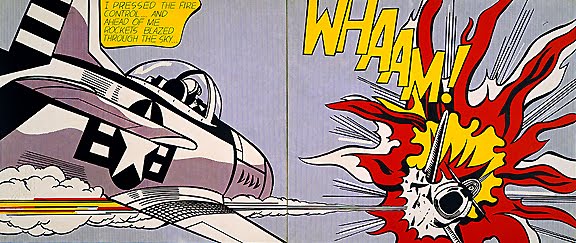
I'm talking, of course, about Roy Lichtenstein and the Pop Art movement. While just about nobody alive has ever even heard of All-American Men of War #89, Lichtenstein's works and aesthetic have been studied for decades in schools and displayed in art galleries. Other than hardcore comic book fans and art historians, though, few people realize that most of Lichtenstein's works, major and minor, were not the product of his imagination but were rather taken directly out of actual comic books -- swiped from other artists, blown up to canvas size and presented as original works.

Much of this, of course, has to do not only with the perception of comics as low art -- a perception that continues today -- but to the belief that the art in those comics was a disposable commodity, mass produced by some faceless worker turning out page after page in assembly line fashion. And in a way, that's true to a point; many of the artists themselves felt their art was just that, disposable, just a way to make a living while they pursued "real" art on the side.

But while Andy Warhol, king of Pop Art, was busy taking his inspiration from actual mass produced images, altering things like the Campbell's Soup can as commentary on modern culture, Lichtenstein's art was being taken from art designed and executed as art by other artists. And while the comics themselves may not have had credits listing those artists, the artists themselves were certainly aware of Lichtenstein's appropriations and the fact that Lichtenstein was becoming incredibly wealthy and gaining worldwide fame by selling copies of art they themselves had been paid often less than a couple hundred bucks for. And for which they would never receive any recognition.

All-American Men of War is one of the prime examples of this process due to the fact that Lichtenstein appropriated (some say outright stole) not one, but at least five different images for use in his work. The most famous of these comes from the aforementioned Lt. Johnny Cloud story, which is titled "The Star Jockey."

In this tale, Johnny Cloud relays a story from his childhood, when a shaman gave him a spirit vision that revealed to him a scene of his own future when he would fly fighter planes. In his vision, he sees a dogfight where the Nazis appeared to him as flaming stars in the sky. Later in the story, he shoots down an enemy fighter and it explodes in a brilliant fireball, causing Johnny to remember his earlier vision:


Art fans will probably recognize this right away as one of Lichtenstein's most famous paintings, and probably his most famous non-romance painting. Titled "Whaam!," this painting was completed in 1963:


Just how much "Whaam!" is worth today is hard to say, as the Tate Museum purchased it in 1966. But we can get a good sense based on sales of other Lichtenstein paintings that have sold recently, such as "I Can See the Whole Room! ... and There's Nobody in It!," which sold last November at a Christie's auction for $45 million.

The original art that was used to create "Whaam!" was done by an artist named Irv Novick, who as I mentioned was not credited in the actual comic book. Did this fact play a role in Lichtenstein's apparent belief that it was unnecessary to give credit to Novick?

An interesting sidebar comes from an anecdote whose origin I'm afraid I no longer have attribution for. It seems, however, that when Lichtenstein became a huge star in art world during the early and mid 1960's, thanks in large part to early works such as "Whaam!," a number of the artists he swiped from were quite upset. Lichtenstein ended up meeting a large group of them and explained that he had never expected his stuff to take off and he was just as surprised as they were; he was just a starving artist who got lucky. Charmed, the other artists decided not to press the issue.

On the other hand, we also have the story of Russ Heath, a comic book legend who (unlike Novick) is still alive. Recently Heath conducted some interviews that coincided with a drive to try and raise money to cover his escalating health care costs because, as an artist, he had no pension or health coverage to speak of. In the interview, Heath explained that on more than one occasion he invited Lichtenstein to dinner, but was turned down on each occasion. For me, it paints (perhaps unintentionally) a picture of an artist who doesn't want to acknowledge where his fame and fortune truly come from. Was he embarrassed by the fact that he was making millions of dollars while the artists he appropriated works from remained unknown and sometimes living in poverty? Was he covering it up in order to preserve his own image?

Heath, as it happens, is another artist who contributed to All-American Men of War #89. His story is the third in the issue; set during the Korean War, he depicts a dogfight between a young pilot desperate to become an ace and his communist attackers. At one point the pilot tries a desperate maneuver and drops a bomb on a plane cutting beneath him. The bomb blows up the plane, as shown in this scan from the great site Deconstructing Lichtenstein, which chronicles Lichtenstein's extensive swiping:http://www.blogger.com/img/blank.gif


This image was later used to create Lichtenstein's painting "Blam!"


And that's just the tip of the iceberg for Heath's contributions to Lichtenstein's ascent in the art world. Another panel of Heath's from the same story was used on the cover of All-American men of War #89, re-intepreted by cover artist Jerry Grandenetti -- which makes Lichtenstein's work "Jet Pilot" (inset) a copy of a copy:


And two more Heath panels from the same story (!) were also used by Lichtenstein, for "Brattata" and "Okay, Hot Shot," the images of which can be seen here and here.


The artistic merits of Lichtenstein's work as compared to the originals can be debated. Many comic fans feel that the original art is better executed and better drawn than Lichtenstein's copies, but this seems partially intentional to me, as Lichtenstein flattened out the images as part of his commentary on pop art. Likewise, his brighter colors and mostly his greatly expanded scale create a far different visceral impression than the small images found in the comic itself.

A more pressing question for me and many others, though, isn't whether Lichtenstein the artist has merit on his own rights but rather whether Lichtenstein the man did the right thing. And though I only know what I have read second hand, to me he failed epically in this. While he was making money hand over fist and earning accolades from art critics and historians around the globe, the artists whose works he was feeding off of remained toiling away in obscurity. That obscurity and their financial burden could have been greatly changed merely by Lichtenstein acknowledging their contributions to his work. Yet he did not, even while continuing to turn out image after image knowlingly and purposely pilfered from the artists of the comic book world.

Simply by providing proper credit, Lichtenstein could have given artists like Novick and Heath a whole new world of opportunity by highlighting their work on a world stage. The money they could have made just from commissions alone would have likely prevented the spectacle of Heath, in his mid-80's, having to search for work online to pay his medical bills. Yet Lichtenstein kept the credit and the spoils for himself.

And maybe that's the true importance of All-American Men of War #89. Because beyond the fact that it directly led to an entire art movement, it also now stands as an object lesson and warning for any artist in any field. Not to mention a condemnation, in my eyes, of the art world. Can you imagine what it must have been like for these artists to watch as someone copied their work and was hailed as a genius while their own art was still derided as cheap junk for kids? For me, it's a reminder to judge things for yourself, for what they are; and to give credit to those who deserve it, not those who ask for it.

So there's the story of All-American Men of War #89, the most important comic book that you've never heard of, a comic that in its own way influenced culture as much as Action #1 or Detective Comics #27 but which, unlike those, commands no premium on the back issue market and is sought after by no one other than the hardest of hardcore war comic fanatics. And if it seems both ironic and somehow fitting that All-American Men of War #89 should be as forgotten and overlooked as the artists whose works fill its pages, well, it is.

Fitting, but hardly fair.


(note: It should be mentioned that Lichtenstein's swiping -- what some comics fans would call outright thievery by http://www.blogger.com/img/blank.gifan art world con man -- is hardly limited to his war paintings or All-American Men of War #89. Indeed, nearly every single one of his works was taken directly from another artist's work, usually at DC, including his famous romance paintings. The Deconstructing Lichtenstein site has carefully uncovered dozens and dozens of instances both in the war and romance comics as well as from other sources. Oh, and that painting "I Can See the Whole Room! ... and There's Nobody in It!" that sold for $45 million last year? It was a straight up copy of a panel done by artist William Overgard for the comic strip Steve Roper, as seen in this inset, again by David Barsalou and his Deconstructing Lichtenstein website.)

Saturday, March 24, 2012

Tales From the Vault: Lois Lane #93

Welcome back to another gripping installment of Tales From the Vault, where we read comics so you don't have to. Or something like that. So what's on the docket today? How about a prime example of some Silver Age superdickery, courtesy of Lois Lane #93, guest starring Wonder Woman? Grab your kryptonite and cinch up your red underpants, because this one is a doozy.

And don't forget to click on the images to enbiggen them.

Details: This issue of Lois Lane (technically, the series is titled Superman's Girl Friend Lois Lane, but I refuse to use that title for reasons that are about to become obvious) has a cover date of July, 1969. The comic doesn't have any credits, because DC was really into the whole corporate factory thing at this point, but it's by writer Robert Kanigher and artists Irv Novick and Mike Esposito. Anyone who knows Kanigher has a pretty good idea of the madness that is about to ensue, so it's probably just as well they didn't scare the kids by putting his name on the first page.

Synopsis: First off, this issue came out during the short-lived I-Ching era of Wonder Woman, which for those of you who aren't Chinese means the brief period when Wonder Woman lost all of her super powers, got rid of her costume and fought crime using amazing kung-fu taught to her by her blind Asian mentor I-Ching. That's a real thing. I did not just make that up.

So, to the story: Wonder Woman is in Metropolis to help Superman out by performing with him in the circus. Finally, someone realized what a freak that alien tool is. Or, actually, it's for charity. Naturally, Lois is on hand to cover the story for the Daily Planet, and just as naturally she immediately becomes insanely jealous to the point of having nightmares about the possibility of Wonder Woman stealing her man. Here's a tip, Lois: If he can be stolen, he's not really your man. Think about it.

Anyway, Perry White loves the article so much that he assigned her to follow Wonder Woman and Superman around. This plan goes wrong right away as it's clear that Superman is, in fact, falling for Wonder Woman. So she tags around behind them like a lame duck while they do things like try on wigs at Wonder Woman's boutique (don't ask) and go dancing at a hippie night club. No, really:


In fact, Superman gets so into the dancing that he accidentally uses his super speed and sets the dance floor on fire. Now that's cutting a rug. Anyway, irritated by the gathering crowd, he and Wonder Woman fly off to enjoy themselves in private, ditching Lois in the process, who can only watch forlornly as they fly off - something that will happen more than once in this comic (foreshadowing!).

Lois, though, is made of sterner stuff, so she decides to fight for her man. Literally: She hires a judo and karate expert to train her. And after a super cool training montage, where Lois becomes a martial arts master, she's ready to challenge Wonder Woman. Oh, it's on!


Unfortunately for Lois, Wonder Woman without her powers is still Wonder Woman, so she immediately decks Lois, throwing her ass-over-teakettle, slamming her into the ground and then pimp-slapping the hell out of her, all while Superman perches on a rock and has the time of his life, no doubt concealing a super-boner as the ladies catfight for his love. You'll want to click on this to see it in all it's... glory:


Honestly, it's downright disturbing. Here's a closeup of his face as he watches the fight:


Nothing gives him as much pleasure as seeing Lois get beat to a pulp. Think I'm exaggerating his super-assholitude? Check out the end of the fight where, unable to walk, Lois crawls on her hands and knees, literally praying for Superman's love. His response? He flies off with Wonder Woman again, leaving Lois broken, bloodied and lying in the dirt:


As it happens, though, Lois still has an ace up her sleeve. See, all along Superman has told her that he can't marry her ever because, as a normal human, she would be an easy target for villains bent on revenge. And since Wonder Woman has no powers any more, it means Superman can't marry her. Which is why Lois is so shocked and horrified when Wonder Woman suddenly saves an exploding NASA rocket using flight, invulnerability and super strength. How? Why? WHYYYYYYYYYY?!

Well, it doesn't matter why, because now that Wonder Woman has powers again, it's a done deal: Superman proposes and she accepts. Better yet, Lois gets the assignment to cover the wedding, so she has to trail around behind Wonder Woman while Diana shops for her wedding dress. And she's totally bitchy about it too, delivering the stone cold line "Now you can come and watch me shop!" when Lois asks if she can instead get a look at Wonder Woman's new mansion.

Lois isn't the best reporter in Metropolis for nothing, though. She figures something must be up. And sure enough, she quickly (well, it's page 18, so not that quickly) uncovers the truth. Sneaking over to Wonder Woman's new mansion, she discovers the real Wonder Woman locked in a basement cell. Turns out the Wonder Woman who has been wooing Superman is actually a Kryptonian imposter, escaped from the Phantom Zone. But before Lois can rescue Diana, the fake Wonder Woman returns, and, after declaiming her origin, blasts Lois with a disintigrator ray.

Except! Superman flies in out of nowhere and destroys the ray gun before she can fire it. Then he frees Diana and Lois and shunts the villainess off to the Phantom Zone. So how did Superman know what was going on? Was the whole charade a clever plot on his part to uncover her evil scheme?

Well, no. Turns out he happened by totally by chance. See, he was looking for Lois to tell her he had decided not to marry Wonder Woman after all. So for those keeping score, everything Superman did in this issue -- acting like the biggest a-hole in the universe, two-timing with Wonder Woman and then proposing to her -- it was all totally real, because Superman had NO IDEA she was an imposter. And forget about how crappy Lois must feel about all this, imagine how totally awkward Superman's next conversation with Wonder Woman must have been. "Wait, you fell in love with 'me?' And you got engaged to someone you thought was me? Did you guys, like... do it? You know what, I don't even want to know."

Really, how creepy is that?

THE END!!!

Extras: There's a letter from DC in the back of the book explaining why they had to raise their price from 12 cents to 15 cents. It had been a dime since issue #30, but it would only be 20 issues before the price was raised again with #112. There's also a full page ad with a bunch of comic book covers and a giant blurb that says "Dynamite's Coming!" in huge letters. What does that mean? Who the hell knows. I'm guessing they were just trying to think of words that started with D and C.

My Grades: For sheer WTFness, this issue gets a solid A. Superman, on the other hand, gets an F for being the worst "boyfriend" ever and just for being a gigantic douchenozzle. Lois is a toss up; on the one hand she shows guts and gumption, as usual, battling Wonder Woman in hand to hand combat. On the other hand, she's still in the lovelorn fool mode DC stuck her in for pretty much all of the 1950's and 60's. So I'm giving her an Incomplete. I-Ching Wonder Woman, though, is tops, so she gets an A for not kicking Superman right in the junk when she found out he was banging her doppelganger. Even though I would pay a lot of money to see that happen -- the kick part, not the banging part.

Free Lois!

Tuesday, May 31, 2011

DC Comics Goes Completely Nuts

So, here we are, minding our own business, getting ready for the Green Lantern and Captain America movies next month -- and then, all of a sudden, DC Comics decides to go completely, off the reservation crazy. Sigh.

I guess we might as well dig in and try to make sense of this.

For those of you who haven't heard the news, here's the deal: this August, DC is rebooting their entire universe. Yep. New versions of all their characters, apparently with new costumes and in some cases new origins and powers as well.

And that's not all: to kick this off, they aren't going to half-ass it like they did after Crisis on Infinite Earths; no, this time around their entire line will relaunch, with every single title starting over at #1. That includes, you know, Batman, Superman, Detective Comics and Action Comics -- those last two, in case you were wondering, having maintained their current numbering system since they debuted in 1937 and 1938 respectively.

But those are just the details, because hidden beyond the character reboots and the renumbering firestorm sure to follow (which I may or may not start momentarily) is an announcement probably even more important to the comic book industry: DC is also going to begin offering all of these titles digitally, online, on the same day they go on sale at comic shops. In other words, goodbye, comic shops, hello iPad, because the future of comics is apparently here right now.

Whew. That's a lot. But wait, there's a little more: the details of the reboot, which involves Jim Lee redesigning all the characters (even though, as his atrociously fug Wonder Woman outfit proves, his designs mostly suck); a new Justice League title by the team of Geoff Johns and Jim lee, which will form the center of this new DCU; and a new lineup that will include 52 different titles. A number, of course, that has special significance in the DCU since there are 52 alternate universes -- a "coincidence" that has more than one fan or blogger already speculating that this entire new line is actually going to be just DC's version of the Ultimate universe.

So first, my knee jerk reaction: I don't care about rebooting the characters at all, in part because I don't follow current DC continuity anyway. And to be frank, it's so confusing at this point anyway -- just in the last few years we've had Infinite Crisis reshaping reality in undefined and random ways and the multi-verse returning with 52 alternate worlds, not to mention the confusing mish-mash that was Final Crisis -- that maybe a reboot is the only way to clean it up.

However, it will come as no surprise to anyone that I am opposed on all levels to renumbering Action Comics and Detective Comics, not to mention Superman and Batman. In the case of Action and Detective, I just feel that those numbers represent something important -- not comic book continuity, but continuity with our own past and the industry's history. Action and Detective and their numbering means something to comic book readers; they mean something to me; and it's unfortunate they it don't apparently mean much to Dan Didio.

Not that I expect any numbering change on those titles to be permanent in any sense of the word. I have no doubt that, by the time we get to what should be Action #1000, they will revert the numbering as yet another blatant, cheap sales ploy. But really, are they so desperate for a few extra bucks that they can't figure out a way to just keep the stupid numbering out of respect for all the creators and fans that have gone before them? What kind of legacy is that, exactly? "Dan DiDio, the guy who ran DC so far into the ground that they had to renumber Detective Comics after 74 years." Congrats on that.

I also think it's unlikely that this is an Ultimate universe situation, though the reverse may be true. In other words, 52 titles is just too big for this to anything but the main universe; heck, they're only putting out like 30 right now. But they might find a way to continue certain creator driven series like Grant Morrison's Batman titles by keeping them on as some sort of alternate world, multiverse storyline for old timey fans.

Finally, of course, the big news really is the distribution system. Comic shop owners are already pitching a fit about the fact that DC will be selling the titles digitally on the same day they come out in hard copy, as it deincentivizes people from going to the comic shop. of course, I don't think this will have a big impact at first and perhaps, as DC is hoping, it will even drive new audiences to try the comics since they will be able to just download them on their iPad or whatever instead of trying to track them down in some grubby basement comic shop filled with weirdos like you and me. I certainly hope so. Eventually, of course, I think this will have a major impact on the direct sales market, but let's face it -- it was inevitable, and by taking the lead, DC has probably done a smart thing by stealing the march on Marvel.

One thing is sure, though: after today, changes are coming, not just to the DCu but to comic books as we know them. Whether the changes are good or bad is something we'll all have to wait to find out.

Tuesday, September 28, 2010

Breaking News: Bob Harras Named DC EiC

DC announced yet another stunning bit of news today, this time taking pretty much everyone off guard with their out-of-nowhere announcement that former Marvel Comics Editor-in-Chief Bob Harras has been named DC's new Editor-in-Chief.

Exactly what this means, mind you, is a bit unclear; DC hasn't actually had an Editor-in-Chief for years. But with the recent restructuring of the company, with Dan DiDio and Jim Lee named co-publishers, the elimination of Wildstorm from the face of the Earth and the move of everything non-comics to Los Angeles, it's clear that DC has some sort of game plan they are finally implementing.

The fact that that plan leans heavily on Bob Harras, however, is still a shocker on some levels. For the past several years, after all, Harras (who was once also writer on Avengers) has been toiling in near-obscurity as the editor in charge of DC's collections department -- collections as in trades and reprints, not as in billing. That position is about as far as you could get from Harras's glory days when he presided over Marvel Comics from 1995-2000.

Just how fans are going to react the news is almost as unclear as just what Harras's role will be in relation to DiDio and Lee. Many fans remember Harras as editor most for the whole Heroes Reborn fiasco (and I use the word fiasco in terms of fan reaction, not in terms of sales, as by all accounts the event did what it was intended to do). Harras is also somewhat unfairly held responsible by many fans for the many troubles Marvel had during this time period, when the company went bankrupt. That really stemmed from things way over his head, but the trickle down effect -- and the poor quality of many of the titles he inherited during the whole 90's Image/speculation era -- have led many fans to forget all the highlights of Harras's tenure in favor of the lowlights.

Among those highlights, of course, are not just the Heroes Return relaunches, which led to such fan favorite teams as Kurt Busiek and George Perez on Avengers, but also the greenlighting of Busiek's Thunderbolts series, the creation of the Ultimate universe and the launching of Marvel Knights, which eventually ushered in the era of his successor, Marvel Knights honcho Joe Quesada.

On balance, then, Harras's hits probably outweigh his misses as he helped return Marvel to a firm creative foundation after the near disaster of their bankruptcy. How his style or experience will effect DC, with their increasingly elaborate editorial structure -- in addition to DiDio and Lee, DC also has Geoff Johns on board in the official capacity of Chief Creative Officer, whatever the hell that is -- is a big question mark.

One thing is for sure though: DC is definitely shaking things up. And judging by their sales and the vocal complaints of the internet minority, anyway, that can't be anything but a good thing. Here's hoping Harras can straighten things out.

For more on the promotion of Harras, here's Newsarama with the press release and CBR with industry reaction.


Bookmark and Share

Tuesday, September 21, 2010

Breaking News: DC Shuts Down Wildstorm, Zuda

DC Comics announced in a press release earlier today that they are shutting down Jim Lee's Wildstorm imprint and absorbing the characters into DC. The move was one of several major changes announced, including the end of Zuda Comics as well as the relocation of numerous jobs from DC's New York headquarters to Los Angeles.

Wildstorm, of course, has been one of the premiere imprints in comics since it debuted nearly 20 years ago as part of the Image launch in 1991. Under Lee's guidance, Wildstorm published acclaimed and groundbreaking titles by creators such as Warren Ellis and Alan Moore, including influential series such as Gen13, WildCATS, Planetary, The Authority, Tom Strong, DV8, Ex Machina and Top Ten. For the last few years it has also been the publisher for Kurt Busiek's Astro City.

Considering Lee is now a co-publisher of DC itself, the move isn't necessarily a complete shock, but it's still a bit of a surprise that leaves many questions unanswered, particularly the future of the many Wildstorm characters. Will they now be folded into the DCU itself? Will some of them be DCU characters and others go to Vertigo to maintain their feel? And what will happen to creator owned works like Astro City (Busiek has said on his facebook page that he hasn't heard anything from DC yet)?

The decision to dump Wildstorm came at the same time as DC's decision to dump Zuda Comics, which as you know (thanks to my reviews last year) was a digital comics experiment that for a while provided a unique platform for new creators. That's gone and in it's place is... a nebulous something that DC is working on instead; their press release indicated that Lee will now be heading the new digital initiative, but what form that's going to take is unclear.

Also unclear is how the decision to move a number of jobs from New York to Los Angeles will affect DC. One has to assume that this is a result of last year's move by parent company Time/Warner to consolidate the management of DC under the Warner Bros. entertainment banner.

In short, pretty much nothing is certain as a result of these moves other than the fact that Wildstorm and Zuda no longer exist. It appears on first blush, though, that these moves all are part of a larger plan to focus on and leverage DC's core properties -- which unfortunately may come at the expense of their more innovative and creative smaller branches.

We'll see.


p.s. The DC website where they posted the press release seems to have crashed but I'll try to get a link to it when I can. Here's an interview with DC's head honcho Diane Nelson, though, where she sort of talks about the changes.


Bookmark and Share

Monday, September 20, 2010

New Comic Cavalcade: Thor, Avengers and More

Hey kids, welcome back to another edition of New Comic Cavalcade. It's been quite a while since I reviewed new issues, so as you can imagine, I now have a metric ton of comics to read. So this time around we're going to go back to the ultra short, two-sentence reviews for all the new comics. Ready? Okay, here we go:


Astro City Special: Silver Agent #2
A surprisingly satisfying ending to the story we've been waiting for for more than a decade. If it is an ending -- I'm not what those final panels mean, exactly, but they sure were interesting. My Grade: A-.


Thor #613 and 614
I was very skeptical of this storyline when it started, but it ended up being a lot better than it had any right to be. I still don't have any idea why this Kelda characters exists, though, despite the writer's attempts to justify her. My Grade: A-.


Thor: For Asgard #1 and 2
At this point Thor is basically appearing in five series at once; this six-issue story may seem limited, but since another limited series or one shot will replace it when it ends, they might as just make a second ongoing called "Tales of Asgard" or "Journey Into Mystery." It's kind of annoying, but this story -- though I can't figure out if it's even in continuity or an imaginary tale -- has some great art, so I'll probably stick with it. My Grades: B+.


Hawkeye and Mockingbird #4
I appreciate the return of the once-heroic Phantom Rider at the end of this issue and I hope the storyline ends with the character finally being redeemed after 20 years in the dead rapist doghouse. But I still find the return of Mockingbird to be both contrived and unnecessary, as is the presence of whoever this new Dominic Fortune is. My Grade: B-.


Avengers: The Children's Crusade #2
Yet again, Alan Heinberg's version of the Young Avengers turns out to be, inexplicably, the best Avengers series Marvel is putting out. I'm actually enjoying the search for Scarlet Witch despite the fact that I hate the character -- and enjoying this series despite things like the totally unnecessary Wolverine cover. My Grade: A.


Avengers #4
Could be worse; the art is good and Bendis is doing a great job of writing the future Avengers kids as a bunch of complete shits, so if they die at the end of this story I'll enjoy that at least. But let's get one thing straight right now: Kang isn't afraid of Hulk in any part, future or alternate reality. Period. My Grade: B-.


Secret Avengers #4
The first arc ends solidly, but overall this story was a little bit of a letdown, particularly Brubaker's somewhat weird version of Valkyrie and the apparently pointless inclusion of Nova. I am very intrigued by the Nick Fury stuff, though, and Brubaker has earned my trust, so I'll be sticking with it. My Grade: B-.


Steve Rogers: Super Soldier #3
Not sure what the point of this series is, really, but for me it's Brubaker's weakest Captain America work ever. The Cap-reverts-to-a-weakling plot didn't help, as it pointed out how much Eaglesham's artwork looks like Al Milgrom's from the dreadful Gruenwald storyline with the same plot, which, by the way, is not a compliment. My Grade: C-.


Captain America #609
Now this is more like it, as Brubaker is still hitting on all cylinders with his return of evil Zemo storyline. I even am kinda/sorta enjoying the Nomad backup. My Grade: A.


Jonah Hex #59
Another solid story, but one of the very few in the series that seems to suffer from being a single issue story instead of an extended or multi-part arc. The big setup introducing the Grey Ghost is interesting but doesn't have any room to develop before it's forced to suddenly end amidst a different, random plot. My Grade: B.


Bookmark and Share

Tuesday, September 14, 2010

In-House Ad Showcase

Hey guys. You know, reprints are kind of cool in that they allow you to get access to stories that you may otherwise never be able to find or afford and with today's trade market driving the industry, the time has never been better to pick up collections of material you've been curious about. But there are things lost when you get a collection or a reprint; the lettercolumn, the advertising, really the whole flavor of the comic itself. And maybe the biggest casualty for comics fans is In-House Ads.

These, of course, are the advertisements that companies would put in their comics promoting over titles or characters in their line. Often these are little more than just a small shot of a cover with maybe a few lines of text. But just as frequently companies would whip up promotional art, graphics and other weirdness that in some cases is better or more interesting than the comics themselves. And sadly, few of these house ads have been given nearly as much attention over the years as they deserve, because really, some of these are real gems.

With that in mind, today we kick off another semi-irregular feature here at The Vault, In-House Ad Showcase, where we'll dig up some of the more interesting in-house ads from the last 75+ years of comics so that fans can get another (or often first) look at some of these rarities and gems.

And what better way to start than with the ad that inspired this feature, a beautiful full-page splash from Jack Kirby advertising Avengers #3? I found this gem in the pages of Sgt. Fury #4, and it's a masterpiece. It's also a bit of a historical curiosity due to the fact that it features Iron Man in his all-gold armor, despite the fact that he actually was wearing his new red-and-gold armor in Avengers #3. Obivously the ad was done before the armor was redesigned. Anyway, here it is:


Next up is an early gem from another classic artist, Barry Windsor-Smith, who made a name for himself in the industry with his gorgeously detailed work on Conan the Barbarian and its related titles. Check out this great in-house ad that I found somewhere on the internet (sorry, I forget where, so my apologies to the hapless dupe I stole it from):


And we'll end with a more traditional style in-house ad, this time from DC. It's got the basic in-house ad style of presenting an entire cover along with some hype text, but what's unusual here is, well, just how awesome the cover and overall effect are. This ad is from 1973, but it's so effective that I just had to guy buy this comic as soon as I saw it -- over 35 years later. And I'm betting that you'll be on ebay with five minutes of seeing this ad yourself. Here you go:


Yes, it's a romance comic about a nun! And the guy hitting on her is a tortured Vietnam Vet trying to deal with PTSD. Don't worry, though, if you can't find your own copy (which I strongly recommend getting), some kind soul has uploaded it to the internet so you can read the whole thing here.


Next time: More Kirby! More early Marvel! More of everything you love about comics!


Bookmark and Share

Wednesday, August 25, 2010

The Top 150 DC Covers of All Time: The Top Ten

Welcome back to the Top 150 DC Covers of All Time countdown. If you have any questions about what criteria was used to select the covers, you can read the ground rules here in the countdown Prologue. For a complete listing of selections, check out the Top 150 DC Covers Master List. And as always, I strongly recommend clicking on the covers to see larger, better and more detailed versions of these classic covers.

Now, here it is, at long last: the top ten covers in DC history.


10) Watchmen #1
September, 1986 -- Dave Gibbons

I originally planned to place this cover at number two on this list -- yes, even above the cover that is actually at number two. But then something happened that changed my mind -- I actually looked at this cover again. Not that it isn't a great cover, because it is -- it introduces the great design for Watchmen, with the big bold logo down the side and the iconic smiley face button and it is, of course, expertly rendered by Dave Gibbons in an almost abstract composition. No, the problem wasn't the cover but what the cover isn't -- it isn't this, more famous cover from the Watchmen trade paperback. Which presented two issues for me. Firstly, the TPB cover is much better known simply because far more people have read Watchmen in TPB than in the original comic form; and secondly, the TPB cover is also superior artistically. It's just a masterpiece of minimalist design. So as great as this actual cover for Watchmen is, I couldn't justify it any higher than tenth because it's really just a prototype for the justly revered TPB cover.


9) Justice League of America #21
August, 1963 -- Mike Sekowsky and Murphy Anderson

The first crossover between the Earth-1 Justice League and the Earth-2 Justice Society also provides one of the great covers in DC history, courtesy of Mike Sekowsky and, of course, Murphy Anderson, who seemed to have inked just about every awesome cover DC had during the Silver Age. I love the design of this cover; there's just something fun and almost joyful about the Justice Society coming out of that cloud, even though this issue likely caused thousands of kids to horrify their parents by attempting their own Earth-2 seances. This issue also, of course, was the first of DC's many "crisis" stories, as well as the first in the annual JSA-JLA crossovers, a tradition that would last for over two decades. Just a fun, nostalgic cover for any fan of superhero comics.


8) Justice League #1
May, 1987 -- Kevin Maguire and Terry Austin

Since its publication over twenty years ago, this shot of the JLA looking up at the viewer with folded arms and grumpy expressions has been one of the most homages and parodied covers in all of comics. I would have sworn that this logo wouldn't have worked if I hadn't seen this cover, but the art and the unusual perspective are so powerful that they elevate everything, even that unfortunate font.


7) Crisis on Infinite Earths #7
October, 1985 -- George Perez

Both the DC and Marvel countdowns were filled with Pieta-style covers (such as the famous "Robin Dies at Dawn" Batman cover we looked at last week), but they all pale in comparison to this timeless cover by the master of detail, George Perez. While his covers can occasionally be accused of being too cluttered, this time around he find the perfect balance, mixing the powerful and unforgettable central figure of the weeping Superman holding his slain cousin with the background detail of the gathered heroes of the DCU looking on in mourning. Even that wonky DC 50th Anniversary banner can't detract from this indelible cover.


6) Green Lantern / Green Arrow #76
April, 1970 -- Neal Adams

While the Silver Age belonged to Marvel, in many ways the Bronze Age belonged to DC, as the company pushed the boundaries both in terms of design as well as innovation in storytelling and developing new characters. The DC revival and the Bronze Age in general -- an entire era of comics, really -- is summed up and represented in full by this renowned cover from Neal Adams. If you want to get really deep, the shattering of Green Lantern's lantern symbolizes the way DC itself was smashing their own traditions and cliches to try and form a new paradigm through stories like this one, the first of their "relevancy" comics; a symbolism, by the way, that I think Adams completely intended. Add in the fact that it's just really cool looking; brings back the classic (and much better) Green Lantern logo from the golden age; and features the new Green Arrow in full badass mode and there's no wonder that this is one of the best known comics of the past 40 years.


5) Star Spangled War Stories #138
May, 1968 -- Joe Kubert

I know I've said this before, but this time I'm serious: you have to click on this and see it at a larger resolution. As we've discussed before, War comics aren't exactly the most popular genre these days, so you may not be familiar with this cover; and though it's the first issue of Enemy Ace's ongoing series, to be honest there's not a whole heck of a lot of historical significance to it considering that series lasted less than 15 issues. Here's what is significant: this is probably the best war cover in comics history due to the fact that it's also, in my opinion and the opinion of many others, the best cover Joe Kubert ever did. Considering he's one of the greatest legends in comics history, that's saying something.l But most of all, it's just beautiful in design, detail and execution. Look at it and you'll see why it makes the top five.


4) Superman #14
February, 1942 -- Fred Ray

I've featured this cover before basically just because I wanted to look at it, so everyone pretty much knows how much I love it. It's not just one of the best and most famous war covers to come out of the Golden Age of comics, it's also an enduring and iconic image of Superman, directly associating him with America through the symbolism of the shield and eagle. What's more American than Superman, right? but when this came out, he had only been around for four years. It's covers like this -- or rather, it was this cover -- that really began to seal that link in people's minds. And it just is so damn nice to look at.


3) Batman #9
March, 1942 -- Jack Burnley

What's interesting about this cover is that just about everyone -- not just people in comics, I mean everyone in general -- is familiar with this image, it's just that most people don't know where it came from. Not that this cover has been reproduced all that much in broader media or anything, but the idea of Batman and Robin that people have in their minds was essentially generated here; this image has been so influential that it's become pervasive to the point of almost losing the origin. Basically, this is Batman and Robin. And beyond all that, of course, is the fact that's is a really sharp, effective and beautiful cover in its own right. It's fitting that it goes back to back with Superman #14, because the two covers share a DNA; not the first appearances of the character, maybe, but the genesis of the legends.


2) Detective Comics #27
May, 1939 -- Bob Kane

I actually struggled with the placement of this cover, strange as that sounds. There are so many classic, iconic and awesome Batman covers (as we've seen just over the last two days) that it's hard to pin all the importance on a cover like this one, even if it is his first appearance. On top of that, nearly every element of this cover was swiped by Bob Kane from other sources and sort of stuck together in this (admittedly very effective) pastiche. So I moved it around several times. IN the end, though, despite my reservations, I decided I couldn't justify putting this cover anywhere other than at number two (though if I had decided to make TPB covers eligible, that Watchmen cover might have snuck in). But, here it is, probably right where it belongs after all.


1) Action Comics #1
June, 1938 -- Joe Shuster

Could there ever be any other choice?


Next: What?! Where's All-Star Superman #1?! OMG!!! NOOOOOO!! Okay, calm down, dude. Relax. In a couple days I'll be posting my inevitable follow-up where I explain why stuff like All-Star Superman #1 and Justice League of America #1 didn't make the list and I'll also answer any questions or concerns that have cropped up during the countdown. So if you think I blew anything or left any important covers off, let me know now. Who knows -- I might even change something if you're persuasive enough.


Bookmark and Share