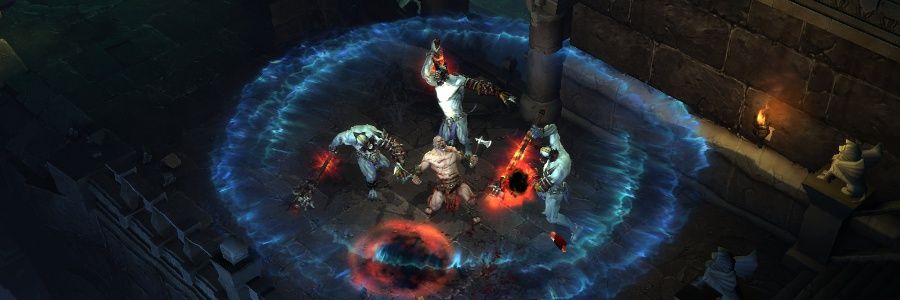
Game Review: Diablo 3

Diablo 3 is out. But is it a game? Or is it the most brilliant money making scam in internet history?

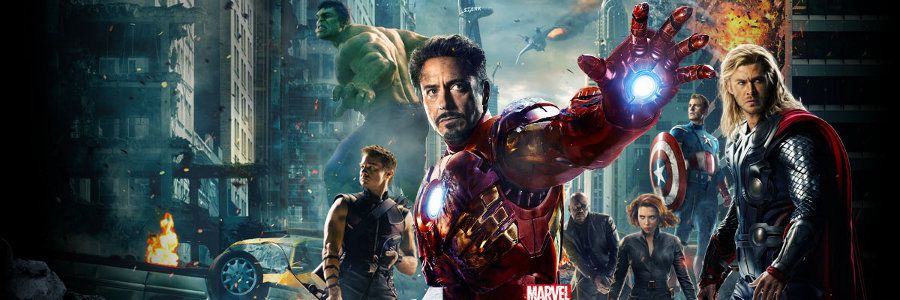
Movie Review: The Avengers

Okay, okay, I posted my Avengers review. Get off my back already, geez.

The Most Important Comic Book You've Never Heard Of

Action Comics #1. Detective Comics #27. Why is All-American Men of War #89 as important as these great comics -- and why have you never heard of it?.

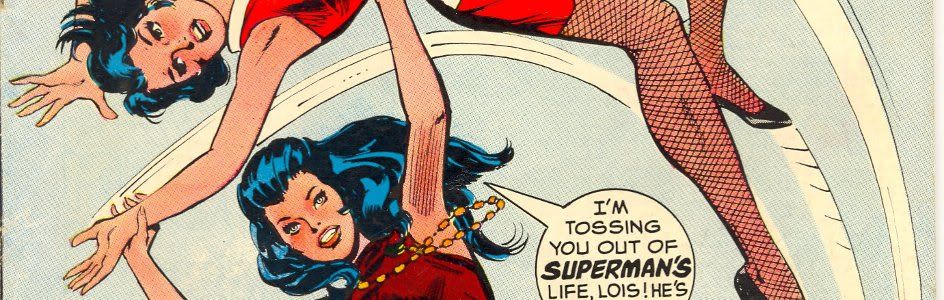
Tales From the Vault: Lois Lane #93

If you thought Superman was a total tool before, you ain't seen nothing yet.

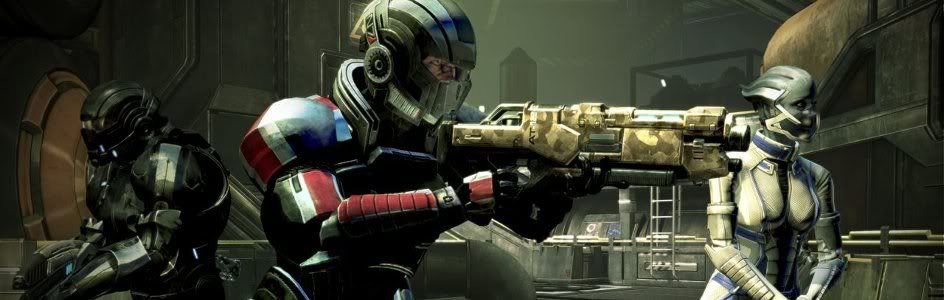
Mass Effect 3: The Official Review

Mass Effect 3 isn't the end of the world, it just portrays it.

Showing posts with label video games. Show all posts

Tuesday, June 19, 2012

Game Review: Diablo 3

This is going to be an interesting experience for me, because my review of the new video game Diablo 3 isn't really going to have anything to do with the game itself. But that is fairly fitting, because with Diablo 3, Blizzard has delivered a product that has almost nothing to do with the game itself either.

Before we get into the meat of the review, then, let's get the game stuff out of the way: it's fine. It's fun even. Diablo 3 pretty much has everything Diablo 2 had, except with graphics and an interface that are a decade better. If you enjoyed playing Diablo 2, chances are you will enjoy playing Diablo 3, which is basically the greatest version of Gauntlet ever created. It's fine.

Unfortunately, though, creating a fun game just isn't enough for the folks at Blizzard these days, because instead they've created what is either a revolutionary new gaming model that will change how people play for the next decade or more, or they've created the ultimate online pyramid scheme. Or both.

At issue is a little thing you may already have heard about in regards to Diablo 3, namely the fact that you have to log into the Blizzard servers and play online even if you are playing a solo, single player campaign. There have been a lot of complaints about this and it received a lot of media coverage when the game was released last month, but after playing Diablo 3 for a few weeks, I can assure you that as far as Blizzard is concerned, this is definitely a feature and not a bug. And it also drives every single facet of the gaming experience.

That's because here's a deceptively simple reason Blizzard makes you play online: You can't really play the game otherwise. Blizzard has designed the game in such a way that even if you could play it offline, you couldn't, because at higher difficultly levels you are required to interact with other payers in one way or another to progress through the game. And they've brilliantly set this up so that most of that interaction takes place at the true heart of Diablo 3: The auction house.

See, in Diablo 3, unlike Diablo 2, equipment is randomly generated by the mobs when you kill them. That means that if you want to get a specific item, you cannot, say, do Baal runs over and over again until you get the drop, because the bosses in Diablo 3 have no set loot table. In English, this means that there's never any way of knowing what any monster you fight is going to drop.

And even if you did know, that knowledge would be useless because Blizzard has randomized the stats on all equipment drops. The upshot of this is that when you do get an item, it will have between 1 and 6 random stats from a possible chart of say 15-40 different effects; and each of these stats will then have a random numerical value between 1 and 250 or something.

As you can see, it's all incredibly random, which becomes a major problem when you want to actually get gear that is useful for your character. On lower difficulty levels, finding a piece of gear that boosts one of your stats modestly is enough to get through. But when you get to higher difficulty levels, you need to have gear with stats specifically catered to your character's build. And since finding gear with the exact stats you need is almost literally impossible, the only option players have is to turn to other players who have likewise been getting random equipment they can't use and trade or buy each other's stuff. Aka, the auction house.

Now, here's where things get really interesting. You see, ever since the days of Diablo 2 (and into Blizzard's other big game, World of Warcraft), players have bought and sold items (and gold) on the black market. This has always been technically against the terms of service and if you are caught you get banned, but thousands of players still do it all the time. With Diablo 3, however, Blizzard has decided to co-opt the black market by building it into the game and controlling it themselves, via the brilliantly insidious creation of the Real Money Auction House.

If you want to buy or sell an item for real money, then, you can do it right in game through secure systems that Blizzard has set up themselves. This removes the risk of getting your info stolen by some Chinese hacker. But more importantly, it also potentially makes a mound of money for Blizzard themselves, as they charge a flat $1 service fee for every transaction, along with a 15% additional fee if you sell items using PayPal.

So let's review: Diablo 3 is designed in a way that requires you to use the auction house, and every time you do, Blizzard takes a piece of the action. In essence, Blizzard has designed Diablo 3 in such a way that the entire player base becomes gold farmers working for Blizzard.

Of course, there are some benefits to this for the player. One of the main drawbacks of games like Diablo -- and to a lesser extent MMOs such as World of Warcraft -- is that there's no real purpose to anything. Once you've finished the story of Diablo 3, you can go through it again on higher difficulty levels, but essentially when you buy or find better equipment, there's no actual point to it. Because the only thing having better equipment does is allow you to go through the game easier and quicker... in order to find more equipment. It can be fun, but it's also a pointless, closed loop that eventually becomes tiresome.

The Real Money Auction House, on the other hand, removes this problem in part, because now there is a reason to keep playing to find that better equipment: You can sell it for real American cash on the auction house. Which in a way is an even more brilliant fact from Blizzard's perspective; after all, you have a highly addictive game franchise played by a population known for obsession and then you add to it the possibility of actually making money for playing?

This does affect gameplay in some unexpected ways as well, though. Previously, when you found equipment in a game that you didn't personally need, you would almost always sell it for gold or trade it to other players in order to acquire equipment that you do need. And you can still do this via the regular, gold based auction house in Diablo 3. However, let's say you find some great Monk shoulders, but you are playing a Demon Hunter. Are you going to want to use this to buy a better bow for yourself? Or do you sell the item for real money instead?


Here's a real life example: Yesterday I got lucky and found a legendary helmet called Andariel's Refuge. I was playing on my 59 Barbarian, but I also have a 54 Witch Doctor whom I don't play very much and for whom this helmet was a huge upgrade. So what do I do? Sell it for gold and buy something awesome for by Barbarian? Give it to my Witch Doctor? Or sell it for real money?

Obviously, I sold it for real money, making a cool $10.61 as just a side effect of doing something I was already doing just for fun anyway. And it's an obvious but true fact: once you start making real money for playing a fun game you were already enjoying, it becomes much more enticing to play more and continue playing. In the first week of the RMAH, I cleared just over $30 -- and that was just from stuff I either had sitting around my vault or that I found while leveling up alts, without any dedicated farming involved at all.

But is that a good thing in terms of either Diablo 3 being a good game or the future of gaming itself? Because, make no mistake, if Blizzard ends up making as much money off of this as they seem poised to do, the industry is going to take notice. For instance, that $10.61 I received for the helm was only after Blizzard had already skimmed $2.88 off the top for themselves. And that's just one transaction out of what is probably thousands and thousands every day. Once the money starts rolling in -- Blizzard hasn't yet implemented stuff like buying materials, gold and even characters, which they are going to add later -- how long to you think it's going to take for Blizzard to implement a RMAH in WoW, for instance? And if it does become a successful model, that means you can look forward to a whole new generation of games that, like Diablo 3, are designed from top to bottom around the auction house rather than around, you know, actually making a good game.

It's kind of fun. It's fairly addictive. It's almost satisfying. But is Diablo 3 a good thing for games and gamers?

One thing for sure: It's a great thing for Blizzard's bottom line.

My Grades: As a game it gets an N/A because Diablo 3 isn't really a game at all. As perhaps the most well-crafted way to harness the earning power of gamers and trick millions of players into becoming free labor, it gets either an A+ or an F- depending on your outlook.

Thursday, May 24, 2012

May Answers From the Vault

Welcome back to a very special edition of Answers From the Vault. Why is this edition even more special than all previous special editions? Well, it's because these questions were pretty much all unsolicited. Don't worry, though, they aren't so much of an annoyance that I won't answer them. Let's get right to it and help expand your mind!

Why would my 17-year-old students be involved in a bordering-on-scathing battle about the ending of ME3? - Professor Chesley Wendth

Thanks for the question, Chesley. The basic answer is simple: Because anyone who plays Mass Effect 3 is obligated to get in an argument about the ending. It's one of the unwritten rules of the internet, at least, it was until I just wrote it. 

I covered this briefly in my review of Mass Effect 3, but basically, the entire series is designed around the premise that the player's actions dictate the story, so whatever you decide has major ramifications on how everything plays out. However, while there are technically something like 16 different endings to Mass Effect 3 -- and thus to the entire series -- they are all almost entirely identical. So some angry gamers feel the ending betrays the entire premise of the series and invalidates their 100+ hours of gameplay.

On the other hand, I didn't mind the ending. It may be nit picking to the point of semantics, but the choices you make at the end do drastically effect the Mass Effect universe, you just don't get to actually see it. At the end you have three choices, each of which determines the fate and future of the entire universe in very different ways. For whatever reason, though, BioWare doesn't actually show the ramifications of that choice. Which is annoying and weird. But even though the game plays out as if your choice didn't make a difference, I still feel like the ending upholds the spirit of the story. Affecting the future of the universe is about as big a choice as you could make, after all.

I can understand why some people are pissed, though, as it doesn't provide the kind of clarity fans are used to. It's kind of like the ending of Inception; something big happens, but you have to decide what it was yourself.


Why can Superman shoot lasers out of his eyes? - Avery Houle

Thanks for the question, Avery. Superman, as you may know, is from a planet called Krypton, which is on the other side of the galaxy. Unlike our world, Krypton had a red sun instead of a yellow sun. When Superman arrived on Earth, he discovered that the energy from a yellow sun gives him super powers, which is why he can fly, lift heavy objects and do everything else Superman does.

Because he gets his powers form the sun, Superman is essentially a living solar battery. Just like solar panels on a house, Superman absorbs sunlight and turns it into energy. And since lasers are basically focused beams of light and energy, Superman's heat vision is actually the one power of his that makes the most sense; he's simply channeling all the solar energy he collected and shooting it out of his eyeballs.


After watching Justice League Doom the other day I have a late question for The Vault: Because Bane's exposed rubber tubes make him the most vulnerable super villain in the DC Universe, why doesn't he cover them up with a metal case or something? The whole setup seems kinda stupid. - Rob Lettrick

Good question, Rob. I'd like to say it's because Bane is a moron, but he's actually portrayed as being a super genius. So why doesn't he use his big brain to come up with a better outfit? I'd say because he arrogant enough that he doesn't much care if his tubes get yanked out. The tubes, after all, just feed him the venom drug that gives him his super powers. Without those, however, he's still a genius who has trained his whole like in fighting and other disciplines -- in other words, if his tubes get pulled, he becomes Batman. And Batman does okay.

In the comics, before New 52 erased everything, Bane had apparently stopped using the drug a while ago, meaning the tubes no longer do anything at all. So that's another reason I guess.

I would say that Bane isn't the most vulnerable supervillain in DC, though. That honor probably goes to the Doom Patrol's arch-nemesis The Brain, who is literally just a human brain in a glass jar.


Other then Nick Fury has any other character gone through a race change and did Marvel ever address it? - Ben Milton

This is a timely question, Ben, so thanks. There have been a number of characters who have had race changes similar to Nick Fury's and most have them have happened the same way: In an alternate or new universe. DC, for instance, recently added some ethnic highlights to some of its established characters in the New 52 universe, while Marvel has tweaked other classic characters in their Ultimates universe, much like Nick. Most of these don't really need much explanation other than "it's a different universe."

There are two other types of race changes that happen in comics, though, First, there's the type where a character is replaced by someone of a new race. Examples of this include Blue Beetle at DC (who was killed and replaced by a new Hispanic Blue Beetle) and Ultimate Spider-Man (who again was killed and replaced by a Hispanic kid). it's not really the same thing, of course, as it's a whole new character, but it happens fairly regularly as comic companies try to add diversity without actually coming up with new ideas.

The more interesting -- and by interesting I mean horribly hilarious -- type of race change is when an established character suddenly changes races as part of a storyline designed to highlight "race issues." Sort of a cross between Black Like Me and Batman; maybe you could call this Black Lightning Like Me syndrome. This has happened at least a coupe times I can think of off the top of my head. Punisher, for instance, had a storyline where he went under cover as a black dude, mainly as a way to try out a new street-thug version of Luke Cage.

That was embarrassing. On the other hand, the most famous story like this, from Lois Lane #106, was trying to actually seriously explore racial issues in the early 1970's. They ended up putting Lois in a machine that turned her black for 24 hours, where she then discovered the plight of the African American and delivered some timely lessons on racism to the reader. It's just as bizarre as it sounds, topped off by the amazing fact that the story is called "I Am Curious Black," which of course is a reference to one of the most famous pornos of all time.

The 70's!!!


Thursday, March 22, 2012

Video Game Review: Mass Effect 3

So, where was I?

Oh yeah, reviewing things all up in there. And this time around we've got something pretty epic to review, namely Mass Effect 3, which came out earlier this month after years of build up -- and, according to many sources, provided a great deal of let down.

With that in mind I'm going to cut right to the chase and address the controversy over the ending of the game. For those of you who don't sleep with a controller under your pillow, some fans were upset -- and extremely vocal about it -- over the ending because they felt that, after three games worth of being able to affect every aspect of game play with your decisions, nothing you do at the end has any consequence.

Now, this is not an entirely unwarranted complaint, because, without getting into too many spoilers, all three of the possible end scenarios feature nearly identical build-ups and epilogues. However, at the risk of getting too semantic on y'all, I didn't really have such a big issue with this because while it's true that your decisions don't affect game play much at he end, they do have a huge effect on the future of the Mass Effect universe. It's simply that none of those affects are actually shown to the player.

Granted, I might be splitting hairs, because either way your actual playing experience is going to be nearly identical no matter what you chose at the end. But within the context of the story, your choice literally decides the fate of every living being and civilization in the entire galaxy. And for me, I was into the story -- the feel of the universe -- so much that knowing my decision had such massive consequences was enough, even though I couldn't actually see any of those consequences in-game.

Honestly, I'm not sure that makes any sense, but the bottom line is that while I do wish BioWare had spent a little more time giving us unique endings for each decision so that the experience felt more complete, what they did give us was epic enough for my tastes anyway.

That's because, before you get to the ending, you do have to make major choices that, even if they don't change the ending, drastically change the gaming experience both for the player and for the main character. Like the both the Dragon Age games and the previous Mass Effect games, BioWare has crafted a game that makes you think about the consequences and potential consequences of your actions more than any other game I've ever played.


And the ending aside, those consequences are often dire and permanent. Again, without giving too many spoilers, there was one decision in particular that I had to agonize over and after seeing the terrible consequences of my decision, I felt compelled to replay the previous 45 minutes of the game in order to choose a different option. BioWare must hold the record for the most extended pauses in gaming history, because I often found myself staring at a menu, unable to decide whether to cut off my left hand of my right foot. Sometimes no matter what you choose, something crappy happens and that's why, as the commander, you are called upon to make the tough decisions.

Mutliplayer: Another thing that has a bug up some people's ass is the multiplayer in Mass Effect 3, which frankly I think is pretty sweet. In Multiplayer, you join a four person squad sent to some random outpost to battle Reapers, Geth or Cerberus agents. The actual missions themselves are pretty much always the same, but what's interesting about the system is that playing in multi-player affects your single player campaign. The more missions you complete in multiplayer, the higher your "galactic readiness" score is in single player, which in turn affects which cutscene you get during the ending of the game.

Now, obviously, there are those who don't think multi-player should affect single player. But for me, I found this to be unexpectedly enriching in terms of universe building. As Commander Shepherd, you spend your time on high level missions, protecting diplomats and building coalitions, all while the Reapers are attacking across the galaxy. By playing in multi-player, where you control other, customizable characters, it provides a glimpse into just what is happening on the ground around the galaxy, the soldiers who are buying you the time you need to finish your mission, often with their lives.

Plus, when you get to level cap in multi-player (which, at 20, is not hard to do), you can promote your character to single player, at which point in your single player campaign, Shepherd gains a new war asset -- i.e. your fully trained commando -- to help raise your galactic readiness and military strength more. I found it to be really well thought out over all; even if it lacks a little in variety, it makes up for it by enriching the single player experience even more.


Technical: The graphics are very nice, though there are some random clipping issues sometimes during cutscenes. The game froze on me a couple of times as well, but more irritating were a couple of rare brain farts from BioWare, again during the ending cutscenes. Specifically, the cutscenes showed members of my crew doing things that they could not possibly have been doing due to the fact that I had selected those specific team members to join me for the final mission. I'm not sure how that slipped through.

On the other hand, the game really is pioneering a new type of immersive experience by importing data from the previous games, so that choices you make in Mass Effect 1 or 2 have lasting repercussions; characters that died during my suicide mission at the end of Mass Effect 2 remained dead for me in Mass Effect 3, while they are available for players who made different choices in previous games. It's really amazing.

And the voice acting is stellar.

My Grades: Despite the wonky ending, I still think Mass Effect 3 is a masterpiece. The ending and some of the technical glitches, though, force me to only give it an A- overall. The game does get some bonus points for its inclusive take on sexual and gender issues, though; the gay pilot mourning his dead husband was an interesting subplot and given the testosterone-jacked nature of at least some parts of gaming culture, may be a step in the right direction towards opening some minds.

Tuesday, June 29, 2010

Game Review: Call of Duty: Modern Warfare 2

There's no doubt that Call of Duty 4: Modern Warfare is one of the all-time classic first-person shooters, thanks in large part to the wildly popular online gameplay that allowed millions of people to shoot the hell out of each other while talking trash via headsets. So it was a no-brainer for Activision to come out with the hotly anticipated sequel, Modern Warfare 2. But can it improve on what many thought was a perfect game?

The answer, as it turns out, is maybe, depending on what you consider to be an improvement. The campaign mode, which back in the day used to comprise entire games, picks up where the first left off, with a crack team of black ops guys doing battle against a crazy Russian terrorist. This time, the plot diverges even further from the reality of current politics by imagining a full-scale Russian invasion of America following a massacre of civilians at an airport that is so shocking the game offers you the option of skipping the level. Not that anyone playing this game to begin with is going to select that option. This leads to some really cool levels where you fight block by block through Washington D.C. and suburban Virginia. It's a nice, exciting and challenging storyline which unfortunately suffers, like the rest of the games in the series, from being too short (a few hours of play will complete it).

Of course, when it comes to Call of Duty 6: Modern Warfare 2, the real game is online play anyway. Once again the game picks up where the first left off, replicating the combat system almost exactly. There are, however, a number of twists beyond the simple addition of several fresh maps to play through. The array of weapons is vastly expanded, which in turn leads to a much greater level of customization, which is further enhanced by the ability to choose from a large selection of character traits and abilities called perks. Unlike the first game, you can also choose your killstreak rewards to suit your game play style. All this does lead to some confusion, of course, as every tactic and weapon has a counter to it, making it much more difficult to strategize your game. The upshot is that, to me, the new additions tend to favor those who play with speed and reflex rather than with planning and tactics.


That would be fine if it weren't for the biggest issue to plague online play, one carried over from the original, which is the problem of latency. Modern Warfare 2, like its predecessor, uses a "peer to peer" system of online gaming, which in this case means that the game picks one player's console the host the game on and everyone else connects to it via the ol' internet. As you might imagine, this provdies an unfair advantage to whoever happens to be hosting the game, as well as a smaller but still tangible advantage to those with faster internet connections. There's nothing more frustrating than getting the drop on someone, opening up with a fully automatic sub machine gun right in their face and watching them run right through your hail of bullets and stab you in the face. Then on killcam you get to see the action from their point of view and discover that on their end, your character never even fired his weapon at all -- because of latency, by the time the opponent shows on your screen, on his end, he's already killed you.

Usually the advantage isn't quite that pronounced, but it's often enough of an edge to be able to tell while playing which characters have a technological edge. This, as you might expect, kind of undermines the game to a degree, an issue that is exacerbated by some iffy AI that regulates respawns. The game is supposed to somehow judge a good place to respawn you based on what bits of territory your team controls... or something... but in fact it often dumps you directly into someone's line of fire, out in the open where you die instantly under a hail of dropping bombs from enemy air support or boxed into a death trap where your foolish teammates have gotten stuck. These are what players call spawn kills, and they are a major irritant, as one death can suddenly send you into an irreversible spiral of deaths that are totally beyond your control.

I'm emphasizing the negatives, of course; obviously the game is massively popular (I've racked up over 3000 kills and 2+ days of game play and still rank well below 5 million in the world) and for the most part it's fun. And Activision has added some MMO elements as well, such as questable gamer tags and emblems that give you specific in-game goals to shoot for beyond just killing opponents. But the many positives of this addictive game only help emphasize the unnecessary negatives. Here's hoping that Activision listens to complaints form players and sorts out these issues before Call of Duty 7: Black Ops comes out in November.

My Grades: Console play gets a B for just being too short to make the game worthwhile without the online component. Online play gets an B+ overall, a score which is dragged down by a D for the peer to peer system and an F for the terrible respawn AI. Seriously, this can't be that hard to fix, can it?


Bookmark and Share

Friday, April 2, 2010

Game Review: Final Fantasy XIII

One of the biggest video game releases of the year took place last month when Square Enix debuted the eagerly awaited Final Fantasy XIII. Now, if you're like my brother, you probably wonder how final the fantasy could be if there are thirteen editions of the game (actually 14, since the sequel to Final Fantasy X wasn't XI at all, but rather X part II). But for those unfamiliar with the Japanese series, it is, in fact, very Japanese: the entire line of Final Fantasy games can be seen as a type of Kabuki for your console, as they take similar themes, concepts and characters and rework them into new iterations over and over, meaning that in a way, what we have here is the 13th variation on the "final fantasy".

Still with me so far? If so, good, because this kind of circular thinking is going to be key to any attempt to enjoy Final Fantasy XIII -- as, ironically enough, the game is so amazingly linear that you'll pretty much need no other higher functions to make your way through it and you'll have to resort to tricking yourself to have any fun.

Before I start totally slagging the game, though, let's start off with some of the high points, which by now have been pretty thoroughly touted by those people who did like it. The biggest draw: the graphics are great. Really, seriously, top level great. And these graphics are used in service of a complex and even fairly compelling storyline that eventually grabs your interest and makes you want to see more.

Unfortunately, however, everything about Final Fantasy XIII is designed to serve the propulsion of that storyline. Unlike previous games, which existed within a larger universe for players to explore at their leisure, XIII is as straight-ahead, one-note as possible. There are no zones to explore. No countrysides to wander. No NPCs to talk to. All you have is one possible path -- usually quite literally a narrow path to walk down -- with occasional obstacles to defeat in order to see the next cutscene.

The result, then, becomes less a game and more an extended length movie that you can't actually watch without participating in this illusion of interactivity. But illusion is all it is; in some cases, all you get to do between cutscenes is literally walk twenty feet and press X. The question you end up facing is, do you care enough about the story and the characters to actually slog through the required combat encounters to watch it?


For some people, the answer may be yes, even though the combat system itself is also as flawed as the overall game structure. Unlike previous editions, this time you can only control one character at a time, with the AI playing your other team members based on what configuration of roles you choose. Though you can change configurations at any time, this also means that if your team leader goes down, its game over, which in many encounters limits which characters you can pick to play as team leader and what roles they can be in. Of course, even if you do die, the game doesn't actually end; all that does is require you to retry the fight, meaning that for the most part these fights are empty exercises requiring only the patience to pound your way through them.

All of this might be forgivable if the characters were compelling, but unfortunately, SE has decided to foist one of the worst designed characters in video game history on their fans in the form of the unbearably annoying Vanille. This vapid, irritating teenage girl, who speaks with a ridiculously bogus accent stuck somewhere between New Zealand and Boston, manages to ruin pretty much every scene she appears in and made me seriously wonder about the Japanese pysche, as I have a hard time understanding how a society ends up creating characters like this on purpose. It's honestly that bad. Add to this that one of the other main characters, Snow, is a dead ringer for Bret Michaels, the skeeviest sleezebag in rock history, and that all of his scenes feature some of the absolute worst dialogue ever written in this history of mankind, and it's a wonder that somehow the storyline does eventually become compelling despite itself.


The key word here, of course, is "eventually," which brings us to my final gripe about FFXIII: the designers apparently think we're all complete morons. I say this because, despite the fact that I played straight through (as if there were any other way), often avoided as many fights as the game allows in order to get through it as quickly as possible, it still took me nearly 15 hours to finish unlocking the basic elements of game play. Simple things like being able to picking your team -- or even picking which character you yourself wanted to control -- literally took 15 hours to unlock, while even at the ten hour mark I was still getting tutorial pop-ups as new combat features were unlocked.

SE's response to this will seem typical to anyone who has had the pleasure of dealing with them before.

"We try not to listen to the critics too much. Most of the criticisms have come because the first half of the game is very linear," game director Motomu Toriyama told a British game magazine. "But we've got a story to tell, and it's important the player can engage with the characters and the world they inhabit before letting them loose."

He then added: "We think many reviewers are looking at Final Fantasy XIII from a western point of view. When you look at most Western RPGs, they just dump you in a big open world, and let you do whatever you like... [It] becomes very difficult to tell a compelling story when you're given that much freedom."

Yeah, sorry. My bad. I didn't mean to look at the game from a ridiculous Western point of view where I enjoy stupid things like "freedom." Instead, I appreciate you not "letting me loose" before I have had the chance to experience 15 hours of tutorial play while you subject me to your godawful characters.

If I sound unhappy with the game, well, I think the above quotes tell the entire story of FFXIII. The focus here was for SE to be able to tell their story to you, not for you to actually participate in any kind of interactive way. Interaction apparently was seen as some kind of impediment to be avoided because it might have hindered their ability to set up their convoluted plot, as players might have chosen to do things that were actually fun instead. It's too bad, because the last game in the series, FFXII, allowed much greater freedom in terms of exploring the world and choosing the sequence of events by offering various quests that could be completed in any order -- all without interfering with the storyline, which I distinctly recall seeing in its entirety while playing. Plus, these decisions look especially backwards when compared to such "western" games as Grand Theft Auto VI, which was about as non-linear as you can get while still telling a vastly superior story.

In other words, Square Enix can pretty much bite me. Let's just hope they don't botch Final fantasy 14 as bad as they botched 13.


My Grades: The graphics get an A-. The character designs get a B for everyone except Snow and Vanille; Snow gets a D and Vanile gets a special place in hell. The storyline gets a C for being strangely compelling despite literally hours of navel gazing and utterly horrible dialogue. Thanks to the arrogance of the designers in deciding how to make the least interactive game imaginable, however, these scores all add up to an F for the game as a whole. This is essentially most expensive screensaver ever produced.

Here's a sneak preview of some well rendered emo nonsense:


Bookmark and Share

Tuesday, December 29, 2009

Game Review: Uncharted 2

If you're into gaming, chances are you've at least heard people talking about the newest must-have game in the Playstation 3 library, Uncharted 2. Supposedly some of the best graphics ever, people say. Great game play. Revolutionize the industry with a its mix of blockbuster-level cinematics and unusually sharp writing.

Well, we've finally had a chance to play Uncharted 2 and now we can reveal the facts: it's all true.

Building on the legacy of the classic Tomb Raider franchise, Uncharted 2 follows the adventures of treasure hunter Nathan Drake as he tries to unravel some of history's most unusual mysteries in order to find a legendary mystical artifact. It's a tried and true formula in both games and in cinema, from National Treasure to Indiana Jones and the Crystal Skull. But Uncharted 2 sets itself apart by simply being better than anything that has gone before it.

Okay, maybe not better than the original Indiana Jones film trilogy, but even just watching someone else play the game is a more immersive and compelling experience than anything National Treasure has been able to heave up on the screen. That's mainly because the writing is significantly more engaging than your typical Hollywood blockbuster; while some plot points are a bit obvious (a certain early betrayal is completely unexpected, for instance), the interaction between the characters is believable, which in turns makes even the most outlandish plot points (demon yetis, anyone?) seem believable by extension.

And then there's the graphics. The only way to play this game is on a large, HD television, because anything less would be disrespecting the meticulous work put in by the folks at Naughty Dog. And as you go through the game (which took me about nine hours to complete on normal mode), the graphics, impressive to begin with, only seem to get better and better, with spectacular vistas and realistic weather effects. Some cinematics even approach film-level CGI while, unlike your typical blockbuster film, the fantastically rendered environments are fully interactive.

So what is there to dislike about the game? Well, not much, if anything. The tracking system is a little sluggish (though not as much as in the first game) making some fight sequences a little more difficult than strictly necessary. And... that's it. We haven't had a chance to fully explore the online capabilities, but as far as the central plotline itself, that's about the only downside we were able to come up with. And that's really picking nits.


Grades: The online experience gets an I for incomplete, though it looks good on the surface; we just haven't been able to get the system hooked up to the net yet to try it. Everything else gets an A+ across the board. If you can only play one game in your life, this is the one.


Bookmark and Share

Tuesday, November 24, 2009

Web Review: The Guild Season 3

Now, I know what long time readers are thinking: didn't he already review The Guild? Isn't that the web series about weirdos who play video games all the time and stuff? Firstly, gamers aren't weirdos, they are just like you and me, though probably more like me than you if you get what I mean. Secondly, that review was only for the first episode of season three. Now that the entire season has aired, however, I thought it would be a good idea to go back and review the whole darn thing if for no other reason than to give you guys all a nice sense of closure. You're welcome.

So how was season three? Actually, it was pretty good. It did start off a little slowly; the first two episodes contained a lot of (necessary) exposition that progressed everyone from the dramatic confrontations at the end of season two and set up this season's major conflicts, both within the guild and without. While these first couple episodes did have some funny moments, mainly thanks to the appearance of the new rival guild, the Axis of Anarchy, they were a bit of a slow go, which is too bad considering the series was bringing in a ton of new fans thanks to their viral music video hit "Do You Wanna Date My Avatar" (which actually topped some Eurpopean download sites when it was released over the summer as a tease for season three).


Once the setup was done, however, the season really hit its stride, deftly showing the breakdown of the Knights of Good as internal pressures reduced the guild to almost nothingness before Codex (the alarmingly awesome Felicia Day), thrust into an unfamiliar and unwelcome leadership position thanks to Vork's soul searching walkabout, managed to start pulling things back together, rallying the tropps from their individual meltdowns for an epic PvP faceoff in the final two episodes.

While the individual plotlines for each character were interesting, though, the scenes were routinely stolen by the deliciously evil Axis of Anarchy members during their brief times onscreen. Led by geek king Wil Wheaton as the smarmy and obnoxiously self-satisfied Fawkes, the Axis added a new level of awesomeness to The Guild, particularly in episode four when Codex wanders into their vent channel in the middle of a raid and gets ripped into.

That may be a little bit of inside baseball for those who don't play MMOs, but then again, that's the audience the series is designed for. Another in-joke that kills is episode five's application process, which features clips sent in by fans of The Guild as they apply to join the Knights of Good.

Overall, then, I have to say I thought this was the strongest season to date despite the slow start. The climax nicely ties up the individual plotlines for each character while setting up next season and -- thankfully -- leaving open the door for more Wil Wheaton and, even better, breakout star J. Teddy Garces, who plays in your face cop and in-game healer Bruiser.

More Axis vs. Knights? That's one raid encounter I think all fans of The Guild are looking forward to seeing.

My Grade: The slow beginning was well worth it; as a whole the season gets an A-. You can check out the cathartic final episode for yourself here:

<a href="http://video.msn.com/?mkt=en-us&amp;from=sp&amp;fg=shareEmbed&amp;vid=2090d74c-bc07-4300-916c-4c15520ba718" target="_new" title="&#39;The Guild&#39; season 3 finale">Video: 'The Guild' season 3 finale</a>


Bookmark and Share

Friday, September 18, 2009

Game Review: Marvel Ultimate Alliance 2

At long last, the comic book event of the decade is finally here and the seemingly endless wait is over. And funny thing: it's not even a comic book. No, it's Marvel Ultimate Alliance 2, the most hotly anticipated super hero video game of all time. Lucky for you, I've spent the last few days slaving and toiling over this game in order to bring you all the news you need to know about this game. So what are we waiting for? Let's get right to the review.


Marvel Ultimate Alliance 2
Marvel Comics and Vicarious Visions

For those who have been living in a cave for the last few years (and weren't able to build a Playstation with a BOX OF SCRAPS), Marvel Ultimate Alliance 2 is the sequel to one of the most popular games of 2006. The original was a tour de force action role playing game (in the grand tradition of, for example, Gauntlet) which explored the farthest corners of the Marvel Universe while allowing you to play any number of classic Marvel superheroes (and if you wanted to spring for the character expansion packs, even some villains). For comic fans, it was about the most perfect blend of video games and superheroes that had ever been attempted.

So how does the sequel fare in comparison? Well, for the most part it does pretty well, though there are a few slips here and there. Let's start right up at the top with the storyline.

Unlike the first game, which featured a totally original storyline, MUA 2 uses the infamous Civil War story as the basis for the game's plot. Now, Civil War is one of the most popular (and at the same time, most controversial) comics of the past decade, so this decision makes sense in a lot of ways. Mostly, it allows the game to feel current and relevant to comic fans; as awesome as the first game was, it was very rooted in classic Marvel characters and storytelling. Unfortunately, that's not really how Marvel rolls these days, so even when the game was new it already felt a bit nostalgic (which to be honest was one of its draws for some players such as myself). The new game, then, manages to seem much more contemporary by tapping in to this Civil War setting (and also by incorporating some elements of Brian Michael Bendis's Secret War limited series).

Have no fear, though: if you're one of those people who didn't care for Civil War, you're in luck, because in many ways the version in the game is actually better written than the comic was. A few small changes were made which result in the characters seeming to be, well, more in character than they were in the comic. For example, Cap's first thought when faced with the Superhero Registration Act is to go to Congress and testify against it, and even after he begins his rebellion (triggered by his fight with Maria Hill, which in this version takes place after the act is passed rather than before -- another small but important change) his focus is on trying to convince the voting public to repeal the law. Likewise, the pro-reg group seems more understandable and sympathetic here, thanks in part to Mr. Fantastic sharing his future history theorems with everyone prior to sides being chosen (rather than keeping it to himself until it's too late for anyone to care any more).

From a storytelling point of view, then, the game gets a big thumbs up, because it actually improved upon the source material. I won't give too much more away, but suffice it to say that the lame ending to Civil War is also gone, instead replaced by an outside threat that forces everyone to realize how stupid they are all acting -- a sentiment anyone who has read Civil War can probably agree with.

As nice as the story is, though, adhering to Civil War does cause some issues with the actual game play. Because some characters are important to the storyline, they become unavailable during specific sections of the game. Even if you select the side that the character conforms to (i.e. Captain America is on the anti-registration sid,e of course), you still may not be able to play them. My plan to play Cap through the whole game was derailed when, due to a plot point, he was "unavailable" on my team roster -- and remained that way for about a quarter of the game. Needless to say, this was kind of annoying, and if you want to play other heroes (such as Luke Cage, Mr. Fantastic or Iron Man) you should be prepared to swap them out, because chances are you won't be able to actually play them the whole time.

Another thing that is less inviting in this game compared to the last game is the team bonus. One of my favorite things about the first game was the ability to create your own Marvel hero team, complete with name, roster, logo and special team bonuses. That seems to be completely missing from the sequel. Likewise, the alternate costumes are for appearance only, rather than having different abilities that allowed for more strategy. Instead of each character equipping items for specific boosts, the entire team benefits from the use of items. And the new fusion system -- where each hero supposedly has a unique interaction with any other hero -- is a slight letdown, as there are really just a handful of interactions depending on what type of character you have (i.e. energy powers, martial arts, super strength, etc.).

Beyond the character play, a couple other small things irritated me. Being able to rotate the camera seems like a simple, vital part of pretty much any game these days, but while you can sometimes do it here, other times you get stuck with specific camera angles that make it very difficult to figure out what you're doing (for instance, when a giant truck is blocking your view of the battle). And there are places where the environment conforms to a linear storyline -- there's no reason why I shouldn't be able to, say, walk down that hallway over there or fly up onto that rooftop, but for some reason, I can't do it. Instead, an invisible barrier prevents me from exploring, as if I were playing Castlevania of something.

That's not to say the game isn't enjoyable, though; most of these are fairly minor points. If you liked the first game, chances are you'll like this one too. It looks great and the story is interesting. I do have to add that, on the normal difficulty mode, it didn't seem as difficult as the first game (which itself wasn't particularly difficult). And while the voice acting is uniformly good, watch out for Thor, who sounds eerily like the Ben Franklin from those Ask a Freemason ads on the radio. I'm not sure why they decided to cast Ben Franklin as Thor, but that one voice really doesn't work at all for me. But if little things like this don't bother you, then by all means, grab your shield and start slinging it.

Because Lord knows that Tony Stark needs to be taken down a notch.


My Grade: This gets a B. I thought about slipping it down to a B-, but I suspect that playing this with four people instead of solo is going to be a blast, and that will make up for the disappointments.


Bookmark and Share

Saturday, September 5, 2009

Game Review: Madden 2010

You know, some people just enjoy punishment. Or maybe enjoy isn’t the right word, but there’s a certain guilt that people have that drives them to seek penance, and for some this leads them to debase themselves in all manner of degrading ways. Personally, I’ve never understood this, but last week I discovered myself unintentionally participating in one of the most severe acts of contrition you can undertake. So let me give you this bit of advice: if you ever feel the need to undergo public humiliation, there can be no more complete a venue than trying to win games in Madden 2010 as the Detroit Lions.

Yes, it’s fall and that means the return of America’s most gripping obsession. No, not football, silly – simulated, video game football. And the undisputed dominatrix of the genre is John Madden, who for years has provided casual football fans with just the kind of whippings they’ve deserved. But after playing the newest version for a week, I should warn you: this year, there is no safe word.

Okay, that’s probably taking the metaphor too far (or… not far enough… hmm) but the fact remains that while Madden remains the best football video game in the world, and possibly the best sports video game period, 2010 may have gone just a little overboard trying to top itself. Every year the game adds more and more features in an attempt to both remain fresh and also become as realistic as possible. Madden has said in interviews that part of his intention is to make this as much a football simulator as a game – i.e., he hopes it can actually be used as a teaching tool for people learning the intricacies of the game.

Well, it certainly succeeds on that front. The only problem is, unless you are a hardcore Madden player or a literal student of the game, like an offensive coordinator or something, chances are you’re going to have a harder time playing this version of Madden than you did with earlier iterations. One example can be found in the reworked audible system. In years past, I have done my best Peyton Manning impersonation – line up, check the defense, then audible to one of the three plays preset for such a situation. That took a bit of knowledge about football and some gaming skill, but you don’t need to actually be Peyton Manning to pull it off.

Now, though, when you hit the audible button, a giant menu of different plays pops up, closer to a dozen than three. And you certainly don’t have time to actually check what those plays are, because when you come out of the huddle now (in games against the computer, that is), the timer will speed ahead to 15 seconds left on the play clock unless you are in a situation where you can run down the game clock as well. This means that you have to read the defense, decide to audible, hit the correct play and have your guys shift positions in 15 seconds – and you have to have memorized all dozen different audible calls in advance in order to select the right one.

Now, again, for those hardcore Madden fanatics like the dudes who play it on ESPN for money, this is probably another evolutionary step towards one day actually fusing Madden with real football players somehow. It’s great for the dedicated. But for casual players who just want to bang out a few tough yards in Shawn Merriman’s bloated roid face, it’s a frustrating experience. So too is the tweaked defensive AI, which now excels at reading the quarterback, meaning even if you have Reggie Wayne in single coverage with no help over the top, having Manning throw it deep isn’t going to result in a long gainer but rather is more likely to be a pick. Maybe not if the DB is Ellis Hobbs, of course, but more often than not, which makes it pretty difficult for a casual player to beat the D.

That’s not to say there aren’t some nice improvements this year. The designers have tweaked the rating system for each player so that there’s a bigger gap between A level stars and C level journeymen. And besides the sims actually looking like the real players, then, they play like them too. For example, every single game I played ended up with Joseph Addai getting sidelined due to injury, so score one for the dev team. It’s almost more realistic than the NFL itself.

Some of the other changes are also reasonable. In Franchise Mode, for instance, it’s no longer a simple task to bilk the AI teams out of their best players for pennies on the dollar; the trade system has been beefed up so that the other GMs aren’t all Matt Millen level executives. And the best change is probably is at the line of scrimmage; now when you check to see what routes your players are running, there are decoy routes you can select instead so the person you are playing against can’t easily defend your play calls.

This year also marks the first year the Madden doesn’t do the play calling; instead, it is handled by Chris Collinsworth and some other dude. Collinsworth is pretty good in the booth and I think is a good choice overall, though there are some glitches in the audio track. For instance, if you have the Ask Madden feature up to help you with play selection, Madden and Collinsworth will sometimes talk over each other, making it seem as though Tony Kornheiser is also involved. Also, it’s clear that some of the bits of dialogue are standard and then are mixed and matched to whoever you are playing at the time, meaning Collinsworth sometimes ends up praising complete a-holes like Philip Rivers in a way that no self-respecting journalist or football fan ever would.

Overall, then, it’s a nice enough package, but unless you have the time and interest to really devote yourself to the game, chances are you’ll be better off sticking with an earlier version of the game and letting the real NFL handle the business of serious football.


My Grades: A- for being the best sports game around, but a B for actual playability. At best.


Bookmark and Share