Game Review: Diablo 3

Diablo 3 is out. But is it a game? Or is it the most brilliant money making scam in internet history?

Movie Review: The Avengers

Okay, okay, I posted my Avengers review. Get off my back already, geez.

The Most Important Comic Book You've Never Heard Of

Action Comics #1. Detective Comics #27. Why is All-American Men of War #89 as important as these great comics -- and why have you never heard of it?.

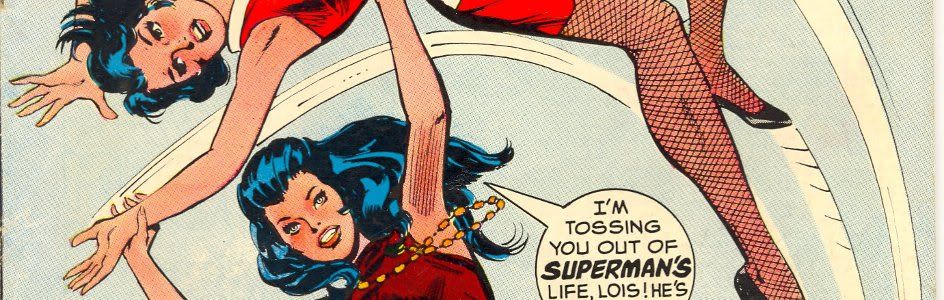
Tales From the Vault: Lois Lane #93

If you thought Superman was a total tool before, you ain't seen nothing yet.

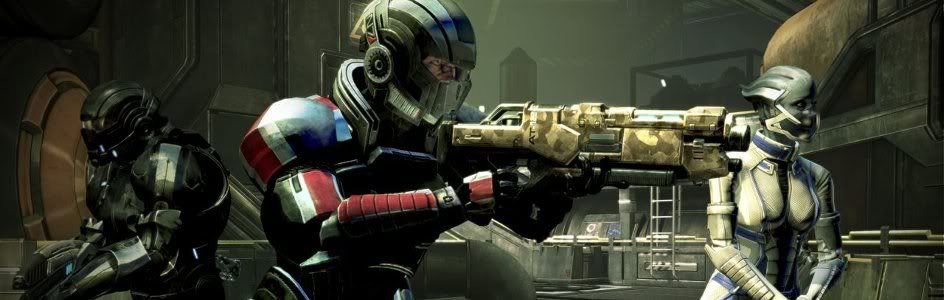
Mass Effect 3: The Official Review

Mass Effect 3 isn't the end of the world, it just portrays it.

Showing posts with label Voices from Artists Alley. Show all posts

Thursday, October 29, 2009

Voices from Artists Alley: COMICBOOK ARTISTS GUILD

Rounding out our weeklong review of the indie presence at the recent Boston Comic Con is a Vault first: an interview with an organization rather than a person, in this case, The Comicbook Artists Guild. Oh, sure, the guild was represented by people, but I think it is best to keep things on a pure artistic level and instead just refer to the representatives of CAG by iconic comic nicknames instead, so that their message doesn't get diluted by focus on the individual. Which is my way of saying that my recorder malfunctioned and didn't record the part where they told me their names. But whoever those men of mystery were, gentlemen, we salute you!

Since there were two men manning the booth at the show, we'll refer to them as The Man and King. Onward!


What can you tell us about the Comicbook Artists Guild?

THE MAN: We’re representing the comic book artists guild, which formed in 2000 -- we’re in our ninth year -- of up and coming, amateur, independent comic creators – writers, artists, inkers, pencillers – who network and collaborate. We do things like throw in on convention tables to make it more affordable for members, collaborate on each other’s projects, the guild does several publications a year that members are invited to contribute to so that you can end up being published for the first time, and generally support each other in the creation of our own independent projects as well.

So it’s anyone working in comics, not just artists? The “artists” in the title refers to artists in the general sense?

THE MAN: Yeah, anyone. I’d say we almost have a 50-50 split between writers and artists. In fact we have a prose project coming out next year that the writers got together and started, and each story has a couple of illustrations from the artists. But it’s more prose focused than the traditional sequential art.

KING: And even on our Facebook page we have different groups, you could be in the artists group, you could be in the writers group, you could join as many as you want, whatever. If you have anything you do in the comic book industry or anything you want to do in the comic book industry, that’s what we’re all about.

THE MAN: And we’ve even got just a few diehard fans who just want to be involved. And it’s very low dues, just $25 for the first year and $20 a year thereafter. And the website is www.comicartguild.com.

And you have regular meetings?

THE MAN: Yep. We have different chapters, the New England chapter meetings take place in Connecticut once a month, usually around the third week of the month on a Saturday or a Sunday at a regular location. There’s a New York chapter that meets regularly, a Midwest and a West Coast chapter and we even have a couple international members in London and Brazil.

And what do you do at the meetings?

THE MAN: Discuss everything from… sometimes we pass around artwork for critiques from artists and writers. Sometimes there’s a little kind of mini-seminar. At a recent meeting, Keith Murphy, our President and co-founder of the guild gave a seminar on how to put together a portfolio presentation for one of the major comic companies. So you have like people giving advice, you do have members who have worked professionally for some of the big indies and even the Big Two.

About how many members do you have in the New England branch?

THE MAN: I don’t think I could tell you how many we have in the New England Branch itself, but all told I think we’re over 100 members, I think 120 or 130.

KING: I’d heard we’re up to about 160.

THE MAN: And the last meeting I went to [in CT], there were about 30 members present.


[editor's note: the banner on the front page is from the CAG Anthology #7 story / series "Agent Unknown" by Robert Sodaro and Chris Torres]


Bookmark and Share

Wednesday, October 28, 2009

Voices from Artists Alley: KARL STEVENS

All week we're presenting the latest batch of mini-interviews with independent comic creators we caught up with at the recent Boston Comic Con. Today we unveil our chat with Karl Stevens, a writer and artist whose work can currently be seen in the Boston Phoenix. Let's see what he had to say for himself, shall we?


Now, you have a comic that’s appearing in the Boston Phoenix, is that right?

That’s correct. It’s called Failure and it’s an autobiographical comic. It’s basically about me living in Jamaica Plain and getting drunk all the time.

Fair enough. And how long have you been working on this?

Well, I’ve been doing comics for the Phoenix since 2005. The first one I did was called Whatever, which was recently published in a collection by Alternative Comics.

And how did you get the gig with Phoenix?

Well, the first work I did was called Guilty, and it got reviewed by the Phoenix. And it was right around the time that they redesigned the paper. I had been doing freelance illustration for them, so the art director asked me to do a comic that was kind of similar to that book, which was about living in Allston. And that became Whatever.

Now, you also have here a third book you’ve published, Anatomy for Artists. That’s basically a how-to art guide?

Yeah, that’s basically a straight illustration project. It’s for artists that want to learn anatomy; I didn’t write it, I just did the illustrations. The idea of the book is that you find the anatomical parts on your own body and that will make it easier to familiarize yourself with them.

Well, that makes sense. So, you had mentioned that Failure is semi-autobiographical. Were your earlier projects like Guilty and Whatever also autobiographical?

Yeah. I mean, I definitely used myself in the first strip [Whatever]. But, yeah, there’s a strong element of that, writing about personal things that have happened to me and the world around me.

And did you study art in school?


Yeah, I studied painting at the art institute of Boston and also at Montserrat College of Art.

And what kind of feedback have you been getting about your work?

Mostly positive. A lot of people seem to like it.

Do you know when Failure will be collected? I know you’re still working on it, but is there a lot left in the storyline?

Maybe in 2010 sometime. Or maybe in early 2011. It’s part of a larger book that I am doing, so… I have this literary agent now and she’s been pitching it around so we’ll see what happens.

Is Failure available to read online, or is it something you can only read in the printed version of the Phoenix?

Yes, you can read it online at the Phoenix website which is phx.com and just look in the comics section, it will pop up. Or you can go to my website, which is karlstevensart.com.

And do you know what you’re going to be working on after you finish Failure?

I’m only like halfway in, so I haven’t really started thinking about it.


Bookmark and Share

Tuesday, October 27, 2009

Voices from Artists Alley: KEITH GLEASON

Next up on our spin through the world of independent comics and the creators who publish them is Keith Gleason. Keith is one of the masterminds behind Hero Envy, a comic that spins out of the live action web sites Swass Adventures. But instead of me just blathering up here in the intro, why don't we get right to the interview and let Keith explain it all himself?


So, what can you tell us about yourself and this project?

Hi, I’m Keith Gleason from Swassadventures.com and we’re talking about our web series “Hero Envy” and the Swass Adventures. Basically what it is, it’s an online webisode series, live actors, all scripted. It’s a show about geeks – it’s for geeks – and how they relate to each other and the adventures that they go in on.

We’ve done like adventures about Transformers, about wrestling, you know, anything geeky, we’ve done it, we’ve talked about it. We’ve made fun of reality shows, Behind the Music and stuff like that. And then basically, we’ve been doing that since 2005 and we decided a year ago to start a comic book based on the series of characters that we’ve built on the web. And the comic book allows us the opportunity to exp[and on their adventures and do stuff that we couldn’t do in the actual webisodes.

So we decided to do it top notch, full color. It’s got a 23 page full story and then a six page back-up story, which is drawn by a separate artist. It’s about one of our side characters called El Diablo, who’s a wrestler character, an imaginary friend and his origin and how he came about. And in the back we have a letters page and an episode guide so if you haven’t seen the episodes online, the comic is designed for a new reader so they can read it and say, “oh, there’s more episodes on line” and they can go check it out. It’s tons of entertainment for the money.

So you publish this print on demand?

Yes, we use Comic Express. We do all our work through them. Great company, every time I’ve had an issue they’ve taken care of it right away, they get back to you right away. It’s a good company.

Now, a lot of people who use on demand end up printing in black and white because it’s a lot cheaper, but you went with full color. Was that much more expensive?

Yeah. It definitely is a little more expensive and that’s why we’re selling at $3.99 versus $2.99. But when I wanted to do this, I wanted to go all out. I wanted to make a comic that was going to stand out. In Artists Alley. So I wanted to really represent how god I think we are. I wanted people to check it out. My mentality is, if it looks good, they probably are more inclined to check it out. That’s why I wanted to go top notch with the comic, and basically find a good artist or a couple god artists.

And when did you publish this first issue?

Recently, probably within the last few months we’ve come out with this. We’re already working on issue two, here are some of the pages from two. We got a different artist because the guy who did the original issue is kinda having a mental breakdown, so instead of waiting for him we started with a second artist. This one’s going to be all set at San Diego Comic Con. It’s going to be a lot of fun and we’re having a lot of fun doing it and making the series go. It’s a lot of fun.


Bookmark and Share

Monday, October 26, 2009

Voices from Artists Alley: EVERETT SOARES

All week we'll be presenting mini-interviews with some of the independent voices in comics, those artists and writers who provide the creative lifeblood of the medium and publish comics for the love of the craft. Today's special guest, who we caught up to at the recent Boston Comic Con: Everett Soares, creator and writer of the small press title Sky Pirates of Valendor. Let's go to the tape!


Hi, Everett. If you don’t mind, could you take a moment to introduce yourself to our readers?

My name is Everett Soares and I am the writer and creator of Sky Pirates.

And is Sky Pirates a title that you publish yourself?

Oh, no. We are published through Free Lunch Comics out of Granby, Connecticut.

So they have a whole line of comics?

Sure. There’s everything from Only in Whispers, which is horror short stories, Beyond the Kuiper Belt, which is science fiction stories, The Blood Rider, which is a vampire western, Pork and Beans and Bigger, which is the humor section of our line. Sky Pirates of Valendor is the action/adventure area of the comics.

And what’s that about? I mean, I can see it’s about sky pirates, but…

It’s about Tobin Mannheim, he’s captain of a ship that gets a job and he discovers that he’s working with his ex-wife. Then, as the job goes on he finds out that everything is going wrong, where his ship blows up, he gets a bounty put on his head, and by issue five he’s ready to fight back.

And you’re the writer? Who does the art for Sky Pirates?

Yes, I’m the writer, the artist is Brian Brindley, out of Texas.

And how did you get in touch with him? Online? Was there a certain site you use to make connections with artists?

You use any site from deviantart to ComicSpace to craigslist… there are different forums you can utilize. I went through about three or four different forums and about 16 artists. Brian was actually number 15. So we were able to work well with each other and that’s pretty much what you have to do. You have to try out artists, find one that really likes your story and wants to put some effort into it.

Now, about your publisher, Free Lunch Comics. Do they mostly publish books by local (New England) creators?

Yes, most of the creators are local to New England. Because Matt Ryan and Steve Kanaras, the writer and artist for a lot of these, they’re based out of Granby, Connecticut. So they’re locals.

And what kind of distribution system does Free Lunch use? Is it mostly online? Or do you go to a lot of shows to get your product out there?

Shows, internet, driving to local shops to see who will buy a batch of books. Because that’s the whole thing – Diamond is very unhelpful when it comes to the independent crowd. Haven is a good distributor to use but sometimes you just gotta hoof it to the nearest store and say, hey, I do this book, I’m local…

What kind of feedback have you been getting on Sky Pirates?

Oh, we’ve been getting really good feedback on the series. We have multiple review on the website, Broken Frontier has done reviews of all the books, Geeks of Doom have done reviews. We’ve been getting quite a bit of good reviews so I’m kind of happy. Those are the ones I can remember off the top of my head, but we do have a website and all of the links are on our website that have done reviews for us. It’s skypiratesofvalendor.com.

Okay, great. Well, thank you very much, Everett, and hopefully some of our readers will check out your work.


Bookmark and Share

Sunday, October 25, 2009

Boston Comic Con Showverview

Long time readers no doubt noticed a curious and perhaps frightening lack of activity at The Vault over the past two days. Desperately -- and correctly -- needing their fix, these stalwart champions have likely begun to worry about my safety. What could be so important, so serious and potentially deadly that it could possibly keep me from talking about comics? Was it an earthquake? Was the server attacked by thirsty monkeys? Was I accidentally shunted into a dangling subplot that only Mark Gruenwald could rescue me from, twenty years after the fact? Well, rest easy, friends, because although your concern is appreciated it is unwarranted. The truth can be revealed: I was getting ready for this weekends comics extravaganza, Boston Comic Con.

Held for some reason in the basement of the Back Bay Expo Center (though I was assured that it is moving to larger and more prestigious facilities before the next show), this year's Boston Comic Con was a two day affair and featured appearances by a horde of creators both famous and unknown. It also had a decent, if somewhat compact, dealer room that provided some interesting bargain hunting; and perhaps most importantly, it provided fans of comics to let their hair down or, better yet, pull it up under a cowl or or themed headpiece. Thanks no doubt in part to the proximity to Halloween, this year's show bordered on a costume party that included not one but two female Captain Americas as well as what appeared to be a themed date night (best costumes and couple of the night was a toss up between an excellent Green Arrow/Black Canary team and an equally impressive Scarlett/Snake Eyes duo which managed to top the film versions by excluding unnecessary gigantic fake lips).

But the highlight of the day was undoubtedly the creators in attendance. Among the many notables were Cliff Chiang, Khoi Pham, Geoff Darrow, David Mack, Mike McKone and Tim Sale. However, the highlights for me involved two of the more old school artists in attendance: Herb Trimpe and Walt Simonson. Simonson, who was accompanied by his equally acclaimed and lovely wife Louise Simonson (and before you ask, no, I didn't have a copy of House of Secrets #92 for her to sign), was nice enough to spend several minutes discussing the origin of his unique signature, which he designed to look like a Brontosaurus after his mother suggested the dinosaur theme to him as a kid. Trimpe, meanwhile, talked at length about the creation of Wolverine, chalking it up to luck of the draw; out of the dozens of Hulk villains he helped create, Wolverine just happened to go on to become super popular. He also lamented the fact that Wolverine had now overshadowed the Hulk himself, even in terms of the commissions and sketches he does at shows, because he feels the Hulk is a much more complex and interesting character, more a victim of circumstance than a hero or villain, while Wolverine is just one-note by comparison. Both gentlemen were generous with their time and friendly to both hardcore fans and those new to comics.

This was evident because both of those conversation took place thank to the attendance of a friend who has never read comics much less attended a show before. While she enjoyed the creativity on display and the seemingly universal friendliness of the pros we talked to, there was one less inviting aspect of the show on display as well -- the juvenile and and many instances inappropriate depictions of women on display at just about every turn. This deserves a longer discussion (which you can expect in a future essay), but though the convention was actually well attended by women and girls, there's also no doubt that steps could certainly be taken to make both the shows and, more importantly, the comics themselves more welcoming to women readers and attendees.

Perhaps the most interesting part of the day was, as you may expect, my trip through Artists Alley. As always, I spent a good deal of time talking to the lesser known creators who self publish or work on small press books and who continue in the business because they just love comics; these people, after all, are the creative center of the art form and it is from this group of creators that the talent of tomorrow will arise. One of the highlights was mys discussion with the creators manning the Comicbook Artists' Guild booth. The CAG is an organization where independent creators meet to discuss the theory of comics craft and the practicalities of self-publishing comics in both print and online. It also acts as a way to meet with potential collaborators and get your work peer reviewed in order to hone your craft. For up and coming creators like myself, it may be an avenue worth looking into, especially if you are in the New York or New England areas, since they hold regular meetings in those locations.

Lastly, a special shout out must be given to longtime friend of The Vault, inker Bob Almond, who as always was in attendance to promote The Inkwell Awards. If you happen to be at a show with Bob, I recommend stopping by his booth with your purchases so he can diagnose at a single glance what art team -- and inker in particular -- worked on the cover. It is a singular skill that helped make this convention one of the more interesting and educational that I have attended in recent years.


Tomorrow: But wait, there's more! What would a show be without interviews with some of the creators who make comics so great? That's right, beginning tomorrow it's another batch of interviews with the Voices From Artists Alley, including a more detailed talk with the people at the Comicbook Artists' Guild.


Bookmark and Share

Wednesday, September 23, 2009

Voices from Artists Alley: TYLER JAMES part 2

We wrap up our week of conversations with the self-publishing set with the second half of our talk with writer and artist Tyler James. In case you missed yesterday's segment, where Tyler talked about his own projects, now is the time to read it. DO IT. Okay, back? Good, then let'stake a look at the second half of our interview, where Tyler discusses a topic near and dear to my heart: how to break into comics. But while I've been talking to you guys about how to submit within the system, Tyler focuses more on how to create your own system to get your ideas seen.

Let's go to the tape!


Scott Harris: I’m not too familiar yet with web comics, but I’m curious just what the business model is. You publish your stories and you’re building your readership, but just how do you make this financially viable? Do you have sponsors that advertise on your site? Or is there some other way?

Tyler: You know, there are a number of different business models. I’m also a two time competitor on Zuda Comics, Super Seed was a competitor on Zuda. There, it’s owned by DC Comics, their business model is they’re looking for comics properties. They post them online for free and then they’ll eventually collect them in a trade and sell those, and also look to exploit them into other media. So that’s what the big DC/Warner Brother model is, that’s their apparatus.

A different business model, and really the self-publishing model, is something that’s been around for the last ten years or so, and that’s comics like PVP. The web comic world is huge. Basically what you do is, you put your comic up for free and support yourself by posting ads for other sites, by selling things like collections of your book at shows or online; and then other merchandise, T-shirts, buttons, bumper stickers, prints, and that’s the business model. And, you know, it’s tough because there’s a lot of stuff out there but on the flip side, some of my comics had more eyeballs on them than some of the lower selling Image titles in the last month. Simply because it’s online, free – it’s exposure.

And I really think, to work for Marvel and DC, the way to do that is not to just submit story after story of your take on Superman because if you look at everybody that’s working on big name comics, they’re bringing an audience with them when they get there. If you don’t have a web presence you’re shooting yourself in the foot nowadays. That’s just what I’ve been seeing. And as I’ve been putting up content on a regular basis, using social media, you find that you can really start to build a name for yourself.

I also teach a class. I’m from Newburyport on the North Shore and I teach a class on creating comics and writing for comics and graphic novels. And I write a column every Monday on the Comic Related website, it’s called Creating Comics: the Art and Craft.

This is something I'm personally interested in: how do you contact and form relationships with artists? Do you meet them at conventions, or do you usually contact artists online?

Sometimes. Chris Gibbs is around the corner; I started chatting with him at a show and he did a pin-up for CounterTERROR for me, which is cool. But there are a couple sites online – Digital Webbing is probably the most popular one, if you just post an ad and they have a section for collaborations and a section for paid work.

A project I’m working on is going to be trying to improve on that process, make it easier to match up artists with writers and writers with artists online. But for now, [it's] posting stuff on forums going on sites like Digital Webbing or Comics Space and just find an artist you like and contact him directly.

I teach a course on writing, and one of the things we do is we look at solicitations for artists. And there’s a right way to do it and a wrong way to do it, and you do see a lot of the wrong stuff out there.

I don’t know if you saw the announcement that Marvel did; in their open submissions for artists, they hadn’t actually picked anyone for five years. Very, very rare is the publisher that will see a script, love it so much that they say we got to get this guy and find an artist for it. The business just doesn’t support that.

So if you really want to write comics, you’ve gotta write comics and get them in comics form. I’d suggest starting with just short stories, five pages, eight pages, learn how to work with artists because that’s a big process. For me, I’m lucky that I have a modicum of artistic talent that I don’t necessarily need anyone to tell stories. Like [Super Seed], I did everything on that one, I did lettering, I did coloring, I did the production, I did everything.

But to do things at a higher level, I can’t do everything. So on Tears of the Dragon, this is gorgeous stuff, I have a colorist in Canada and the artist that I’m working with [in Indonesia]. And this is better than the last thing I did working with an artist.

I think it’s really frustrating to send stuff out and not hear anything back. [But] it’s well within your power to make books happen. And rather than sitting on the sidelines and hoping that someone else is going to make it happen, I’d just encourage you to take a shot at it. Do something small, especially since I assume you don’t have a huge war chest ready to throw at the top caliber artists. But there are people that are out there that will work for art supplies, that will work for credits as long as they know you’re going to be pushing forward with it.

Nobody’s going to sign up sight unseen for the deals of “you’ll get paid on the back end of it so draw my 70 page graphic novel”, because it just takes too long. You’re asking too much of someone’s time for that. But can you get someone to do a five page or eight page story for some art supplies and a little bit of beer money? Yeah. And if you’re willing to put in a little bit more, you can get guys that are really goo. I mean, this artist that I worked with here, he’s doing work for Boom! Studios now. He’s a year or two away from Marvel. He’s that good. And because I’ve had other work out there before, and I’ve worked with other artists, he was willing to give me a pretty good deal on a page rate. A lot less than he should be charging. But that’s because I have work out there.

Now, if you don’t have any work out there, an artist is going to give you, you know, 80 hours or 100 hours of work, so you just gotta think of it from that perspective.

But make it happen. Take control.


Bookmark and Share

Tuesday, September 22, 2009

Voices from Artists Alley: TYLER JAMES part 1

Our final interview from last Sunday's New England Comic Con was so sprawling and epic that I had to split it into two parts. Our subject? None other than writer and artist Tyler James, who has been featured in the Zuda webcomic competition twice. This first half -- the Fellowship of the Ring of Tyler James interviews, if you will -- discusses Tyler's various projects, including those Zuda series as well as many other comics. Here we go!


Scott Harris: Hi Tyler. Would you mind introducing yourself to those few readers out there who aren't already following your work?

Tyler: Hey, I’m Tyler James, I’m the creator-slash-writer-slash-artist of a number of comic titles. Most recently I’ve been working on Over, which is an online graphic novel, it’s a romantic comedy, sort of a cross between Chasing Amy and Forgetting Sarah Marshall and it updates Monday, Wednesday and Friday. I’m also the writer on a fantasy comic called Tears of the Dragon, which updates Tuesdays. And I’m probably most known for my series Super Seed, which is about the world’s first superpower fertility clinic. So, that’s kind of the stuff I do.


So the material debuts on your website and then you collect it into printed form?

I’ve kind of in the past six months really been getting into web comics. Prior to that I had been posting my stuff online just, you know, finish something, put it online and get some feedback. With Over, it’s my first foray into actual being on a regular, scheduled delivery of content and it’s actually a great experience just in terms of putting out work on a regular basis, seeing readership build, getting feedback. So I’m definitely a convert, as opposed to just when you finish a page or finish something you put it online, to actually delivering it as if you were a content provider. People get on your schedule and know, hey, it’s Monday, new page is up.

Over is just the latest in a long line of projects you've put out in the past couple years. Can you give us an overview of the various titles you've worked on?

Well, Over is a story about an indie comic book creator – he writes a fantasy comic that’s pretty popular – it’s been months since he’s written that comic because for the last six months he’s been working on a graphic novel that he thinks is going to be this great, romantic piece and it’s all about his failed relationship with his last girlfriend.

When he finally delivers it to the publisher, his publisher tells him it’s absolute crap and it’s unpublishable and he doesn’t understand how that’s possible. But what he ends up finding out is that there were about five good scenes and in those five scenes, it kind of explains what went wrong with his relationship. And at the same time, he kind of deals with a number of hijinx with all the stupid, crazy things people try to do to get over bad breakups. That’s kind of what Over is all about.

It’s in the vein of some of the more recent comedies like 40 Year Old Virgin or Knocked Up, something like that. It’s my attempt at doing something a little different. But it’s got a lot of inside baseball because the protagonist is a comic creator, a lot of self-referential comic book stuff, so comic creators really dig it but I think comic fans will enjoy it. There’s a lot on inside jokes to enjoy.

Tears of the Dragon is sort of my attempt to do an epic fantasy piece, you know, Lord of the Rings, Willow, Princess Bride are all kind of inspiration for it. It’s a story that starts out with two dragons in love and at the same time, there’s a king who is dying without an heir. And there’s two rivals for the throne, and one of the rivals is a war leader, the other is more of a man of the people. And the man of the people ends up, to try to become king, he goes back to an old custom where before you become king you have to slay a dragon. Now dragons are very rare, but he tracks down a dragon and kills a dragon and he end up killing a dragon that’s the great love of the other dragon and that basically sets off his slow demise. Just in that initial act.

That’s what kicks it off. It’s a fun story. I’m working with a talented artist from Indonseia who’s just knocking it out of the park.

And then there’s Super Seed, it’s about the world’s first superpower fertility clinic and abhout kind of the pros and cons of a world with superheroes. And the idea behind that is, if you look around the world now, people pay hundreds of thousands of dollars to have kids the way they want – sperm donors from Olympic athletes and Harvard PHDs go for top dollar and the idea is, just how much would people pay for Superman to be a donor?

So there’s just a lot of different story ideas to play with there.

And I also have a book that’s a collection of [some] of my different stories. CounterTERROR is kind of an action-slash-horror mashup. I. C. E. is a comic that competed on Zuda in July and it’s sort of a political thriller that deals with the war on terror and the torture debate.


Tomorrow: Part two of our interview with Tyler James focuses on the business side of things. Just how do you go about assembling a creative team and setting up a successful self-published comic? Tyler tells us his secrets!


Bookmark and Share

Voices from Artists Alley: CHRISTOPHER GIBBS

One of the more difficult ways to make your living is by being a commission artist. These are the guys who spend long hours at conventions and shows, doing sketches for people and selling prints both in person and online. Even though it's a tough row to hoe, it's also a way for artists to get their work out into people's hands -- both readers and publishers. Make a name for yourself at conventions with hot artwork, and you might end up landing a bigger gig with someone down the line.

At the recent New England Comic Con, I had a chance to talk with one of these unsung commission artists, Christopher Gibbs, and we briefly discussed some of the challenges of breaking into comics as an artist.


Scott Harris: Thanks for taking the time to talk with us. What can you tell our readers about yourself and your work?

Christopher: My name is Christopher Gibbs. I’ve been an artist struggling in the trenches for a while, so to speak. I’ve been pretty much a commission artist until recently. Most of my stuff for sale right now is sold through serendipityartsales.com. I also sell through ebay, facebook… people find me and buy my stuff.

You mentioned you were mainly a commercial artist until recently. Does that mean you have some projects being published in the near future?

I do, actually. I started doing cards for a company called Monsterwax. I’m also doing cards for Rittenhouse for an upcoming Marvel set. And I have two comics that are in the works at the moment that I can’t really talk details on yet. So, I kind of got real busy in the last two months. But It’s a good busy.

Do you have your own personal website to showcase your artwork?

I do not have a personal website as of yet. Just through facebook and myspace currently, and twitter. And the simple email address Christopher_M_Gibbs@yahoo.com, you can find me anywhere through that.

How did you get started as an artist? Did you study art in school?

I did go to art school ever so briefly, but I kind of realized quickly that I was spending a lot of money to not learn a whole lot, so I moved on from that and went on to school for other things.

I started drawing at a young age. Gave up drawing for about ten years or so and decided that I really wanted to get back into it and kind of devote myself to it full time. Which is what I’ve been doing for the last couple years. Kind of the darker edge of things is where I started out, the horror end, the gothic end. I have been branching out and doing a lot more comic stuff, but it still has my edge to it. I’m bringing a different style into more mainstream comics.

I recently did a pinup/promo piece for [Tyler James’s] CounterTERROR book, which I did the pencils and ink on and he just got back to me with the color work on it yesterday, as a matter of fact. It was a piece that I had done for him a few months back.

Thanks very much for your time, Christopher, and good luck with those upcoming comic projects.


Bookmark and Share

Voices from Artists Alley: ALAN HEBERT, JR.

Today's guest in our weeklong series of interviews with independent comics publishers is Alan Hebert, Jr. Alan is the head writer for HB Comics, which is a bit different from many of the self-published works we've been talking about in that they are ambitiously planning not just one title, but a whole shared universe. But why should I try to explain it when we have the man himself right here to spill the details? Take it away, Alan!


Scott Harris: Thanks for agreeing to chat with us, Alan. What can you tell our readers about yourself and the projects you have here?

Alan Hebert, Jr.: Well, I’m the comic book writer; my brother [Chris Hebert] is the artist for Lazerman and I’m the writer of it. We’ve been doing this about a year now, we’ve got the first four issues out of Lazerman. It’s the story of a hardcore comic geek who ends up actually getting superpowers. So it’s kind of a semi-spoof on superheroes, but also very much a thorwback to the classic Silver Age superheroes. We’ve got a lot of very classic themes going on, some very intentional, some played for comedy, some not. We think we really have a unique bok here.

In addition to that, we also have our second title of this universe, Vindication, which is more of a straightforward team book. They’re in a shared universe; Vindication premiered it at the Chicago Comic-Con last month.

You mentioned the Silver Age influence. Maybe this is a bit to technical, but is it more in the style of the Marvel Silver Age stuff, or more like DC Silver Age material.

It’s kind of both. It definitely has elements of both Marvel and DC. The influence I would say is more of the classic characters. The characters, you have your Supermans, your Wonder Womans, Batmans, your Spider-mans, your Captain Americas, all of them sort of play into that. In some ways its also a tribute to all of them. Because when I say spoof, there’s two ways to spoof. You can do a spoof that’s sort of insulting and a spoof that is more honoring. And we do definitely the more honoring. We’re laughing along with it. And saying, look at how great this is, even if sometimes it’s [silly].

And you’re self-publishing this?

Yes, we self-publish. We’re situated right here in Boston. Like I said, we’ve been doing it for about a year now, and Lazerman 1-4 make up the first full story, the first complete story, and we just came out with 4 a few months ago so we’re really proud to get that done.

Do you have any plans to collect this first Lazerman arc in a trade?

We are, we’re looking at publishers right now, so hopefully we’ll have some quotes back and decide which way we want to go with that. But we’re definitely going to put it in a trade. And then we’ve got issue 5 planned for probably the end of November. Vindication #2 is supposed to come out at the end of October.

Besides Lazerman and Vindication, do you have any other series that are going to take place in this shared universe?


We have two more definite titles planned that will be coming out in the next year or two. And we’d like to keep four in rotation, and maybe some new series here or there. But definitely there will be four.


Bookmark and Share

Voices from Artists Alley: SAM COSTELLO

Another day, another interview with a small press comic creator. And what could be a better compliment to your morning bagel than a brief chat with Split Lip writer Sam Costello? He's like human cream cheese, y'all. Let's get right to it!


Scott Harris: Thanks for taking the time to chat with us, Sam. What can you tell the readers out there about yourself and your work?

Sam Costello: My name’s Sam Costello, I’m a writer of all sorts of things, including comics, based in Providence, Rhode Island. The main comic I have these days is a series called Split Lip. It’s a horror anthology. I write them all but they’re drawn by different artists from all around the world. I post them online at splitlipcomic.com and then also make them available in print.

Is Split Lip self-published, or do you have a publisher you work with?

Basically, it’s self-published. I did have a publishing deal in Australia for a little while but unfortunately that company went out of business, but I don’t hope there’s any relationship between them publishing me and going out of business.

When did you start working on this?

Split Lip debuted in October, 2006, so we’re coming up on the third anniversary now and we’ve published about – I think we’re in the middle of the 27th story on the website right now and it’s about 300, 310 total pages of comics available on the site. But of course, I had started working on it a little before that, I started at the beginning of 2006 actually writing the stories, finding the artists, that sort of thing.

Okay. So the stories debut on the website first, then you compile them into the trades?

That’s correct. The stories get serialized on the website, three pages every Sunday. So you get the new stories coming online, then basically I put out one collection a year. So right now we’ve got Volume One, that came out in 2009; Volume Two should be debuting in probably January, 2010.


And the series is mostly horror?

Yes, it’s basically entirely horror. It’s the kind of thing, if you like Twilight Zone, if you liked the original Tales From the Crypt, you’ll probably like this sort of thing. It’s more about scaring you, more about ideas and mood and tone. You’re not going to find vampires, you’re not going to find zombies, you’re not going to find any of those sort of traditional, archetypal horror concepts. It’s very much about trying to push in some different directions that you don’t find in a lot of modern horror comics.

So it sounds more like it’s more of an atmospheric type of horror, like Poe.

Yeah, there’s definitely some of that. It’s difficult, you’ve got to walk that line between having the atmospherics but also the action. People are looking for certain things out of horror, so some of the stories are a little bit more low key, some of them are a bit volent, some of them are a bit scarier, some of them are a bit more strange or weird. It kind of runs a gamut.


Bookmark and Share

Monday, September 21, 2009

Voices from Artists Alley: JOE HALEY and JOHN HALEY

First up in this series of interviews with the indie and small press creators who are the lifeblood of comics is a double barreled shot of adrenaline straight to the heart: Joe and John Haley. This brother team is... actually, they're not a team so much, since they were appearing at the New England Comic Con to promote entirely unrelated projects. On the other hand, Marvel Team-Up used to have much more random excuses than brotherhood to throw people together, and if it works for Spider-man and Brother Voodoo, it can work for these guys. Let's jump right in and allow these two to tell you about Joe's comic The Underburbs and John's superhero novel Legendary Sidekick -- in 4D!


Scott Harris: Let's start with you, Joe. I'm afraid I'm not familiar with The Underburbs. What can you tell us about that project?

Joe: The Underburbs is a series that I’ve been working on with my friend T. J. Dort since about 2005. We’ve got eight issues out now. It’s basically -- the story that there is this vampire girl – I’m gesturing with my hands, by the way, our [readers] should know that – there’s a vampire girl that’s comes from the evil dimension to try and take over the human world on Halloween night. Basically, she has like this magic scroll, turns people into monsters, but that’s really about as far as she’s plotted out. She just kind of expects people to sort of follow along with her and they don’t, because they’ve got their own problems in real life to worry about. But meanwhile, there’s like a girl who volunteers herself to be turned into a witch to try and stop her.

And you've been self-publishing this since 2005?

Joe: Yes, this is self-published. [Our imprint], Roiling Boil Press is basically a two-man operation, writing and drawing and distributing. We started working on it [in 2005]; the first issue came out in October, 2006.

How about you, John? What can you tell us about your new novel Legendary Sidekick - in 4D!?

John: Legendary Sidekick is about a guy who gets out of college and decides to become a sidekick for a superhero. So, he lives in a world where superheroes exist and it’s fairly normal. He winds up getting in way over his head and basically ends up having to be chosen by God to defeat demons. There’s an interplanetary war… pretty much what it is, it’s a series of journeys through time and space and each journey is meant to read as a different short story almost, where the genre practically changes. You have samurai at one point, cowboys, knights and castles, demonic creatures and then the regular super hero stuff is where we start off.

And this is also self-published?

John: Yes, this is self-published, so I also made up my little company called Dazzlingly Brilliant Books – and that little Chinese character actually means “smile”. I got the name from my Dad, who gave me a saying: if you can’t dazzle them with your brilliance, baffle them with your bullshit. I don’t know if I can say that. You can always replace it with little swirly things and asterisks on the site when you retype it I suppose.

Obviously, you're both long time fans of comic books.

John: Yeah, we just have different ways of expressing it. For example, I did draw scenes from the book by hand, but because my drawings basically suck compared to everything else here, you don’t see them in the book. But I do draw them to visualize, and I don’t want to toot my own horn or anything but one thing I was proud of in this book is that it does create a lot of strong visuals. Which I do with words, where my brother’s art is beautiful.

Joe: Yeah, I do my visuals with visuals.

Lastly, do you have any websites where our readers can check out your work online?

Joe: Yes I do. I’m on deviant art, so it would just be underburbs.deviantart.com. I put a lot of convention sketches, things like that, covers. The actual comic isn’t online, but it can be ordered online.

John: Yep. And I’ve got my book on a site called Lulu.com, which is a self-publishing site for writers, and from there I have some free downloads, short stories and stuff like that. You can see a book review and interview for the book. And, of course, the book itself is on there and on Amazon as well.

Thanks very much guys, I appreciate the time. Hopefully my readers will check our these projects. Good luck.


Bookmark and Share

Voices from Artists Alley

Everyone loves a comic book show. Sure, Comic-Con in San Diego gets all the big press, but for most fans, just heading down to the local hotel complex to browse through a hundred long boxes in the renovated dining hall provides just as big a thrill. And even if you can't afford the big back issues up on the display wall, just getting a look at them in the flesh -- seeing those crisp Golden Age Adventure and More Fun covers, for example -- is exciting enough.

But as nice as rifling through the bargain bin can be, the big draw at most conventions is the chance to meet the people who create these stories. After all, back issues you can get at your local store or online. But when was the last time you were able to buy a conversation with Walt Simonson on eBay? That's an experience that can only be found in one place on Earth, the most magical street this side of Diagon Alley: Artists Alley.

It's not just the big stars who show up at conventions to mingle and mix with the fans, though. Take a look around Artists Alley and you'll likely see a dozen or a hundred unknown faces, sitting at table after table promoting titles and characters you've never heard of. These are the up and comers, the dreamers and the people who work in comics not for fame or fortune but simply because they love the medium. And the sad thing is, while you line up behind forty other fans to have Geoff Johns sign three dozen copies of his latest crossover for some online auction, most of those independent creators on Artists Alley sit alone, ignored, talking mostly to each other while people with DC and Marvel in their eyes wander by in an oblivious fog.

Hey, I've done it too. But in our zest to meet the famous, we sometimes forget that those people once were unknowns too; and that the richest ideas don't come out of editorial decrees, but out of individual visions. As I've discussed before, I learned that myself purely by accident when I passed my time in line for some star by chatting with Alex Robinson, whose little indy book -- Box Office Poison -- went on to become one of the most acclaimed (and one of my favorite) comics of the decade.

So what other voices are out there right now, struggling on the convention circuit to find a few people willing to give their book a try? That's what I'm aiming to find out in my new feature, Voices from Artists Alley. In this (necessarily) sporadic feature, I'll be heading to comic conventions when I have the chance and conducting interviews -- not with the big stars, but with the creators in Artists Alley, the men and women who are chasing the dream. Not a dream of movie rights, action figures and Wizard promotions, but the ultimate dream: making good comics that tell good stories.

Starting tomorrow, then, I'll be presenting a series of interviews I conducted this past Sunday at the New England Comic Convention in Boston, where I had the opportunity to talk to six of these new voices in comics about their projects. I hope you'll give these interviews and these comics a try. And the next time you're at a show and you head down Artists Alley, take a minute to look around.

Because you never known who or what may be there, just waiting for you to find them.


Bookmark and Share