Game Review: Diablo 3

Diablo 3 is out. But is it a game? Or is it the most brilliant money making scam in internet history?

Movie Review: The Avengers

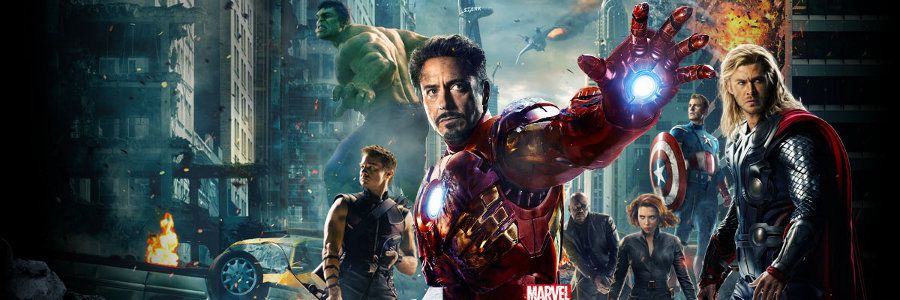
Okay, okay, I posted my Avengers review. Get off my back already, geez.

The Most Important Comic Book You've Never Heard Of

Action Comics #1. Detective Comics #27. Why is All-American Men of War #89 as important as these great comics -- and why have you never heard of it?.

Tales From the Vault: Lois Lane #93

If you thought Superman was a total tool before, you ain't seen nothing yet.

Mass Effect 3: The Official Review

Mass Effect 3 isn't the end of the world, it just portrays it.

Showing posts with label Vertigo. Show all posts

Saturday, August 7, 2010

Trade Reviews: Zot! and Fables

Welcome back to another installment of New Comics Cavalcade, where we take a look at all the newest... wait, what's that? These comics aren't new, they're in trade paperback reprints? Well, what the hell.

Oh, alright, I'm going to go ahead and review these anyway, mainly because they're pretty interesting even if, technically speaking, they are dirty reprints. usually I recommend that people read the originals, but there may be some merits to reading comics in TPB form -- particularly in the case of the first of our two reviews this time around -- so I'll cede the point and worry about just reviewing the content for the most part and not the sinister and demonic practice of reprinting perfectly fine comics that... ah, caught myself this time.

So, let's get to it, first off with a look at one of the seminal independent titles in comics history:


Zot! The Complete Black and White Series, 1987-1991
by Scott McCloud

Here's a little story. Once upon a time -- 1989 to be exact -- I went to this big comic book show and had a bunch of time to kill because Stan Lee wsn't signing until mid-afternoon. So I wandered around and actually talked to creators I didn't know, which is a parenting no-no of course, but there you go. And one of the bloke I chatted with was Scott McCloud, who nicely gave me autographed copies of Zot! #17 and 18. I read them, thought they were great and proceeded to never read another issue. Now, with the publication of this one volume perfect collection, I've finally had a chance to see whether that was a good idea or not and the answer is: whoops.

On the other hand, it's possible I may not have been able to fully appreciate the series when I was a kid, because there's a lot more going on than what is obvious on the page. One nice feature of this collection is that after each issue or arc, McCloud provides commentary about what he was trying to accomplish, how or why he succeeded or failed and other notes on the issues. This is very interesting, especially for fans of his comic book bible, Understanding Comics. He wasn't just winging things; there was a design and purpose to everything in Zot!, even if it wasn't apparent to the reader.

Most interesting, though, for those who have never read the series, are the final few issues, where Zot! takes a sudden and unexpected turn. McCloud changes the focus of the entire series by removing almost every bit of superheroics and action, stranding the cast of characters on our mundane Earth and instead providing readers with a series of detailed character studies about everyone in the cast, even characters who previously had only appeared in a few panels or backgrounds. It's just about exactly opposite of what you would expect from a mainstream series and frankly, it's fantastically brilliant. The only disappointment, really, is that McCloud didn't produce more issues of Zot!, but he had a good reason for ending the series -- he was itching to start writing Understanding Comics instead.

Fair enough.

My Grades: A++. An excelent story only gets better and better, finally approaching greatness by the end. The packaging of this collection also gets an A+ for the insightful commentary by McCloud, as well as for being both compact and affordable. A great buy for any comics fan.

Here's a closer look at the panel from the cover of the TPB, which is from the first issue of the collection (click to enlarge):


Fables vol. 1: Legends in Exile
by Bill Willingham and Lan Medina

Fables, which has been among the most acclaimed comics since it began back in 2002, has an elegantly simple premise: long ago, in the land of make believe, an evil overlord called The Adversary rose up and began conquering the land. Fleeing his destruction, the fairy tale denizens of the enchanted world -- folks like Snow White, the Big Bad Wolf, Goldilocks, etc. -- fled to our Earth, where they have secretly been living for centuries. Cool enough.

But does it live up to the hype? Based on the first volume, by guess is probably. Willingham uses the clever device of a murder mystery to introduce readers to the milieu and the cast of characters, as the Fables chief law enforcement officer -- the aforementioned Big Bad Wolf, in his human guise of Bigby Wolf -- investigates the apparent death of Snow White's lesser known sister, Rose Red. Things, as you might expect, are not quite what they seem, but Bigby proves surprisingly effective as a detective and his relationship with Snow White is interesting.

I didn't think the arc as a whole was quite as effective as it might have been; the big reveal takes place at the end of the next to last issue, meaning the entire last issue basically are people just standing around explaining their behavior in the first part of the story. But while the dramatic aspect was just slightly saggy, and the basic premise hinted at cheese on a couple of occasions, overall it was an interesting set up with a number of interesting characters who are familiar from legend but still have surprises up their sleeve.

My Grades: This first arc gets a B+. The second arc, which I also read but am not going to review right now (in your face!) is a little stronger, though it also has the same kind of structure, with the last issue being a tying up rather than an organic part of the story; that arc also gets a solid B+, though it's very, very close to an A-. One big, big drawback of getting these in TPB form is that you miss out on the graphic design elements of the covers; while the images are reproduced, they are shown without the text or logos, which is a shame as design is very important to the renowned covers on Fables. I suggest just buying the original comics if you can spare the storage space for them; once you get past the first two arcs, you can get them for about the same price as the TPBs anyway.

Saturday, January 30, 2010

Movie Trailers: The A-Team vs. The Losers

They're the A-Team, you know they're soldiers of fortune. They're the A-Team, helping people in need. You can pretend that you're Hannibal, Murdock or Face. Or Maybe B. A. Baracus; you know each one is an ace. Yes, folks, it's the A-Team, those paragons of early-80's action cheese who have inexplicably risen to cult status thanks to legions of pre-teen boys who have now managed to grow to adulthood without outgrowing schlock. Don't get me wrong, if you're a fan of A-Team, I understand where you're coming from and even better, I have good news for you: there's a big budget film version coming out this year and I've got the trailer right here to prove it.

But wait! There's more! I know what you're thinking: how could there possibly be more when we already have an A-Team trailer?! But yes, we also have here the new trailer for The Losers. Now, everyone knows that the A-Team is a crack squad of former government operatives who are now on the other side of the law, taking on missions nobody else will while the government tries to put them away for good. But The Losers have their own unique story: a crack squad of former government operative who are now on the other side of the law, these fighting men take on missions nobody else will while the government tries to put them away for good. Only, their main motive is revenge, not altruism. See the difference?

The Losers, of course, is based on the Vertigo Comics title of the same name, which unfortunately has nothing whatsoever to do with the 70's DC war comic that they stole the name from. That was a huge disappointment to me since I am essentially the only living person who purposely put together a full run of Our Fighting Forces featuring The Losers, but for most comics fans they couldn't care less because the Vertigo version was both popular and critically acclaimed. So while I am weeping at the absence of Una from this project and pining away for Capt. Storm's wooden leg, the rest of comicdom is frothing at a chance to see The Losers come to life on the big screen.

So which trailer wins? Will the epic improbability of Liam Neeson as Hannibal manage to outweigh the spectacle of Jeffrey Dean Morgan (i.e. The Comedian from Watchmen) returning for more DC Comics action? Let's find out... NOW!


<a href="http://video.msn.com/?mkt=en-us&amp;from=sp&amp;fg=MsnEntertainment_MoviesTrailersGP2_a&amp;vid=1b9d070f-aff2-47f6-8a86-9b2b44ec4fc6" target="_new" title="&#39;The Losers&#39; Exclusive Look">Video: 'The Losers' Exclusive Look</a>


Okay, take a minute to towel off.

So what do we think? Well, let's star with the A-Team preview first. As trailers go, this one is pretty great. It manages to capture the essence of the original show, nicely introducing and teasing all the classic elements (even the van!) without being too obtuse for younger viewers to follow. Of course, A-Team isn't exactly brain surgery, so the formula is pretty simple, but for my money they nailed it here. I have a weird feeling the film itself is probably going to suck (though not nearly as much as, say, G. I. Joe or the exponentially suckier Transformers), but the trailer is pretty great. And for all those internet people complaining that the tank sequence at the end of the trailer is cheesy: it's the A-Team. That kind of nonsense is exactly what the show was about, love it or hate it. So quitcher bellyaching.

The Losers, on the other hand, is catering to a much smaller built-in audience and I think has to exhibit broader appeal, because most viewers aren't going to be as familiar with the comic as they are with A-Team. With that in mind, the trailer relies less on familiarity with the characters and more on familiarity with the editing style of the clip: with its freeze frames, one-liners and use of graphics, the trailer resembles nothing so much as a cross between Ocean's 13 and Reservoir Dogs. For a certain segment of the audience, of course, that would be a heady mix indeed. I think they went a little too strong on the comedy aspect in the trailer -- the numerous clips of Chris Evans's wisecracking commando began to resemble Ryan Reynolds's excrutiating turn as Hannibal King in Blade III -- but overall I think they've done a pretty good job of making this look like a fun time at the movies. And the presence of current it-girl Zoe Saldana in the cast doesn't hurt either.

My Grades: The A-Team trailer gets, appropriately enough, an A- in terms of catering to its fan base, while it still gets a respectable B for the general public. The Losers also clocks in with a B for me. Though both films are dancing right on the edge of cheesiness, I suspect that A-Team will go headlong over that edge while The Losers might manage to toe the line a little better. Time will tell, but these are both pretty effective trailers overall.


Bookmark and Share

Saturday, August 22, 2009

Breaking the Fourth Wall: Episode 4

To review: Twelve years ago I sent in my pitch for an updated Haunted Tank story in which, a generation after World War II, General J. E. B. Stuart finds himself dealing with a new war and a new tank crew headed by an African-American tank commander. And though the pitch wasn’t picked up by Vertigo at the time, within the past year they did end up publishing a Haunted Tank series based on this premise. Only, I didn’t write it.

So, what was the story I sent in exactly? And how did it differ from what Vertigo ended up publishing? Today we’re going to take a look at how two writers working from the same idea can come up with completely different stories as I compare the details of my pitch with the actual published series written by Frank Marraffino.

[Note: before I go any further I want to reiterate that Vertigo and Marraffino in no way, shape or form “stole” my idea; we just happened to have the same idea at different times. I also want to say that though I have read the first three issues of Marraffino’s five issue series, I have been unable to locate copies of the final two issues, so on some points I will necessarily have to focus more on my own pitch due to incomplete information]

In general, the differences between our two stories fall into three major categories.

1. Setting

This is both the most obvious and the most important difference between our two stories, and in many ways the other differences can be seen to stem in large part from this. When I developed my pitch in 1997, the United States was not currently engaged in any widespread warfare; what military actions we were undertaken (or had recently undertaken) also weren’t really much for tank warfare. The only recent conflict with any widespread tank use was the Gulf War of 1991, but that war was so brief in terms of actual combat that it didn’t really seem like the proper setting. With these factors in mind (as well as some others I will discuss shortly) I decided to set my story in Vietnam.

Marraffino’s story, on the other hand, takes place during the war in Iraq. Echoing my thoughts on the Gulf War, he has chosen to set the story during the actual combat phase of the war, i.e. in 2003, rather than making the story contemporary to when it was coming out in 2008-9. I’m assuming at least that his reasons were similar, anyway – that is, this is the one section of the war where tanks were not only being used widely but also when actual, classic combat situations were taking place. Tank vs. tank or tank vs. soldier battles were happening rather than just a police action with tanks just tooling around as a show of force while they try to avoid land mines.

The effect that setting has on both stories is significant. There are some similarities, of course; the parallels between Iraq and Vietnam are obvious and have been a talking point in discussion of Iraq since day one. In this sense, then, most of the benefits of setting the story in Vietnam are also shared by the setting in Iraq, while the modern setting has several additional benefits, which can pretty much all be summed up with the blanket statement that setting the story in Iraq makes the story more immediate and relevant to modern readers. People reading about Iraq are going to have a more visceral reaction to the material based on the immediacy of the action.

Of course, this also means there is some benefit to setting the story in Vietnam instead: namely, if you don’t want them to have such a reaction. Setting the story in Vietnam instead allows for a more studied take because it removes that immediacy from the equation for both the reader and the writer; people are going to take their preconceptions about the Iraq war into a reading that they probably aren’t going to have about Vietnam. With this in mind, I think that the Vietnam setting probably better suited the story I was planning to tell than an Iraq setting would; and likewise, Marraffino’s story seems to be better suited for Iraq (as we’ll see momentarily).

I’d call this difference a wash, then, except I think the modern setting gives the story a certain element of both relevance and legitimacy because of an assumed realism the story gains from being “ripped from the headlines”. So though I think the difference in setting is caused largely because of when we developed our respective pitches, I have to say I think the Iraq setting works better than the Vietnam setting.

2. Characters

One of the other effects setting has on the development of the story is the type of characters it suggests. In the previous section I mentioned that the Vietnam era was more suited to my story, and one of the main reasons is because of what it allowed me to do with my African-American tank commander, Jeb Stuart Gray.

In my story, Jeb Gray was the son of the original Haunted Tank’s black member, Gus Gray, and was named for both the original tank commander Jeb Stuart and their protective ghost. By setting the story in the Vietnam era, it allowed me to craft a complex character who was of a piece with that turbulent political time. I wrote Jeb Gray as an intellectual, a deep thinker who was involved in the nascent black power movement and had become deeply distrustful of the government and what “the man” was selling at the time. Yet, he had been raised to believe in America and that service to the nation was both an honor and a duty. So at the start of our story, he is deeply conflicted, having left put his college education and his political and social beliefs on hold in order to fight in a war he doesn’t believe in for a government he doesn’t believe in.

Likewise, my treatment of General J. E. B. Stuart was influenced in large part through the Vietnam setting. One of the main focuses for General Stuart was the nature of the war itself. The Civil War was a war where both sides passionately believed in the righteousness of their cause, and so for Stuart the details of World War II might have been surprising but the ethos was not. It was another “good war”, one where people believed in what they were fighting for. It was recognizable, honorable. By putting him in Vietnam, then, I wanted the General to be faced not just with a tank commander who challenged his belief system, but with a war that itself inherently challenged his beliefs. So while the two would initially be faced with the obvious black/white conflict, the underlying issue of the war itself – and how it undermines their faith in, well, everything – would eventually become a common ground.

Marraffino’s take is in most ways very different, and again much of this is either caused by or reflective of his choice of settings. His black tank commander, Jamal Stuart, isn’t an intellectual, even an angry one; nor are any of his crew worried too much about philosophical issues. Even though it’s set in 2003, it’s essentially a “post-racial” crew for lack of a better term. Jamal isn’t going to be brooding about civil rights or political injustices; he’s going to be killing bad guys and telling the general to take his outdated racism and jam it up his ass.

Likewise, his General Stuart is not really the type of guy to be worrying too much about the difference in the military ethos between, say, Antietam and Tikrit. He’s really more interested in seeing some action – getting out there and kicking some tail. A major difference between the Stuart of my story and the Stuart portrayed by Marraffino can be seen in their respective ghostly backstories (and here I am taking some details from online reports of the last two issues of Marraffino’s series). In Marraffino’s series, Stuart claims to have become a ghost as the result of a curse dooming him to watch over his ancestors, but we later learn that this is just an excuse for Stuart to pursue his love of adventure and battle.

Some readers have criticized Marraffino for his portrayal of Stuart, specifically his historical details regarding Stuart’s ownership of slaves, but in this case I think Marraffino ‘s take is a pretty good one. Stuart was an adventurer and was known for his exploits; he craved action and the resulting adoration. I think it’s a perfectly valid reading of the character.

It’s not what I was going to do with my Stuart, however. In Haunted Tank #2, Marraffino has Stuart relate the famous incident at Gettysburg where he left Lee’s army blind while he chased glory on a useless excursion with his mounted troops. Lee tells Stuart that “there is a lesson to be learned here”. But it’s clear from his actions in Marraffino’s series that Stuart didn’t actually learn his lesson. In my story, on the other hand, this same event is the key to Stuart’s backstory; essentially, because of this action and the fact that it (arguably) doomed the Confederacy to defeat, Stuart is cursed, becoming a ghost doomed to wander the afterlife until he makes amends for his mistake. My Stuart was someone who was chastened, who had learned his lesson; no longer a thrill seeker or an adventurer, he was a cautious and thoughtful spirit who was earnestly trying to make up for the wrong he had done at Gettysburg.

Again, in terms of the characters, I have to say that Marraffino’s choices lend themselves to a more modern take on the story; at one point the members of the tank engage in, well, a rap battle with the General. Their seeming superficiality appears to be intentional on Marraffino’s part, a comment on the superficiality of our culture in a way; these characters don’t get into deep moral discussions of racism with the General in part because they don’t think of race the same way, but also because they aren’t really capable of that kind of thought to begin with. That’s not to say the issues don’t come up, they are just dealt with differently (for example, there’s a nice sequence where Jamal tries to tell the General why he shouldn’t use the n-word anymore and is completely undermined by his tank crew rapping behind him). While I had a story where the characters were self-aware and thus discussed their differences and the issues, Marraffino has a story where the message is subtext, a subtext created in part because the characters are not self-aware. Obviously, it’s not what I would have done, but I think it’s a perfectly valid creative choice and it may very well resonate more with today’s readers than my story would.

3. Plot


Lastly, one of the major differences between my story and Marraffino’s is the plot. Marraffino’s story essentially treats the burgeoning relationship between Jamal and the General as the plot; that is to say, while there are battles, fights, explosions and encounters, they are pretty much random (as they might well be in the day to day life of a tank in a battle zone) and serve either as background for the conversation or as a prod for the next character bit. The development of the characters and the arc they go through are the narrative force for the series and the action is incidental.

My story was quite different. While the relationship between the characters was the important part, it took place within the context of an action story that also had a complete arc. My hope was to provide a character arc for people interested in character and a straightforward action story for people interested in action. I won’t get into it too much, but basically it had to do with the use of a mystical artifact that the North Vietnamese had obtained and which was being taken to an ancient temple; thanks to the supernatural background of the ghost, the crew of the Haunted Tank ended up being the only ones who could track it down. In the end there were some ninja-monks and the summoning of a dragon along with some mystical ghost-catchers that would give our gang a lot of difficulty.

One of the main uses of setting the story in Veitnam, then, was the ease with which I could introduce the magic elements of the storyline. This was important to me because I wanted to make the General a more active participant in the story; in most of his original appearances he basically did nothing except to show up and give a cryptic warning here or there about enemy troops or upcoming battles. By bringing in mystical enemies that could pose a threat to the ghost, I wanted to make him an integral part of the action instead of just a mascot. After all, he’s supposed to be protecting these guys, not just watching them helplessly as they get shot to pieces.

Marraffino also seems to have been thinking along these lines, but again his solution is very different. While I crafted a plot that would bring in other magic elements, Marraffino settled on a simpler plan: he just gave the ghost the ability to affect the physical realm. In Haunted Tank #3, for example, he runs roughshod over a whole mess of Iraqi tanks, slicing shells in half and running people through with his sword. In essence he can become solid when he wants to and remain a ghost the rest of the time.

Both takes are valid. I tend to want my character work to take place within the structure of a larger storyline, but on the other hand, my pitch probably went a little overboard in some areas. By setting the story in Vietnam, it allowed me to bring in some other DC characters that were in Vietnam, including cameos and supporting roles from the likes of Travis Morgan and Richard Dragon. In retrospect, it might have been better to cut some of this stuff out and focus more on the core story, something that Marraffino is able to do unencumbered by twisty plots and ongoing concerns.

Conclusion


My Haunted Tank was the story of a tank commander caught up in the racial and political turbulence of the 1960’s and a serious ghost looking to make amends for the mistakes of his past. The confrontations and debates between these characters took place over the course of a plot that blended action and magic in order to make the General a more active participant.

Marraffino’s Haunted Tank was the story of a group of typical modern soldiers, caught up in the day to day details of the Iraq War and a ghost more concerned with action than with learning from his mistakes. The post-racial arguments between the ghost and the crew comment as much on the superficial confusion of modern society as on the issues themselves.

It’s interesting for me to compare these stories, because in many instances I think Marraffino and I are dealing with very similar themes and concepts (as you would expect when working from the same concept) but approaching them from almost opposite directions. While I wanted to overtly discuss the issues raised by the core premise, in part by creating characters capable of rationally discussing them, Marraffino would rather covertly comment on them in part by creating characters that are incapable of rationally discussing them. While my story used plot as a major element, Marraffino’s story instead used the setting of Iraq to fulfill many of the same narrative needs; likewise, the more emotionally distant setting of Vietnam suited my more rational characters while the emotionally charged setting of Iraq suits Marraffino’s more visceral story better.

Both, I think, are valid takes on the story; and in a way, I think each is more suited to the time when it was created, as I think my original story would have fit in better with the Vertigo of 1997 than Marraffino’s would have, while the reverse is also true. I can’t say I particularly enjoyed Marraffino’s series, but by the same token I don’t think it was meant to be enjoyed per se but rather was meant as a statement about both the war and modern American culture, and on those fronts I think it succeeded. I can only hope that had my story been published it would have succeeded as well.

Bookmark and Share

Monday, August 17, 2009

Breaking the Fourth Wall: Episode 2

Twelve years ago, fresh out of college, I decided it was time to blow the doors off the comic book industry by introducing it to the world’s newest writing superstar: me. I banged out a couple stories, sent them in to the powers that be and waited breathlessly by the mailbox for the inevitable notice that I had been personally selected by Stan Lee to revamp the entire Marvel Universe.

And in the grand scheme of things, the effort didn’t actually go all that badly; my first submission netted me a request from a major publisher (Vertigo) to rewrite the story and send it back in, incorporating some editorial suggestions so they could take another look at publishing it. Yes, it seemed like I was in business.

Except, of course, I wasn’t. As it turned out, I never did get any of my projects published and that was the highlight of my brief foray into comics. Yet, looking back now, I can see a number of lessons that can be learned from this episode and applied as I launch my second attempt to break into the industry. Having good ideas for stories and being able to write them well is important, but knowing how the business works and how to present those ideas in the proper manner is even more important for someone trying to break in to the industry. Here, then, are Four Lessons I learned last time I tried to become a comic book writer.

Lesson One: Don’t put all your eggs in one basket.

Recently as I was searching the web for comic book writing resources (of which there are very few) I came across one pro who mentioned as set up to an essay that he had presented his editor with 12 pitches, one of which the editor liked. It sounds like a lot, but it jibes with my own experience.

Back in 1997, I put together a total of three pitches. Now, three sounds like an okay number, but the problem was that one of those pitches was for a Marvel property and one was for a DC property, meaning that I only had one actual creator owned pitch that I could just submit to anyone. Now, sure, it’s possible that I might have stumbled into that lucky combination of coming up with a great pitch and actually submitting it to the exact editor who loves it, but simply on a mathematical basis it was a bad idea. Having multiple pitches that you can send to multiple outlets is going to increase your odds. It’s that simple. It might seem like a lot more work, but if one of the stories gets bought by a company I’m guessing it won’t seem like all that much work after all.

Besides the basic math, having more pitches also allows a writer to cover more creative ground. Let’s say you have one nice superhero pitch. The fact is, no matter how great that pitch is, you’re limiting yourself to publishers who do superhero work. By coming up with pitches in multiple genres, you open up the door to new publishers and new opportunities. You may have gotten interested in comics because you wanted to write the coolest Wolverine story ever, but in order to succeed in the business I think you need a broader appreciation for the medium itself and a willingness to explore all the avenues available to you.

As it turned out, not having more pitches ready came back to haunt me, which is the focus of our second nugget of wisdom.

Lesson Two: Embrace networking

It’s instructive to spend some time reading the lettercolumns of your old comic books before you get ready to send in submissions. If you look closely, you’ll soon begin stumbling on names that at the time signified nothing more than just another fan but now are famous within the industry. Mark Evanier, Kurt Busiek, Dave Cockrum – the number of pros who began as fans is too long to list. Wendy and Richard Pini met through a lettercolumn and they not only ended up creating the classic fantasy series Elfquest, they got married to boot.

What’s the point? Well, back in the day, when the only form of communication fans had with comic book creators was just to drop a letter in the mail and hope it got read, the contacts that these fans created still ended up helping them get their foot in the door. Nowadays, with the internet and conventions taking place every weekend, networking with pros is easier than ever. Which is good, because it’s also more important than ever; if Marvel and DC only read proposals from known quantities, then you’d best start getting yourself known.

This is a lesson I learned a little too late. When I received a handwritten letter from an editor at Vertigo saying that she liked my series but wanted to see a few changes made to it, what I had in my hands was networking gold. And I dutifully sent in a revision. But when I didn’t hear back, I let the contact lapse. What I should have done, of course, was send her another pitch for a different project; after all, if she liked my writing, maybe I would find a vehicle for it that better fit their publishing mandate. But because I didn’t have any other pitches to send her (see: Lesson One), I ended up letting go of what could have been my path into the comic world, which was a huge mistake.

Lesson Three: Do your homework

So, why did one of my three pitches gain some traction while the other two went nowhere? There are probably a lot of reasons, but the simplest explanation is that I sent Vertigo a pitch that actually fit what the company was doing, while the other two pitches were random at best and downright dumbass at worst.

For example, one of my favorite comics as a kid was ROM: Spaceknight. Now, Rom was an alien who came to Earth to track down evil shape changers who were eating human brains; he looked and acted kind of like a square version of Silver Surfer. I thought he was a great character that had been sorely neglected, so I came up with a fun pitch for a new series, with a nice hook to replace the defunct wraith angle and some new supporting characters to keep things modern. It was a pretty strong pitch.

Only one problem: Marvel doesn’t own the rights to Rom. As a licensed product, Rom’s publishing rights belong to the toy company that designed him. Because of this, even if my pitch was the comic equivalent of The Bible: Part Two, the editors at Marvel wouldn’t even waste their time reading it to begin with because they couldn’t publish it if they wanted to.

Right there, a third of my entire library of pitches was rendered useless because I had failed to do the most basic research possible. And my third pitch didn’t do much better; it was a Watchmen-style deconstruction of superheroes, only with a 90’s sensibility instead of an 80’s sensibility. It was a fine enough story and pitch, but I sent it to Antarctic Press, which at the time was the home of giant robot comics and manga themed series like Ninja High School along with the occasional indie cartoon such as Alex Robinson's fantastic Box Office Poison (the source for the images accompanying this article; run, don't walk, to your nearest retailer and buy it now!). In other words, they couldn’t have given less of a crap about deconstructing superheroes, which was quite evident in the rejection note they sent me.

Lesson Four: Don’t give up

Okay, that sounds like the most clichéd treacle ever – and it is – but in this case what I specifically mean is, don’t give up when you don’t have to give up.

Looking back on my experience from ’97 and the lessons I’ve laid out here, it’s clear that what I thought was a failure at the time was actually a series of opportunities that I failed to recognize. When I got the positive feedback from the editor at Vertigo, it should have been a breakthrough. But because I didn’t have any other projects ready to follow up with – in part because I hadn’t done my homework about what kind of pitches were viable in that marketplace – I failed to capitalize on the networking opportunity that had presented itself. I became discouraged and ended up going in a different professional direction; I gave up on comics.

But now I realize I didn’t have to. In retrospect, getting my first submission published seems like kind of a pipe dream; but even if the next five pitches had all been rejected by Vertigo, a relationship could have been developed. Heck, even the negative feedback from Antarctic was a positive in a way; any press is good press when you’re trying to get your name out there and even if a company doesn’t like the story they may like the writing or the attitude and give your next pitch a closer look. Plus, negative feedback is still feedback and can be used to help hone your craft. If people don’t like something, there’s usually a reason, and getting a rejection letter can help you figure out what people didn’t like about your project.

So don’t give up when you don’t have to give up, because even things that appear to be setbacks at the time could end up being the step you need to climb up to the next level. If I had realized that at the time, it’s possible you’d be reading my comics right now instead of my blog.

Conclusion

What have we learned, then? To my mind, these are the very basics of breaking into the comic book world. Firstly, develop a large number of properties, preferably in a wide range of genres. Secondly, research the companies you are submitting to so you can choose the correct projects to pitch to them and tailor the pitches to fit their sensibilities. Thirdly, form relationships with people in the industry, even with the editors rejecting you, because the more people who know about your work the better the chance is that someone will like it. And lastly, don’t give up. It’s a pretty simple blueprint, really, but then, everything seems simple once you’ve already figured it out. Now it’s just a matter of executing the strategy, and over the next few weeks I’ll be doing just that -- with you, gentle reader, along for the trip.


Coming Up in Breaking the Fourth Wall: So, now that we’ve learned our lessons, some of you are probably wondering about my nearly-successful pitch to Vertigo. In short, it was an updating of Haunted Tank, but instead of the ghost of J. E. B. Stuart helping his good ol’ boy namesake make it through World War II, it took place a generation later in a more morally ambiguous war, with a new namesake sure to clash with the Confederate general: an African-American tank commander.

If that sounds familiar, it may be because Vertigo just published a Haunted Tank series earlier this year with the exact same premise. Later this week, then, we’ll take a closer look at my pitch and compare it to the actual published story, discussing concepts like simultaneous development and examining how different writers handling the same idea can come up with wildly different stories. See you then.


Bookmark and Share