Game Review: Diablo 3

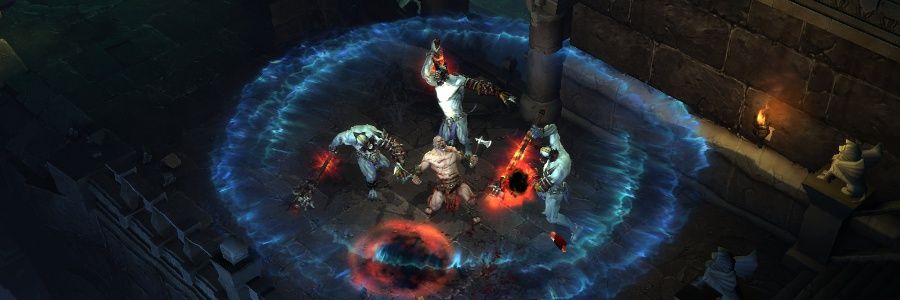
Diablo 3 is out. But is it a game? Or is it the most brilliant money making scam in internet history?

Movie Review: The Avengers

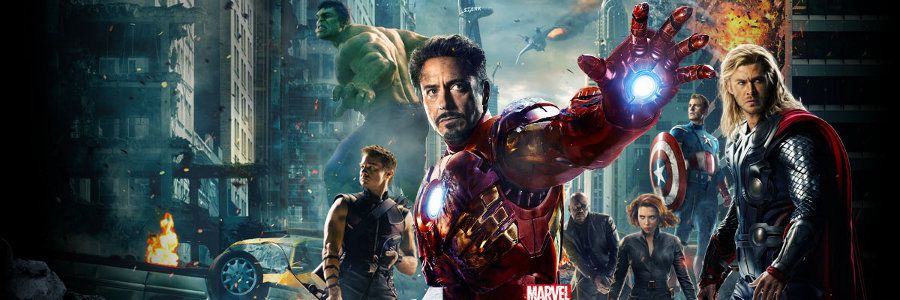
Okay, okay, I posted my Avengers review. Get off my back already, geez.

The Most Important Comic Book You've Never Heard Of

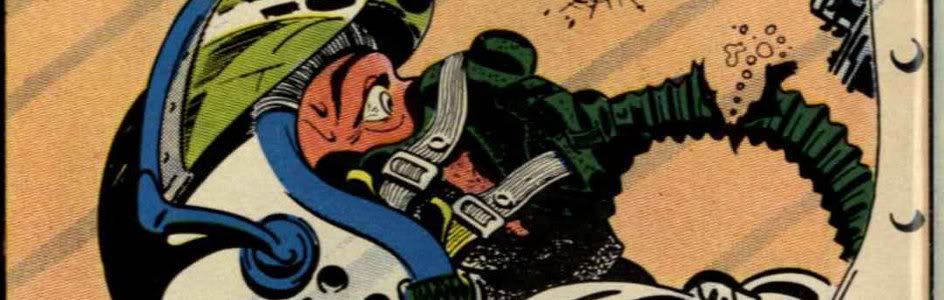
Action Comics #1. Detective Comics #27. Why is All-American Men of War #89 as important as these great comics -- and why have you never heard of it?.

Tales From the Vault: Lois Lane #93

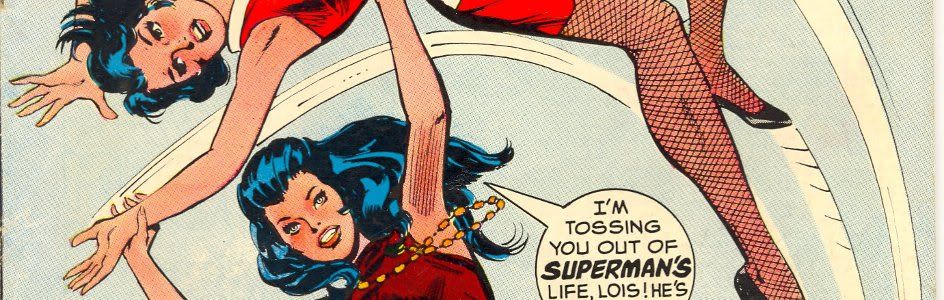
If you thought Superman was a total tool before, you ain't seen nothing yet.

Mass Effect 3: The Official Review

Mass Effect 3 isn't the end of the world, it just portrays it.

Showing posts with label Jim Starlin. Show all posts

Monday, January 25, 2010

Tales From the Vault: MASTER OF KUNG-FU #16

Hey, kids, welcome back to another edition of Tales Form the Vault, where we dig into our vast treasure trove of comics and read a random issue. This week's offering is none other than Special Marvel Edition #16, which features The Hands of Shang-Chi, Master of Kung-Fu. What's not mentioned in this extended title is that the rest of Shang-Chi is also present for the story, so don't worry, this isn't a Che Guevara incident.

But enough dilly dally. Let's get right to the comic!

Details: This issue is dated February of 1974 and has Steve Englehart as writer and lists Jim Starlin and Al Milgrom as artist and co-artist. Wow, Milgrom was messing up comics as far back as 1973? There's also a little credit box saying "Featuring characters created by Sax Rohmer". This is, of course, Fu Manchu, whose trademark mustache I recently attempted to wear with mixed success. A little wiki tells me that Marvel apparently had bought the rights to Fu Manchu for comic purposes, but lost those rights in the 80's, and thus Shang-Chi's father is only shown in shadows from that point and never referred to by name. Huh. I wonder why they bought the rights in the first place?

By the way, the story boasts the terrifically goofy title "Midnight Brings Dark Death!" Of course it does. Plus, the cover blurb describes Midnight as a "Man-Menace." WTF guys, are you even trying?


Synopsis: The issue starts with Shang-Chi standing in Central Park, where he's decided to pitch camp after fleeing from his father in #15. Some New York tough guys decide to kick his butt just because, and instead he wastes them. He apparently has hyper-developed senses, because in one caption it says "The bald one's sweat odor suddenly increases sharply". Real time sweat detection. Hmm. As far as super powers go, that's about the worst I've ever heard of.

A group of bystanders is watching, and when Shang-Chi finishes beating the two dudes, the people watching all decide to also attack him for no apparent reason. See, this is why Ed Koch put together that "I Love NY" ad campaign. Shang-Chi again beats them all down. Then, suddenly, Midnight appears, gives a very brief speech, and vanishes.

This apparently happens as a means to segue into a Midnight origin story, and here's what we learn: in 1973, Starlin couldn't draw children very well. Midnight was just such a badly drawn boy after his parents were killed and his face was maimed in an attack on one of Fu Manchu's villages. Fu (not to be confused with Shaq Fu) took him in so that he could nurse his hate and become a killing weapon, and that's where he met Shang-Chi and they became friends. Is it just me, or does that happen an awful lot? Now I know where I've seen Midnight before: he's Snake Eyes.

Anyway. Now, in the present, Midnight has been sent to kill Shang-Chi because Shang-Chi has left Fu's service, which Fu chalks up to the influence of Shang's "American mother". Midnight doesn't want to kill Shang-Chi, but he is loyal, so agrees to.

Shang-Chi doesn't know any of this just yet, because he's too busy being caught in the middle of culture shock. This involves a belligerent cop who mistakes Shang-Chi for a prank playing hippie, and somehow this requires the cop to pull his gun. This part feels just a weeeee bit contrived, I have to say. In fact, every New Yorker in the issue so far has been a complete tool who has way overreacted and attacked Shang-Chi for no reason other than he's from out of town. In other words, just like actual New Yorkers. Ba-da-bing! Thank you, I'll be here all week.

Just then! Midnight heaves a scroll at Shang-Chi, who clocks the cop and reads it. It's a challenge. The two decide to meet up and start a fight to the death, and seriously, Midnight is pretty cool looking. Sure enough, they fight for a couple pages and start to argue about philosophy when suddenly the cops show up again, saying that "we're not as inept as you think!" Which is an easy thing to say but seems very, very difficult for them to actually prove.

Seems Shang-Chi is wanted for murder from issue #15 and him decking that cop kind of gave away his position. Of course, both Shang-Chi and Midnight immediately vanish even though the cop is looking right at them, with a spotlight on them and a gun drawn, so there goes that whole "we're not inept" argument. During this section the cop refers to midnight as "Boston Blackie" I'm not familiar with this reference, but another quick check of wiki informs me that he was a detective in some books in the teens and twenties and some films in the 40's. Huh. Still in the realm of popular culture in the 70's? I smells me some Roy Thomas.

Anyhow, Midnight and Shang-Chi meet up again and continue their fight and Midnight is pretty much taking it to him hard core. Shang-Chi then realizes that he has been dogging it because he doesn't want to kill his friend, but he further realizes it is inevitable, so he just up and chucks Midnight off a crane. Midnight falls and his cape gets caught on the crane's hook and his neck breaks. Hmm. Seems like there was a lot of that going around in Marvel at that time.

THE END!!!!


Extras: Interesting that they pretty much introduce an arch-enemy for Shang-Chi in this issue, give him an awesome name and costume and compelling back story and then kill him off int he same issue. I'm not sure if that's a terrible idea or a bit of genius. Considering the creative team, I'm leaning towards the former.

And from Bullpen Bulletins we can see that this issue came out at the same time as one of the issues I've already reviewed on here, Power Man #17, so the rest of the Bulletins is the same as that one, i.e. they introduce the Marvel Value Stamp and all of collectordom goes into a silent frothing rage. Yo, someone out there owes me an un-wrecked copy of Incredible Hulk #181. Seriously. Special Marvel Edition #16 and Power Man #17 also both came out the same month as the slightly better known Amazing Spider-man #129. One out of three ain't bad.


My Grades: Midnight gets an A+. The story itself gets a B+, only taking a hit because of the cartoonishly violent actions of all New Yorkers. I know they're trying to play up the cultural differences, but really. Final verdict: somewhat special, but not special enough to warrant the word "Special" in the title of the series. This is more like a Regular Marvel Edition.


Bookmark and Share

Sunday, August 16, 2009

Seven Questions with BOB ALMOND!

Today we are lucky enough to sit down with near-legendary inker Bob Almond. Bob has been working in the industry for 17 years, inking such high profile projects as Black Panther, Warlock and the Infinity Watch and Star Trek. He's also worked tirelessly to ensure that inkers get the credit and recognition they deserve, through his long running website The Bob Almond Inkwell and through his creation of The Inkwell Awards, which annually recognize excellence in inking.

Despite his busy schedule, though, Bob still agreed to talk with us, even providing us with some fantastic artwork (we strongly recommend you click on the pictures and view them at their full size). So without further ado, here's Seven Questions with Bob Almond!

(note: you may only see six questions here. That's one of the dangers of interviewing a professional inker -- he answered one of the questions in invisible ink! I'm pretty sure if you mess with your browser settings long enough, though, you'll be able to see the seventh question. Go ahead and work on that and let us know how it turns out.)


1. Thanks for taking the time to sit down with us today, Bob (metaphorically, over the internet, that is). What can you tell us about your upcoming projects?

The only inking work I have coming out soon will be in Europe, regrettably. I've been assisting my oft-partner Sal Velluto inking the Phantom for Egmont Publishing. It's always a joy to return to familiar ground after twelve years of working with him, especially on such an iconic and globally-recognized character. Sadly, they don't credit me over there.

I also have my ongoing 'Inkblots' column in Sketch Magazine going on two years now. There's not a lot to pimp out right now but that can change in a heartbeat in this business.


2. Marvel is reprinting some of your work from Black Panther in the upcoming Marvel Bromance compilation. When you look back on your work at Marvel so far, what do you personally consider to be the highlight?

The Black Panther work is the highlight, the close second being my first gig inking Warlock and the Infinity Watch (due to the gorgeous Angel Medina pencils and the fact that I'm such a fan of Jim Starlin's work). I was more prepared for BP than Warlock as an artist and Sal & I had enough time together that we were in perfect sync on this job. And Priest allowed input from us and took many of my ideas and request and made them a reality in the subsequent scripts. Between that and acting as unofficial 'continuity cop' and assisting Sal with reference, etc. I felt like more of an active participant in the overall creative process than I usually am, and that's why Priest began crediting us as 'storytellers' instead of just 'pencils' and 'inks'. Together, we achieved being the longest-lasting creative team to work on a BP series and we even got to play with all of his three top rogues (Klaw, Killmonger, and Man-ape).


3. Inkers don't always get as much credit as other creators, either inside or outside the industry, the jokes in Chasing Amy being perhaps the most famous example. Could you give us an overview of just what the job of an inker entails?

The craft of inking was created in the comic book business to expedite production so that's why there's the mystery outside the industry since they have no reference point to relate to. Inking is redrawing the pencil image in ink in an effort to capture what the penciler intended but enhance it. Much like how penciling isn't just drawing but the penciler is also telling a story with sequential art, our job is to elaborate in areas of the drawing and storytelling like giving objects weight and dimension through line weight variations, establish or enhance the light sources, build up contrasts and boost textures for clarity and color, and sometimes even edit the art or fix things like anatomy and perspective. I think of it as akin to us being the bass player to the band's guitarist. They usually grab the spotlight and take the lead but the bassist supports them and helps the overall music to sound better.


4. As part of your efforts to give inkers and the inking art a higher profile, you created the Inkwell Awards. What can you tell us about the awards and the type of feedback you've been getting about them within the industry?

We're trying to draw attention to and spread more information on this misunderstood and often maligned skill, especially with the diminishing focus on inking in general of late. We want to focus on the quality freelance ink artists who perform exceptional work and deserve recognition for this work each year. I'm not against coloring over pencils minus the inks in general, and I understand budgetary matters, but I think it should be more the exception, not the rule, as I find that it rarely looks good but often dark, muddy and lacking something. Good inking is a craft that brings quality to the process. But I admit that I/we have an obvious bias;-)

The feedback has been overwhelmingly optimistic and enthusiastic. It's certainly been a learning process and we keep improving and strive to excel in all areas with each successive year. We've assisted some ink artists in need. And this month we announced that we've established The Dave Simons Inkwell Memorial Scholarship Fund, following the tragic passing of our fellow committee member and friend, to the Joe Kubert School of Cartoon and Graphic Art in order that a talented student in financial need may benefit annually.


5. Beyond your professional interest in comics, you're also a fan and collector and a regular at conventions. Based on your experiences on both sides of the fence, how would you describe the current state of the industry?

There's a lot of 'doom & gloomers' out there screaming about how the sky is falling, the industry is dying and the craft of inking is all but extinct. I'm not so cynical. We're never again going to achieve the record sales of the early '90s. However, as long as we can accept that, I can say that the industry seems relatively healthy considering the economy. Conventions are well-attended by an enthusiastic public and are plugged more than before, as with SDCC coverage on tv, online and in print. Big-budget movies and video games allow the publishers another venue to bring customers in to seek their products. Diversity of titles and genres is still exceptional. But we have to keep trying to bring in the younger readers. The biggest wildcard is the new technology in how the material is created and the medium that the fans can receive it. I cannot predict how comics and the industry will be faring in five let alone ten years but it most-likely will be different. Inking is presently expensive and difficult to do digitally with a wand tool on a tablet or computer screen but there are sure to be modifications. Although the loss in original art as a supplementary income would be a tragedy and another key reason traditional inkers don't go full hi-tech.


7. Lastly, what specific storytelling technique do you use that you could share with new creators to help hone their craft?

Not a storytelling technique (what, and share the secrets of my success?!) but I can share some advice. For starters, the three P's: to practice, persist and be patient (although natural talent comes in handy, too!). It's no guarantee but you have to have the passion (another P) to persevere and to not to do it for the BIG bucks because they_ aren't_there. Diversify your styles and have the equipment like a large scanner and printer, all to be competitive. Learn more than one craft if you can (pencil? digital color? etc.) so as to not be limited and pigeon-holed. And don't ever get too comfortable. Always be prepared for the worst by networking and not have all your eggs in one basket.


(Art Credits: Power Man vs. Doctor Doom, commissioned work re-visioned from the story in Hero For Hire #9, by MC Wyman and Bob Almond; re-created cover of Black Panther #27 by Sal Velluto and Bob Almond; Marvel's The Falcon and DC's Crimson Avenger and crime boss Morgan, commissioned work by Geof Isherwood and Bob Almond; unpublished Archer & Armstrong cover by Sal Velluto and Bob Almond)


Bookmark and Share