Game Review: Diablo 3

Diablo 3 is out. But is it a game? Or is it the most brilliant money making scam in internet history?

Movie Review: The Avengers

Okay, okay, I posted my Avengers review. Get off my back already, geez.

The Most Important Comic Book You've Never Heard Of

Action Comics #1. Detective Comics #27. Why is All-American Men of War #89 as important as these great comics -- and why have you never heard of it?.

Tales From the Vault: Lois Lane #93

If you thought Superman was a total tool before, you ain't seen nothing yet.

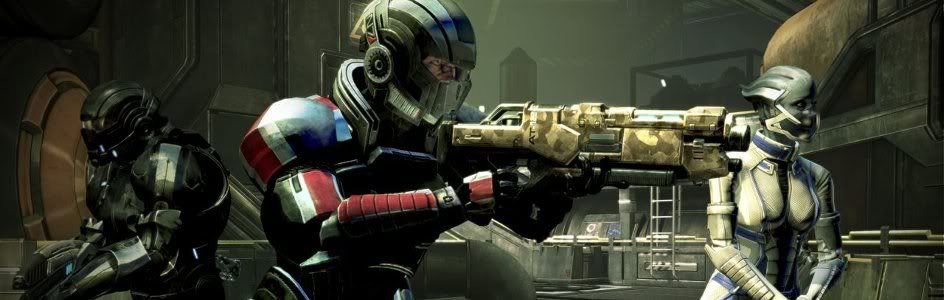
Mass Effect 3: The Official Review

Mass Effect 3 isn't the end of the world, it just portrays it.

Showing posts with label Boston Comic Con. Show all posts

Friday, October 30, 2009

Women in Spandex

Last Saturday I attended the Boston Comic Con and had the pleasure of introducing one of my friends to the world of comic books. She doesn't read comics, she doesn't like comics and she doesn't know anything about comics, but thanks to the kindness of the artists and writers in attendance and especially to the creative energy that filled Artists Alley, my friend ended up having a very good time. All in all, it was a very successful trip.

With one small exception. Passing by the prints and posters arrayed along the walls in front of Artists Alley, we were confronted with picture after picture of scantily clad, huge breasted and impossibly proportioned women arranged in painful and sexually charged poses. Walking past, my friend commented that as a woman, it was sometimes difficult for her to look at comics.

Here's a dirty secret, though: as a man, it's often difficult for me to look at those pictures as well, because they don't just demean women, they demean the audience too. They don't just pander to the lowest common denominator, they actually lower that denominator even further by creating a locker room mentality that alienates fully half of the potential readership of the form. If fans of comics sometimes complain that their medium isn't taken seriously, I say, look around at what we are presenting to the world, because we've earned it.

Of course, complaints about how women are portrayed in comics are nothing new. Current Wonder Woman writer Gail Simone helped bring the issue to the forefront when she was still a fan back in the 90's with her website Women in Refrigerators, which explored the many ways that female characters in comics were often abused, murdered or otherwise traumatized as plot points for their more popular male counterparts. But though the website gained a lot of attention, to the point where the term "women in refrigerators" is now comics shorthand for negative treatment of women in comics, the actual content of the comics in question hasn't changed significantly in the years since. In part this is likely due to the simple fact that, as refrigerator death scene author Ron Marz himself argued with some validity, women aren't the main characters in most of these titles, meaning that as supporting characters they exist primarily to move the plot forward for the main characters, who are usually male.

However, my concern is less with how the characters are written (which is a whole different topic) but more with how they are drawn. Comics is at heart an inherently visual medium, and how women are drawn -- how they are portrayed on the page in the literal sense of the word -- in some ways carries a more immediate and visceral message than the words and actions taken by the characters within the stories. Even on this front, of course, there are some who argue that the unrealistic depiction of female superheroes is part of the form; the male characters, after all, are also exaggerated physically, so it stands to reason that the women would also be given idealized figures as well.

But while this may be true as far as the design of the characters, it does not address the way those characters are depicted in terms of the situations, poses and contexts which they are portrayed in. There's nothing wrong with having beautiful, attractive and fit women in comics, nor in drawing them well; mainstream superhero comics have been doing this for decades. Yet in recent years, artists and editors have begun overtly emphasizing sexuality on covers and in interior shots, not just for characters whose sexuality has long been a central part of their identity (such as Vampirella or Emma Frost), but for any and all female characters regardless of their personality within the stories themselves.

This sort of blanket sexualization has several negative effects. Firstly, it damages the character's credibility with the readers, both within the story and in the larger fan consciousness. Mockingbird, for instance, was at the center of one of the most famous stories about sexual and emotional abuse in the history of comics, yet how seriously are modern readers supposed to take her when she is now best known for gratuitous ass shots? Covers like this send the message that the company itself doesn't necessarily respect their own character -- and often they don't. While the writers of Avengers: the Initiative are trying to rehabilitate the character, for the last several years Tigra has been written pretty much as a punchline, dismissed for her sexuality both by writers and fans alike. Even Mary Jane Watson, who is a well respected fan favorite, has spent more and more time in recent years lounging around in lingerie for no apparent reason, a new attitude towards the character that was perhaps best represented by Marvel's infamous "Mary Jane Bending Over" statue, complete with coquettish grin and visible thong.

This undermining of the characters is only exacerbated when the companies package their female characters together for the sole purpose of showing off their T & A (see: this review of Gotham Sirens) or throw them together into a nominal "women's" title like Marvel Divas, which appropriates the settings and characterizations of Sex & The City and then undermines whatever (debatable) appeal this might have for women by packaging it as puerile fantasy.

This kind of ill-conceived fan-service is the second major negative effect that this kind of objectification has, because by pandering to the type of reader who enjoy this kind of thing, the publishers end up alienating those who do not. This becomes a bit of a self-fulfilling prophecy, of course, because when the only fans left are those who buy these kinds of comics, these kind of comics are the only ones that will sell. If you've devalued your female characters to the point where the only interest that remains in them is sexual, than that is the only kind of viable use left for those female characters.

This also means that in essence you are training new comic readers to expect their female characters to be sexualized. Leaving aside the impact that this may have on younger readers by normalizing these kinds of depictions of women, this has the predictable corollary of training young female readers what not to expect from comics: strong characters, reasonable representation or inclusive role models that they can become invested in as readers. And this is the third, and perhaps most important effect this kind of art has: it drives away potential female readers and creators.

This cannot be overstated. The medium of comics is inherently gender neutral. When I was growing up, I knew any number of girls who read comic strips -- collections of comics like Calvin & Hobbes or Bloom County. Yet none of them ended up making the jump to comic books. Why? Because of the reputation comics have as a boys only club.

Now, part of this no doubt is do the dominant and admittedly violent superhero genre. But much of it can also be attributed to the roles that female characters play within that genre -- not just as plot points or dead girlfriends in refrigerators, but as eye candy utilized by artists (and in some cases writers) for fan-service. Now why would any woman or young girl want to try any of these comics out? And what's true for readers seems even more true for creators. While Simone, who I mentioned earlier, has had success in the field, she is the exception rather than the rule. Historically and presently, mainstream comics have had very few women. Yet, efforts by women publishing in underground or independent comics have proven that there are plenty of women with the talent and skill to succeed in the medium. So why aren't there more female pros working in mainstream comics? Maybe because they don't want to. And why would they want to?

All this is not to suggest that there is no place for sexuality in comics, even in mainstream superhero comics. Of course there is. There are many female -- and male --characters who are sexual by nature and there's no reason to eliminate or downplay this. But by the same token, there are plenty of characters who aren't particularly sexual. There are plenty of female characters who are simply strong, or smart, or brave, or dumb, or cowardly, or weak, or beautiful, or ugly, or kind or evil or just simply boring. And that's the whole point: female characters should be given the same benefits as their male counterparts and be written -- and drawn -- as individual characters, rather than just as props in a sexual fantasy.

Because I think that's all any real comic reader wants: to read about compelling, unique and interesting characters. And once comics start giving us women who fit that description, maybe we'll start seeing more girls picking up comics, more women writing comics and more female fans able to attend comic conventions without being uncomfortable or embarrassed at they way the industry looks at them.


Bookmark and Share

Thursday, October 29, 2009

Voices from Artists Alley: COMICBOOK ARTISTS GUILD

Rounding out our weeklong review of the indie presence at the recent Boston Comic Con is a Vault first: an interview with an organization rather than a person, in this case, The Comicbook Artists Guild. Oh, sure, the guild was represented by people, but I think it is best to keep things on a pure artistic level and instead just refer to the representatives of CAG by iconic comic nicknames instead, so that their message doesn't get diluted by focus on the individual. Which is my way of saying that my recorder malfunctioned and didn't record the part where they told me their names. But whoever those men of mystery were, gentlemen, we salute you!

Since there were two men manning the booth at the show, we'll refer to them as The Man and King. Onward!


What can you tell us about the Comicbook Artists Guild?

THE MAN: We’re representing the comic book artists guild, which formed in 2000 -- we’re in our ninth year -- of up and coming, amateur, independent comic creators – writers, artists, inkers, pencillers – who network and collaborate. We do things like throw in on convention tables to make it more affordable for members, collaborate on each other’s projects, the guild does several publications a year that members are invited to contribute to so that you can end up being published for the first time, and generally support each other in the creation of our own independent projects as well.

So it’s anyone working in comics, not just artists? The “artists” in the title refers to artists in the general sense?

THE MAN: Yeah, anyone. I’d say we almost have a 50-50 split between writers and artists. In fact we have a prose project coming out next year that the writers got together and started, and each story has a couple of illustrations from the artists. But it’s more prose focused than the traditional sequential art.

KING: And even on our Facebook page we have different groups, you could be in the artists group, you could be in the writers group, you could join as many as you want, whatever. If you have anything you do in the comic book industry or anything you want to do in the comic book industry, that’s what we’re all about.

THE MAN: And we’ve even got just a few diehard fans who just want to be involved. And it’s very low dues, just $25 for the first year and $20 a year thereafter. And the website is www.comicartguild.com.

And you have regular meetings?

THE MAN: Yep. We have different chapters, the New England chapter meetings take place in Connecticut once a month, usually around the third week of the month on a Saturday or a Sunday at a regular location. There’s a New York chapter that meets regularly, a Midwest and a West Coast chapter and we even have a couple international members in London and Brazil.

And what do you do at the meetings?

THE MAN: Discuss everything from… sometimes we pass around artwork for critiques from artists and writers. Sometimes there’s a little kind of mini-seminar. At a recent meeting, Keith Murphy, our President and co-founder of the guild gave a seminar on how to put together a portfolio presentation for one of the major comic companies. So you have like people giving advice, you do have members who have worked professionally for some of the big indies and even the Big Two.

About how many members do you have in the New England branch?

THE MAN: I don’t think I could tell you how many we have in the New England Branch itself, but all told I think we’re over 100 members, I think 120 or 130.

KING: I’d heard we’re up to about 160.

THE MAN: And the last meeting I went to [in CT], there were about 30 members present.


[editor's note: the banner on the front page is from the CAG Anthology #7 story / series "Agent Unknown" by Robert Sodaro and Chris Torres]


Bookmark and Share

Wednesday, October 28, 2009

Voices from Artists Alley: KARL STEVENS

All week we're presenting the latest batch of mini-interviews with independent comic creators we caught up with at the recent Boston Comic Con. Today we unveil our chat with Karl Stevens, a writer and artist whose work can currently be seen in the Boston Phoenix. Let's see what he had to say for himself, shall we?


Now, you have a comic that’s appearing in the Boston Phoenix, is that right?

That’s correct. It’s called Failure and it’s an autobiographical comic. It’s basically about me living in Jamaica Plain and getting drunk all the time.

Fair enough. And how long have you been working on this?

Well, I’ve been doing comics for the Phoenix since 2005. The first one I did was called Whatever, which was recently published in a collection by Alternative Comics.

And how did you get the gig with Phoenix?

Well, the first work I did was called Guilty, and it got reviewed by the Phoenix. And it was right around the time that they redesigned the paper. I had been doing freelance illustration for them, so the art director asked me to do a comic that was kind of similar to that book, which was about living in Allston. And that became Whatever.

Now, you also have here a third book you’ve published, Anatomy for Artists. That’s basically a how-to art guide?

Yeah, that’s basically a straight illustration project. It’s for artists that want to learn anatomy; I didn’t write it, I just did the illustrations. The idea of the book is that you find the anatomical parts on your own body and that will make it easier to familiarize yourself with them.

Well, that makes sense. So, you had mentioned that Failure is semi-autobiographical. Were your earlier projects like Guilty and Whatever also autobiographical?

Yeah. I mean, I definitely used myself in the first strip [Whatever]. But, yeah, there’s a strong element of that, writing about personal things that have happened to me and the world around me.

And did you study art in school?


Yeah, I studied painting at the art institute of Boston and also at Montserrat College of Art.

And what kind of feedback have you been getting about your work?

Mostly positive. A lot of people seem to like it.

Do you know when Failure will be collected? I know you’re still working on it, but is there a lot left in the storyline?

Maybe in 2010 sometime. Or maybe in early 2011. It’s part of a larger book that I am doing, so… I have this literary agent now and she’s been pitching it around so we’ll see what happens.

Is Failure available to read online, or is it something you can only read in the printed version of the Phoenix?

Yes, you can read it online at the Phoenix website which is phx.com and just look in the comics section, it will pop up. Or you can go to my website, which is karlstevensart.com.

And do you know what you’re going to be working on after you finish Failure?

I’m only like halfway in, so I haven’t really started thinking about it.


Bookmark and Share

Tuesday, October 27, 2009

Voices from Artists Alley: KEITH GLEASON

Next up on our spin through the world of independent comics and the creators who publish them is Keith Gleason. Keith is one of the masterminds behind Hero Envy, a comic that spins out of the live action web sites Swass Adventures. But instead of me just blathering up here in the intro, why don't we get right to the interview and let Keith explain it all himself?


So, what can you tell us about yourself and this project?

Hi, I’m Keith Gleason from Swassadventures.com and we’re talking about our web series “Hero Envy” and the Swass Adventures. Basically what it is, it’s an online webisode series, live actors, all scripted. It’s a show about geeks – it’s for geeks – and how they relate to each other and the adventures that they go in on.

We’ve done like adventures about Transformers, about wrestling, you know, anything geeky, we’ve done it, we’ve talked about it. We’ve made fun of reality shows, Behind the Music and stuff like that. And then basically, we’ve been doing that since 2005 and we decided a year ago to start a comic book based on the series of characters that we’ve built on the web. And the comic book allows us the opportunity to exp[and on their adventures and do stuff that we couldn’t do in the actual webisodes.

So we decided to do it top notch, full color. It’s got a 23 page full story and then a six page back-up story, which is drawn by a separate artist. It’s about one of our side characters called El Diablo, who’s a wrestler character, an imaginary friend and his origin and how he came about. And in the back we have a letters page and an episode guide so if you haven’t seen the episodes online, the comic is designed for a new reader so they can read it and say, “oh, there’s more episodes on line” and they can go check it out. It’s tons of entertainment for the money.

So you publish this print on demand?

Yes, we use Comic Express. We do all our work through them. Great company, every time I’ve had an issue they’ve taken care of it right away, they get back to you right away. It’s a good company.

Now, a lot of people who use on demand end up printing in black and white because it’s a lot cheaper, but you went with full color. Was that much more expensive?

Yeah. It definitely is a little more expensive and that’s why we’re selling at $3.99 versus $2.99. But when I wanted to do this, I wanted to go all out. I wanted to make a comic that was going to stand out. In Artists Alley. So I wanted to really represent how god I think we are. I wanted people to check it out. My mentality is, if it looks good, they probably are more inclined to check it out. That’s why I wanted to go top notch with the comic, and basically find a good artist or a couple god artists.

And when did you publish this first issue?

Recently, probably within the last few months we’ve come out with this. We’re already working on issue two, here are some of the pages from two. We got a different artist because the guy who did the original issue is kinda having a mental breakdown, so instead of waiting for him we started with a second artist. This one’s going to be all set at San Diego Comic Con. It’s going to be a lot of fun and we’re having a lot of fun doing it and making the series go. It’s a lot of fun.


Bookmark and Share

Monday, October 26, 2009

Voices from Artists Alley: EVERETT SOARES

All week we'll be presenting mini-interviews with some of the independent voices in comics, those artists and writers who provide the creative lifeblood of the medium and publish comics for the love of the craft. Today's special guest, who we caught up to at the recent Boston Comic Con: Everett Soares, creator and writer of the small press title Sky Pirates of Valendor. Let's go to the tape!


Hi, Everett. If you don’t mind, could you take a moment to introduce yourself to our readers?

My name is Everett Soares and I am the writer and creator of Sky Pirates.

And is Sky Pirates a title that you publish yourself?

Oh, no. We are published through Free Lunch Comics out of Granby, Connecticut.

So they have a whole line of comics?

Sure. There’s everything from Only in Whispers, which is horror short stories, Beyond the Kuiper Belt, which is science fiction stories, The Blood Rider, which is a vampire western, Pork and Beans and Bigger, which is the humor section of our line. Sky Pirates of Valendor is the action/adventure area of the comics.

And what’s that about? I mean, I can see it’s about sky pirates, but…

It’s about Tobin Mannheim, he’s captain of a ship that gets a job and he discovers that he’s working with his ex-wife. Then, as the job goes on he finds out that everything is going wrong, where his ship blows up, he gets a bounty put on his head, and by issue five he’s ready to fight back.

And you’re the writer? Who does the art for Sky Pirates?

Yes, I’m the writer, the artist is Brian Brindley, out of Texas.

And how did you get in touch with him? Online? Was there a certain site you use to make connections with artists?

You use any site from deviantart to ComicSpace to craigslist… there are different forums you can utilize. I went through about three or four different forums and about 16 artists. Brian was actually number 15. So we were able to work well with each other and that’s pretty much what you have to do. You have to try out artists, find one that really likes your story and wants to put some effort into it.

Now, about your publisher, Free Lunch Comics. Do they mostly publish books by local (New England) creators?

Yes, most of the creators are local to New England. Because Matt Ryan and Steve Kanaras, the writer and artist for a lot of these, they’re based out of Granby, Connecticut. So they’re locals.

And what kind of distribution system does Free Lunch use? Is it mostly online? Or do you go to a lot of shows to get your product out there?

Shows, internet, driving to local shops to see who will buy a batch of books. Because that’s the whole thing – Diamond is very unhelpful when it comes to the independent crowd. Haven is a good distributor to use but sometimes you just gotta hoof it to the nearest store and say, hey, I do this book, I’m local…

What kind of feedback have you been getting on Sky Pirates?

Oh, we’ve been getting really good feedback on the series. We have multiple review on the website, Broken Frontier has done reviews of all the books, Geeks of Doom have done reviews. We’ve been getting quite a bit of good reviews so I’m kind of happy. Those are the ones I can remember off the top of my head, but we do have a website and all of the links are on our website that have done reviews for us. It’s skypiratesofvalendor.com.

Okay, great. Well, thank you very much, Everett, and hopefully some of our readers will check out your work.


Bookmark and Share

Sunday, October 25, 2009

Boston Comic Con Showverview

Long time readers no doubt noticed a curious and perhaps frightening lack of activity at The Vault over the past two days. Desperately -- and correctly -- needing their fix, these stalwart champions have likely begun to worry about my safety. What could be so important, so serious and potentially deadly that it could possibly keep me from talking about comics? Was it an earthquake? Was the server attacked by thirsty monkeys? Was I accidentally shunted into a dangling subplot that only Mark Gruenwald could rescue me from, twenty years after the fact? Well, rest easy, friends, because although your concern is appreciated it is unwarranted. The truth can be revealed: I was getting ready for this weekends comics extravaganza, Boston Comic Con.

Held for some reason in the basement of the Back Bay Expo Center (though I was assured that it is moving to larger and more prestigious facilities before the next show), this year's Boston Comic Con was a two day affair and featured appearances by a horde of creators both famous and unknown. It also had a decent, if somewhat compact, dealer room that provided some interesting bargain hunting; and perhaps most importantly, it provided fans of comics to let their hair down or, better yet, pull it up under a cowl or or themed headpiece. Thanks no doubt in part to the proximity to Halloween, this year's show bordered on a costume party that included not one but two female Captain Americas as well as what appeared to be a themed date night (best costumes and couple of the night was a toss up between an excellent Green Arrow/Black Canary team and an equally impressive Scarlett/Snake Eyes duo which managed to top the film versions by excluding unnecessary gigantic fake lips).

But the highlight of the day was undoubtedly the creators in attendance. Among the many notables were Cliff Chiang, Khoi Pham, Geoff Darrow, David Mack, Mike McKone and Tim Sale. However, the highlights for me involved two of the more old school artists in attendance: Herb Trimpe and Walt Simonson. Simonson, who was accompanied by his equally acclaimed and lovely wife Louise Simonson (and before you ask, no, I didn't have a copy of House of Secrets #92 for her to sign), was nice enough to spend several minutes discussing the origin of his unique signature, which he designed to look like a Brontosaurus after his mother suggested the dinosaur theme to him as a kid. Trimpe, meanwhile, talked at length about the creation of Wolverine, chalking it up to luck of the draw; out of the dozens of Hulk villains he helped create, Wolverine just happened to go on to become super popular. He also lamented the fact that Wolverine had now overshadowed the Hulk himself, even in terms of the commissions and sketches he does at shows, because he feels the Hulk is a much more complex and interesting character, more a victim of circumstance than a hero or villain, while Wolverine is just one-note by comparison. Both gentlemen were generous with their time and friendly to both hardcore fans and those new to comics.

This was evident because both of those conversation took place thank to the attendance of a friend who has never read comics much less attended a show before. While she enjoyed the creativity on display and the seemingly universal friendliness of the pros we talked to, there was one less inviting aspect of the show on display as well -- the juvenile and and many instances inappropriate depictions of women on display at just about every turn. This deserves a longer discussion (which you can expect in a future essay), but though the convention was actually well attended by women and girls, there's also no doubt that steps could certainly be taken to make both the shows and, more importantly, the comics themselves more welcoming to women readers and attendees.

Perhaps the most interesting part of the day was, as you may expect, my trip through Artists Alley. As always, I spent a good deal of time talking to the lesser known creators who self publish or work on small press books and who continue in the business because they just love comics; these people, after all, are the creative center of the art form and it is from this group of creators that the talent of tomorrow will arise. One of the highlights was mys discussion with the creators manning the Comicbook Artists' Guild booth. The CAG is an organization where independent creators meet to discuss the theory of comics craft and the practicalities of self-publishing comics in both print and online. It also acts as a way to meet with potential collaborators and get your work peer reviewed in order to hone your craft. For up and coming creators like myself, it may be an avenue worth looking into, especially if you are in the New York or New England areas, since they hold regular meetings in those locations.

Lastly, a special shout out must be given to longtime friend of The Vault, inker Bob Almond, who as always was in attendance to promote The Inkwell Awards. If you happen to be at a show with Bob, I recommend stopping by his booth with your purchases so he can diagnose at a single glance what art team -- and inker in particular -- worked on the cover. It is a singular skill that helped make this convention one of the more interesting and educational that I have attended in recent years.


Tomorrow: But wait, there's more! What would a show be without interviews with some of the creators who make comics so great? That's right, beginning tomorrow it's another batch of interviews with the Voices From Artists Alley, including a more detailed talk with the people at the Comicbook Artists' Guild.


Bookmark and Share