Game Review: Diablo 3

Diablo 3 is out. But is it a game? Or is it the most brilliant money making scam in internet history?

Movie Review: The Avengers

Okay, okay, I posted my Avengers review. Get off my back already, geez.

The Most Important Comic Book You've Never Heard Of

Action Comics #1. Detective Comics #27. Why is All-American Men of War #89 as important as these great comics -- and why have you never heard of it?.

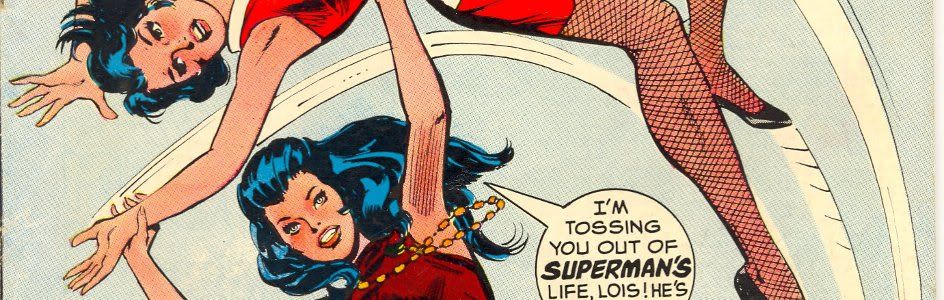
Tales From the Vault: Lois Lane #93

If you thought Superman was a total tool before, you ain't seen nothing yet.

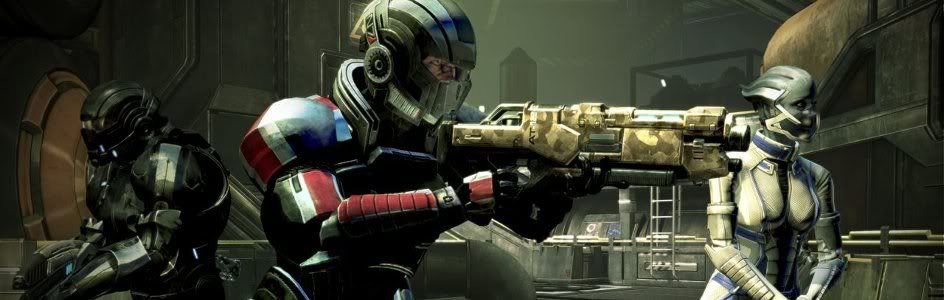
Mass Effect 3: The Official Review

Mass Effect 3 isn't the end of the world, it just portrays it.

Showing posts with label obituary. Show all posts

Sunday, August 12, 2012

Breaking News: Joe Kubert Dead at 85

In recent years we've seen a lot of the great comic creators from the golden age pass into legend, but today's news hits particularly hard, as multiple sources are reporting that Joe Kubert has passed away.

He was 85.

Trying to sum up the career of Kubert is basically impossible, but suffice it to say that he began working in the 1940s and continued as a mainstay of the comic book industry right up until his passing. Best known for his great war comics, including Sgt. Rock and Enemy Ace, Kubert also turned in fantastic work on Hawkman, both in the Golden Age and the Silver Age, as well as titles like Tarzan and literally too many others to mention.

Beyond his unequaled production as a artist and writer, however, his most enduring legacy may be as a teacher and inspiration thanks to The Kubert School, which began training comic books artists and cartoonists beginning in the 1970's. Dozens if not hundreds of pros passed through his courses.

And Kubert's art legacy was also passed down in a much more literal fashion through his sons, Andy and Adam Kubert, who are considered by many fans to be two of the top comic book artists of the past quarter century.

On a personal note, Kubert's death saddens me as I missed his final visit to Boston in 2010 due to a scheduling conflict. I very much wanted to attend so I could speak with him about his work at Lev Gleason alongside Charles Biro and Norman Maurer on Boy Comics. Kubert is the only artist other than Biro to draw a cover for Boy Comics and I wanted to ask him how that came about. Sadly for me, that opportunity is now lost forever.

And sadly for comics, one of the five greatest artists in the history of the medium is gone forever as well.


Monday, July 12, 2010

Breaking News: Harvey Pekar Dead at 70

This is a particularly sad and (somewhat) unexpected bit of news: multiple sources, including The AP, are reporting that American Splendor author and indie comics legend Harvey Pekar was found dead in his home today. He was 70.

Pekar, who had been suffering from a number of ailments including prostate cancer, first began publishing his groundbreaking autobiographical comic book in 1976 and attracted a who's who of artists to depict his introspective, street level stories of the mundanities and dilemmas of an average Joe's life. Though he was well known in the underground comics community, he vaulted to national fame in the late 1980's thanks to some highly publicized appearances on Late Night With David Letterman, a show he was temporarily banned from thanks to his refusal to play ball on Letterman's terms. The appearance gave Pekar a cult following and became one of the show's classic episodes, eventually leading to return appearances for Pekar.

In 2003, Pekar also became the subject of a groundbreaking film, also titled American Splendor, that featured Pual Giamatti as Pekar in an experimental structure that liberally mixed dramatic scenes with documentary and interview footage liberally interspersed.

Even through his illness, Pekar continued writing new stories for American Splendor, vowing to continue writing it for as long as he lived. Sadly for all comic fans, that time has come to an end. Here's a look at Pekar's Letterman appearance and Giamatti as Pekar from the film version of American Splendor:


Bookmark and Share

Wednesday, June 16, 2010

Breaking News: Al Williamson Dead at 79

There's an old saying that no news is good news, and nowhere does this seem to be more true than when it comes to comic book legends. It seems like barely a week passes these days without the industry losing another one of its greats. And unfortunately, the inexorable loss of the men and women who invented comics and made the Golden Age so golden is continuing, as Al Williamson has died. He was 79.

The timing of Williamson's death is particularly ironic (if that's the word for it) considering his close friend and collaborator Frank Frazetta also passed away just a month ago. The two artists were among the "second wave" of creators that entered the industry following the initial Golden Age surge that created the comics medium. But while Williamson might have been in the second wave, there was nothing second rate about his fantastic -- and fantastically detailed -- artwork. Like Frazetta, Williamson rose to prominence thanks to his early work at EC Comics, where he became renowned for his work in science fiction. And though he was proficient in any number of other genres as well, Williamson remained associated with science fiction for the remainder of his career, thanks to high-profile and critically acclaimed projects like Flash Gordon and his adaptation of The Empire Strikes Back.


Williamson also holds a unique place among the pantheon of comics creators in that he was apparently universally beloved. Though I never had the chance to meet him myself, since his death over the weekend. Joe Quesada, Jimmy Palmiotti and Jeff Parker, for instance, have all written memorials to Williamson -- and that's just the J section. By all accounts, Williamson was a kind and generous man, traits that aren't often ascribed to artists as popular and successful as Williamson.

For another look at some of Williamson's more obscure work, you can check out Scott's Classic Comics Corner. In the mean time, here are a couple other classic Al Williamson covers.

They just don't make them like this any more.


Bookmark and Share

Monday, May 10, 2010

Breaking News: Frank Frazetta Dead at 82

In a scenario becoming all too familiar to comics fans, Comic Book Resources is reporting that one of the greatest comic artists of all time has left us, as Frank Frazetta had died at the age of 82.

Though Frazetta is best known for his magnificent fantasy paintings, dozens of which graced the covers of various novels over the years -- Frazetta's work was especially synonymous with Conan the Barbarian books -- he began as a rank and filer in during the Golden Age of comics. He quickly became a mainstay of the industry thanks to his detailed and lush linework, with his science fiction and fantasy art at EC garnering rave reviews during the mid 50's. A decade later, he began making the move to full time commercial painting, a decision that greatly expanded both his fan base and his wallet.

In recent years Frazetta had suffered a number of strokes, and according to The New York Times, a stroke is also believed to be the cause of death. Whatever the cause, however, the fact remains that another pioneer from the early days of comics has departed us. Some small solace can possibly be found in the fact that unlike many of his lesser known contemporaries, Frazetta's work has gained the kind of mainstream acclaim denied most comic artists: one of his paintings sold last year for a million dollars.

Here's a look at perhaps his most famous image, 1973's "Death Dealer." And be sure to click on both this and the above cover of Weird Science-Fantasy #29, long considered by fans to be one of the great comic book covers of the Golden Age, to see them at a more appropriate size.


Bookmark and Share

Sunday, March 28, 2010

In Memorium: Dick Giordano

The comics world was saddened again this week by the death of one of the industry's most acclaimed creators, former DC and Charlton Executive Editor Dick Giordano, who passed away on Saturday due to complications from pneumonia. He was 77.

For most of today's fans, Giordano is probably best known for his work as an inker. Though he also pencilled many comics over his long career, he rose to fame within the art ranks for his strong work inking Neal Adams on the groundbreaking Green Lantern / Green Arrow "relevancy" run in the early 1970's. During this time he also worked closely with Adams and writer Denny O'Neil on their well received Batman revamp which dumped the camp aspects left over from the 60's returned the character to its darker roots. And nearly a decade later, he inked one of his highest profile projects, working with George Perez to create the artwork for Crisis on Infinite Earths.

But despite his many contributions as both an inker and penciller, Giordano's biggest influence came behind the scenes. Giordano began working in comics in the early 1950's as an artist, but he really gained the notice of the comic book world when he rose to become Chralton's Editor-in-Chief in the mid-60's. In that capacity, Giordano oversaw the creation of Charlton's line of "Action Heroes," which included titles such as Blue Beetle, Captain Atom and The Question among others. Recognizing his abilities, DC Comics swooped in; he soon brought many of his top Charlton talents on board at DC as well, giving creators such as Jim Aparo and Denny O'Neil a bigger platform and introducing their talents to a much larger fan base.

In the early 80's, Giordano became the Executive Editorial Director at DC, overseeing not just Crisis on Infinite Earths but also such groundbreaking titles as Watchmen (which originally was slated to use his old Charlton characters) and The Dark Knight Returns among others. Though his tenure at DC wasn't without some controversy -- in particular his stance against creator rights on behalf of DC rubbed many in the industry the wrong way -- his influence on DC and comics as a whole cannot be denied, either as an executive or as an inker.

In recent years Giordano continued to work on projects such as a graphic novel adaptation of Moby Dick and his biography, which was published by Two Morrows. He also was collaborating with protege (and comics legend in his own right ) Bob Layton, who issued a statement reading in part, "few could ever hope to match what he accomplished in his chosen profession, or to excel while maintaining great humour, compassion for his peers and an unwavering love for the art form." He went on to add that, "his unique vision changed the comic industry forever and all of those who work in the business continue to share in the benefits of his sizeable contributions."

For more information on the life and legacy of one of the industry's true giants, I strongly recommend taking a look at the Dick Giordano page over at our friend Bob Almond's Inkwell Awards site, which inducted Giordano into the inker Hall of Fame last year. And our pals over at Comics Should Be Good have also put together a look at some of Giordano's rare Charlton work from the 1950's as well as his seminal Batman origin story, "There's No Hope in Crime Alley."

A sad day indeed.


Bookmark and Share

Friday, October 16, 2009

Breaking News: George Tuska Dead at 93

Marvel Comics and comic fans in general lost a giant of the industry today with the passing of artist George Tuska. Tuska, who was 93, is best known for his work in the 1970's on Iron Man and for helping to create the Marvel house style of art.

Tuska began working in comics 70 years ago, landing a gig as an assistant on the newspaper strip Scorchy Smith in 1939. He broke into comics as a member of the legendary Eisner & Iger studios and worked on such comics as Captain Marvel Adventures and Jungle Comics before eventually providing art for the Lev Gleason's groundbreaking series Crime Does Not Pay.

Tuska is best known, though, for his work at Marvel Comics in the 1960's and 70's. Though he provided art for such titles as Power Man, Ghost Rider, Sub-Mariner and X-Men, his lasting contribution is as the definitive Iron Man artist; though his stint was occasionally interrupted by fill-ins and guest pencils, he lasted as the book's primary artist for over a hundred issues, from #5 in September of 1968 until #106 in January of 1978.

During that period he became associated with what is ironically probably his most memorable creation: Iron Man's metal beak. As the apocryphal story goes, the perpetually distracted Stan lee happened to glance at an issue of Iron Man one day and exclaimed "Why doesn't Iron Man have a nose?", apparently forgetting that iron Man has never had a nose. Being Stan Lee, however, this innocent question caused an uproar, and the editors at the time rushed to issue a mandate insisting that Iron Man henceforth be drawn with a nose. Some time later, of course, Stan saw a new issue of Iron Man with the nose and exclaimed "Why does Iron Man have a nose? That looks terrible!" And thus they immediately removed the nose.

Whether or not this is true is unknown, but thanks to this relatively brief era, George Tuska has been somewhat unfairly associated with the joke that is Iron Man's nose, just as he is also associated by many with Iron Man's roller skates. The Marvel Style of writing aside, the guy was just drawing what he was told to draw, because if there's one thing Tuska proved over the decades it's that he was a consummate professional. And if the powers that be wanted a dumb looking nose on Iron Man, then so be it.

In his later career, Tuska worked for DC on titles like Superboy, but for most he will be forever remembered for his work at Marvel, on Iron Man and for Iron Man's metal nose. He also leaves an impressive body of work and a lasting legacy as one of the pillars of the Marvel style of art that helped propel the company to greatness. He will be missed by friends and fans alike.


Bookmark and Share