Game Review: Diablo 3

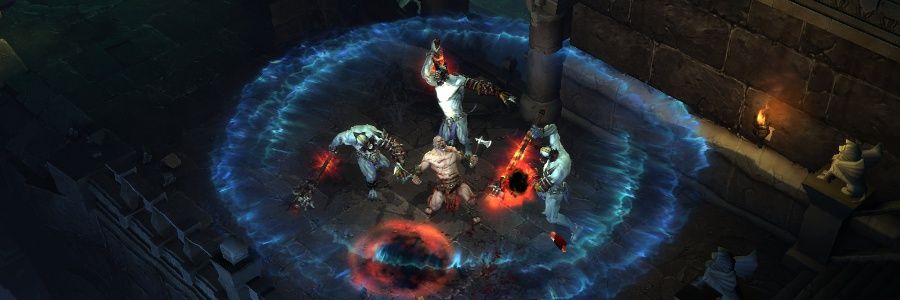
Diablo 3 is out. But is it a game? Or is it the most brilliant money making scam in internet history?

Movie Review: The Avengers

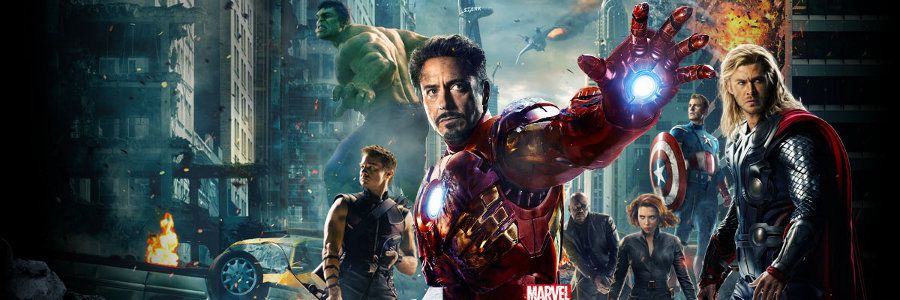
Okay, okay, I posted my Avengers review. Get off my back already, geez.

The Most Important Comic Book You've Never Heard Of

Action Comics #1. Detective Comics #27. Why is All-American Men of War #89 as important as these great comics -- and why have you never heard of it?.

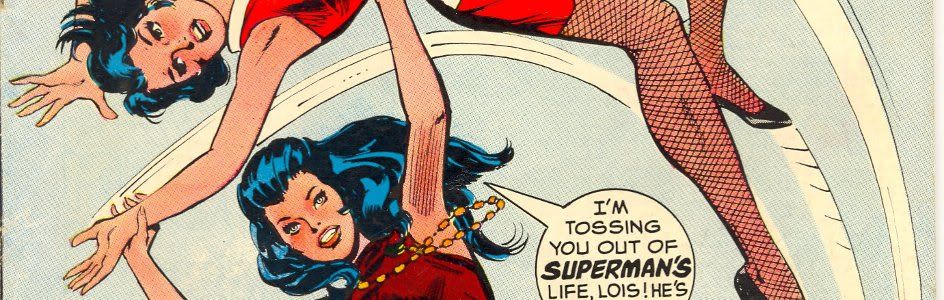
Tales From the Vault: Lois Lane #93

If you thought Superman was a total tool before, you ain't seen nothing yet.

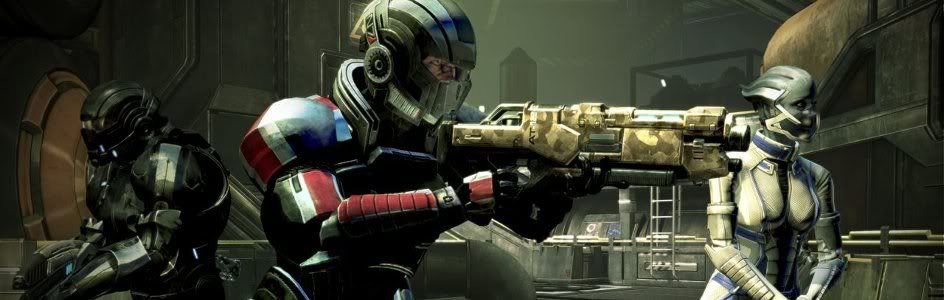
Mass Effect 3: The Official Review

Mass Effect 3 isn't the end of the world, it just portrays it.

Saturday, February 20, 2010

New Comic Cavalcade: Siege #2 and More

Hey kids, welcome back to the latest episode of New Comic Cavalcade. You may recall that last month, we reviewed Siege #1, Warlord #10 and the Blackest Night tie-in Weird Western tales #71. So how far have things progressed in the course of a month? We're about to find out, because it's time for reviews (with spoilers) of Siege #2, Warlord #11 and the Blackest night tie-in Starman #81. Yes, I have been buying other comics, but I also value continuity. So, let's go to the comics, why don't we?


Siege #2
By Brian Michael Bendis and Olivier Copiel

Last month, I complained about the lack of footnotes or any other kind of context, which proved confusing considering the comics that were supposed to set up Siege were in many cases yet to be released. Now, a month later, I can safely say that... well, some of them have come out. I'm still not sure how Thor or the Asgardians ended up back in Oklahoma, but I guess we'll just chalk it up to magic (the magic of editorial screwups) and move on.

So how does the actual issue measure up? Well, it's by Bendis. That's not necessarily meant as a dig, but this issue even more than last seems very Bendis, meaning that like many of his bigger stories there's a lot of surface flash and dazzle that may distract readers from the shaky foundations. Basically, half of the story focuses on Sentry going into full Miracle Kid mode and tearing Ares in half with his bare hands in a giant two page spread that consists almost entirely of a huge splash of blood and flying internal organs. Subtlety is apparently not high on Copiel's to-do list and as a long time fan I could only imagine the kind of infarct this sequence would have caused Jim Shooter.

As usual, though, that's the big problem with Bendis: the comic is cool enough assuming you've never actually read any Marvel comics before. If you have, you might start asking pesky questions like, how can Taskmaster easily take on Asgardian warriors? That sort of thing, of course, is increasingly irrelvent in light of the fact that Bendis places massive plot importance on characters such as Sentry, Daken and Phobos -- in other words, on newer characters whose sudden primacy in the MU is sure to drain much of the drama of the story for older readers, who are probably stuck somewhere between "who are these people?" and "why do I care about any of them?" I will give Bendis some props for turning Sentry into pretty much a grade-A supervillain, which I hope sticks after the end of Siege as it's basically the only justification for his pimping over the last several years that would seem reasonable to me. But as a whole, while there's plenty of pretty action to look at, this comic is still way to much flash (and gore) and not enough substance.

My Grades: It's entertaining enough. But so are cat themed youtube clips, and those aren't actually good either. C.


Starman #81
by James Robinson and Fernando Dagnino

And here, after more than a decade, is a new issue of Starman. Before we get into the issue itself, let me say again that I think this is maybe the greatest event tie-in idea ever, resurrecting entire titles as zombies to go along with the zombie storyline. It's genius. Of course, as we saw last month with Weird Western Tales, it's kind of hard to write a story that's actually relevant in one of these one shots, but heading into Starman #81 I was curious to see if Robinson could pull it off, especially considering the widespread negative reviews he's been receiving lately for stuff like Cry for Justice.

I'm happy to report that no negative review is needed for Starman #81. With this story, Robinson manages to stay true to himself and the series (to the point where, as promised, Jack Knight still remains retired in the happily ever after and doesn't appear in this issue) while still providing both a solid tie-in to Blackest Night as well as a coda to Starman that's actually relevant to the characters. In this case (since Jack remains off limits) those characters as The Shade and his erstwhile love interest Hope O'Dare, who are confronted by the reanimated corpse of Jack's brother Will, who was killed in Starman #0 way back when the series launched.

The fact that this attack take splace right as Shade and Hope are in the middle of having one of those awkward relationship-defining conversations that couples sometimes have means that unlike Weird Western, this comic is elevated beyond a simple zombie shoot out with in-jokes for fans of the defunct property. Actual advancement and development takes place, meaning that instead of being an empty (if cool) exercise, this comic can safely takes it's place right after Starman #80 as a worthy addendum to the series as a whole. Not a half bad trick to pull off.

My Grades: The art by Dagnino is solid, even though it doesn't quite match up to Tony Harris, and the story likewise fits right in. The only real downside is that you will wish Starman was still being published. A-.


Warlord #11
by Mike Grell

And, of course, the Warlord doomsday clock hits eleven this month. The good news is that Grell is back doing the art again, and any time you get a dose of Grell art it's a good day. Even better, the storyline, which revolves around yet another rebirth for arch-enemy Deimos (I believe this is his 6th go-round, though I would have to double check to be sure), looks like it may also provide a resolution to the long-running subplot about Warlord's son Tinder, who Warlord mistakenly believes he killed long ago (way back in the original Warlord #21 from 1979). Personally, I would say that 31 years is more than enough time to work out a plotline, so I for one will be really happy if this finally gets resolved (for those not familiar with the comic, the person Warlord killed was actually a clone of his son, while the real son has been hanging around as a supporting character in an ongoing subplot ever since, both parties unaware of their familiar connection).

So that's good. And this issue is okay, though it still suffers a bit from data dump syndrome, as we get several more pages devoted to going over Warlord's backstory, this time in the form of explaining the whole Deimos-Tinder-clone thingy. But there's some nice action drawn by Grell and the prospect of a resolution has me excited.

Unfortunately, I have a strange feeling that this also is a swan song for the title. There's nothing in the book specifically stating this, but the fact that Grell is back on art and finally tackling the Tinder plot suggests that DC may be giving him a chance to wrap up his dangling threads before they pull the plug. I hope I'm wrong, as I would like to see this comic finally take on some new material instead of just recapping the last 40 years of publications for new readers, but this could be the end.

My Grades:
Looks great, but even with all the action in this issue it still plods along. Travis Morgan is actually starting to seem as old as his 84 years. B-.

Wednesday, February 17, 2010

February Zuda Reviews: Part 2

Welcome to part two of our February Zuda reviews. Yesterday we brought you the first batch of five hopefuls, so, naturally, today sees the other half of the field. And so far this month, unlike last month, nobody has been forced to dro out of the competition, so that's a positive as well (though I wouldn't really miss a couple of these to be totally honest). So will today's group be stronger than yesterday's mediocre crop? Let's find out.


Island, Alone
by Rich Fuscia & Shawn Aldridge

The comma in the title is perfectly appropriate for this comic, because there are a number of superfluous commas in the text and dialogue throughout the story. Maybe that's a minor thing, but it irritated me. Anyway, other than that this was pretty good. The art was solid -- starting of a little frenetic for my taste but getting better as it went -- and the plot was okay if nothing groundbreaking. There were a couple non-comma issues with the dialogue, mainly becoming too expository at times, but overall a pretty decent effort that ended with a nice tease.

My Grades: B-. It would get a B if not, for the use of, commas.


Monsterplex
by Brock Heasley, David Schlotterback & Michael DeVito

Monsterplex is a fairly fun strip that uses horror tropes for humorous effects; the cineplex in question, which shows only horror movies, turns out to be a full, live experience complete with vampires and zombines and the like, all running roughshod over the (often eaten) audience. While the pacing and dialogue were just a bit on the stiff side, particularly in the beginning, the story ended with a nice twist while the art, though a little bit to Erin Esurance for me, was similarly solid. One of the better efforts this month.

My Grades: B. I'm not sure it will win, but it wouldn't bother me if it did .


New Morning
by Louie Chin

Let's start with the good parts: the graphic design for New Morning is cool and some of the little footnote jokes are amusing enough. The art is also solid, particularly on the first page, which had some bold set-up panels to establish the scene that I thought worked nicely. On the down side, the "narrative" was pretty choppy and barely recognizable as a story. I'm not always a fan of decompression, but some could have been useful here, even if it would have meant some of the material wouldn't have fit inside the eight page restriction.

My Grades: The flavor is nice, but the aftertaste is sour. C+.


Sci-fi Drive By
by Ryan Estrada

On the other hand, Sci-Fi Drive By similarly doesn't present a coherent story, yet I enjoyed it all the same. That may be in part because the vignettes are fairly delineated into separate gags, meaning I wasn't expecting more than separate. I'm not sure how well this kind of structure will hold together in the long run, but for eight pages it amused me. That's not bad.

My Grades: The art was solid even if the last "wi-fi" joke sequence was a bit flat overall. B.


Techno Insecto
by Samir Barrett

Don't look now, but there seems to be a superhero comic in this month's Zuda competition. And even more surprising? It's pretty good. yes, there are some clunky bits of exposition that could be safely removed (such as the main character exclaiming "It's you! The Techno-Organic Insectoid Mechanism!" in his best Stan lee impersonation) as well as some cliched bits (the old "he's not shooting at me after all, he's shooting at the menace behind me!" bit) but overall this is a fast, fun read, thanks in large part to the sharp character designs and vibrant coloring that make the artwork look more like cels from an episode of Teen Titans than a comic book.

My Grades: It could be tightened up some, but it's a pretty convincing package overall. B+.


Bookmark and Share

Monday, February 15, 2010

February Zuda Reviews: Part 1

Welcome to this month's batch of Zuda reviews. Okay, the month is more than half over, but what are you going to do, right? The important thing is that voting is still in progress, so it's not too late to weigh in on this month's competitors. My comments will be somewhat briefer than usual, but no doubt that comes as a great relief to many of you, so no problem.

Enough chatter, let's get to the comics.


Aliens vs. Ninjas vs. Samurai
by Darrin Stephens & Jorge Vega

This story pretty much delivers exactly what the title promises, although the aliens don't really show up until the last page. It's a cute enough concept I suppose, though not exactly cutting edge (only lacking pirates and Chuck Norris to fulfill internet mandates), but the art is so stylized it was hard for me to get into it or necessarily follow what was happening. It was like Mary Blair doing thumb puppets. I'm sure some people really loved the art, but I wasn't one of them.

My Grades: Eh. A C. For what it is, I've certainly seen worse.


Divided By Seven
by Scott Boyce

What if the Flash was actually a holocaust survivor from the future? That seems to be the premise of Divided by Zero, which tells the story of a dangerously emaciated speedster who has had some sort of unfortunate experiments done on him. The art was a bit uneven; some parts looked really sharp, while others were a bit too stiff, especially in depicting the runner's form. There seemed to be the germ of a solid idea in there, but it didn't develop quite fast enough for me, instead running in place. See what I did there?

My Grades: A strong C+. I think there's potential here but Boyce needs a bit more work on his storytelling to realize his vision.


Fulcrum
by Alexander Diochon

I have to hand it to Fulcrum creator Alexander Diochon for one thing at least: he uses a lot of words. that's not something most creators these days seem to like doing, and for an old school comic fan like myself, it's nice to see someone who remembers that words are half of the magic of comics. Unfortunately, none of the words he uses were interesting to me. This story of prisoners fighting each other or something inside a prison city just left me cold and suffered a bit from what a lot of Zuda entries suffer from, namely a lack of sympathetic characters. I say execute them all.

My Grades: C+. It just didn't do anything for me.


Gelgun
by Lazarus Ray Berry

Well, this one is interesting. The art is pretty good throughout, although it occasionally suffers from over ambition, particularly in Berry's attempts to fuse a gritty fantasy style with manga-inspired character designs. That doesn't always work, but it makes some sense for a story that seems to be trying to combine Conan-esque fantasy with supporting characters form Inuyasha. I didn't hate it, but this may be a case where the creator's vision is too specific to translate well for anybody else reading it. I could see what he was going for, but I couldn't quite see why he was going for it.

My Grades: Another C+, though separately, most of the individual elements might get higher scores. The whole is less than the sum of the parts here.


Hawkrider
by Marco Palombelli

Hawkrider is like 20 pages of story fit into an eight page structure not by compressing the storyline but by the simple means of leaving out the rest of the pages. You might be forgiven for reading this through several times to figure out just what is happening, if you happened to like it enough to re-read it, which seems unlikely. I don't mean to sound overly harsh -- the art has potential and the basic concept seemed solid enough -- but I just didn't get this one at all.

My Grades: C-, with the occasionally cool artwork saving it from a lower score.


Tomorrow:
The other half of the batch. Will they be more exciting than this group? Based on these grades, you'd almost think they have to be, right?


Bookmark and Share

Saturday, February 13, 2010

January Zuda Wrap-Up: Controversy Strikes

Okay, so it's a little late in the game, but it's finally time to wrap up last month's competition over at Zuda (as a quick refresher, you can check out part one of my January reviews here and part two over here). As you can see, it was a fairly strong batch, though there were no obvious favorites or stand-outs. My highest grade went to War of the Woods, which ended up winning the competition. So it looks as tough my influence has spread through the internet and everyone agreed with me that War of the Woods was the top choice, right?

Well, not exactly. As long time readers know, Zuda seems to be a pretty front-loaded operation; the title that gets ahead in the first week almost always ends up winning (or, at least, that has been the case since I started following Zuda). In January that comic wasn't War of the Woods, however, but instead was The Thunderchickens. Thunderchickens jumped out to a quick lead and throughout the month maintained its edge, which normally would produce a pretty sure win for the comic.

That didn't happen this time, however, for an unusual reason: the comic was pulled from the competition entirely.

As a result of the withdrawal (the reasons for which we'll get into momentarily), Zuda decided to void all the votes given to Thunderchickens, allowing people who had voted for it to instead cast their votes for a different title. Those votes apparently broke overwhelmingly for War of the Woods, because before the controversy began it had been tracking steadily in fourth place. The comic did move up one spot while the controversy was raging on the message boards, but until Thunderchickens was pulled it was still in third place behind NewBot, which had been solidly camped in the number two spot for the entire month. When the Thunderchickens votes were voided, however, NewBot remained in second place while War of the Woods vaulted over it to take the win and the contract from DC Comics.

Voting curiosities aside (and I am stuck by how similar to a political convention that turn of events was), there still remains the question of why Thunderchickens withdrew -- or was removed, whichever it actually was. Those details are a bit fuzzy, with the only official announcements being Zuda's declaration that after discussions with the creative team it was decided to be the best course of action, along with a cryptic statement from Thunderchickens artist Bill Blankenship indicating that the withdrawal was due to some action on his part that resulted in a mutual decision with zuda to pull the strip.

So what happened? Well, apparently Bill got in an online name calling contest with NewBot creator Chuck Harrison that sprang at least in part from a cartoon Zuda reviewer Bryy Miller drew as part of his commentary on the January entries. Or something. At this point it would pretty much take CSI to unravel it, as most of the pertinent info has been ab-blasted right off the face of the Earth, but apparently the argument between Blankenship and Harrison escalated to the point where it involved accusations of cheating and vote tampering, finally requiring Zuda to step in to correct what Blankenship described as unprofessional behavior.

The end result, of course, is that neither Thunderchickens nor NewBot won the competition; NewBot's involvement in the Thunderchickens disqualification may also explain why fans of Thunderchickens decided to throw their support behind a third party rather than boost NewBot from the number two spot into the win. Instead the big winner out of this mess is War of the Woods creator Matthew Petz, who now finds himself in possession of a professional career and one year deal with DC Comics.

In the end it is that professionalism that should be the focus of any post-mortem of the January competition. The fact that Zuda presents an great venue for up and coming creators has also, in my brief experience with the endeavor, been it's achilles heel; just as many of the submissions seem to be works in progress that fall somewhat short of professional standards, so too do many of the creators seem to be in a formative period regarding professional standards of behavior. That's not to paint all Zuda contributors with the same brush, as many are very friendly and positive in their fan interaction, but the nature of such a public competition also seems to bring out the worst in many. Going forward, then, the withdrawal of Thunderchickens will hopefully prove to be a valuable lesson and perhaps even a turning point in the life of Zuda as it strives to be a showcase for professionals rather than just another online amateur hour.

Let's hope the lesson is well learned.


Bookmark and Share

Friday, February 12, 2010

Captain America vs. The Tea Party

While the nation slept, Marvel somehow got dragged into one of the more unusual controversies in recent comic book history, as the conservative political group Tea Party has begun lambasting the publisher over this month's issue of Captain America. At issue is a protest rally depicted in #602 which shows average citizens holding signs decrying the government's tax policies -- signs that apparently originated at an actual Tea Party event.

Here's a look at the pages in question (click to enlarge):


In response to this comic, Tea Party blogger Warner Todd Huston posted an editorial on publiusforum.com decrying the issue as an attack on the Tea Party.

"Isn’t it wonderful that a decades old American comic book hero is now being used to turn readers against our very political system, being used to slander folks that are standing up for real American principles in real life — and one called “Captain America” at that?"

Huston takes issue with a number of things, including the fact that the protesters are depicted as being all white, and goes on to accuse Marvel of implying that "Tea Party protesters just “hate the government,” they are racists, they are all white folks, they are angry, and they associate with secretive white supremacist groups that want to over throw the U.S. government."

While comics are usually completely ignored by everyone outside of hardcore fans, this particular complaint struck a nerve for some reason. Whether it's because of Cap's recent higher profile following his death and rebirth, which were both heavily covered by the media, or because this sort of thing is catnip for conservative news sources, the story quickly spread through the blogosphere, eventually ending up on mainstream outlets like yahoo.com and The New York Times.

In response to this tempest in a teapot, Marvel Editor-in-Chief Joe Quesada conducted an interview with the folks at Comic Book Resources, where he apologized for the "mistake," saying that an editorial assistant working under deadline filled in the signs on the page in question in order to make the scene more realistic and that there was no intent to specifically identify this group as the Tea Party. Beyond this apology, though, he did call out Huston for his accusations of racism:

"Where I do take exception with Mr. Huston’s article is when he states that we are calling the Tea Party racist...wait I’m sorry, that we’re saying that every white person is a racist along with several other horrible and inflammatory accusations. Nothing can be further from the truth, accidental placement of a Tea Party sign or not, those sentiments are not in the pages of our comics and are a complete and irresponsible misrepresentation."

So what's really going on in Captain America #602? I had a chance to read the issue earlier today and while I agree that it probably wasn't wise to use specific Tea Party images in the story (even ones as juvenile and embarrassing as the ones chosen), I also think that even without those signs the connection to the Tea Party would have been pretty obvious, as they are the main tax protesting group in the country.

That, however, is how it should be, because conservative bloggers lambasting Marvel for politcizing comics are missing the mark entirely given the fact that Captain America has always been an explicitly political character and series. Right form the first issue in 1941, where Cap is shown on the cover punching out Hitler months in advance of America's entry into World War II (a stance that earned creator Jack Kirby death threats from American Bundites at the time), Captain America has been used as an allegory to discuss political and social issues confronting the nation. Political commentary is not only regular within the pages of Captain America, I would argue it is essential to the character and that attempting to remove political elements from the series would essentially destroy the entire point of the series. As anyone who ever read CapWolf knows, writing Cap as just another crime fighter in long johns is a sure way to write a crappy story.

Further, the specific charges leveled against Marvel in this instance are spurious at best. While Quesada's insistence that the protesters in the above scene are separate from the militant right-wing group Watchdogs who Cap and Falcon try to infiltrate may seem like splitting hairs, in the context of the story he is absolutely correct that they are portrayed as two separate entities. Just from these two pages, the scene reads to me as though the crowd of protesters is intended to point out to the liberal Falcon that while the Watchdogs may be going overboard, their concerns are shared by many mainstream, regular Americans. Indeed, this scene can be read not as a denunciation of the Tea Party but rather as a wake-up call to the Falcon that there are real issues his liberal political stance doesn't necessarily address. And in that sense this isn't an attack on the Tea Party so much as a validation of them.

In addition, it's clear that neither Huston nor any of the other mainstream media commentators are familiar with Captain America's continuity, because if they were, they would recognize that this sequence and plotline is a carefully constructed re-working of a classic Captain America story from Mark Grunewald that appeared back in the late 1980's. In the first appearance of the Watchdogs, then-Captain America John Walker and his African-American partner Battlestar were tasked with infiltrating the nascent right-wing organization in order to determine their plans. In order to do this, they staged a fake fight with Battlestar pretending to be a porn director and Walker acting as a righteous citizen defending America's moral values from that kind of filth. This scene is repeated almost verbatim in #602 in the pages that follow the excerpt here, only with Falcon now playing an IRS auditor instead. The entire sequence is an homage to Gruenwald's work, with the hot button "family values" issue of the 80's replaced with the hot button tax issue of today.

I do think that writer Ed Brubaker could have been a little more subtle in his racial commentary here (which is surprising as Brubaker is usually a very solid writer) but Huston's charge that Marvel is portraying the Tea Party as racist overlooks four factors. 1) The racial subtext is in part carried over from the earlier Gruenwald story this is referencing; 2) the Tea Party protest is explicitly not the same group as the Watchdogs; 3) this entire sequence takes place in rural Idaho; for Huston to complain that "the people in these crowds are depicted as being filled with nothing but white folks" is somewhat silly considering that less than one percent of the citizens of Idaho identify themselves as black on the census; and 4) the actual Tea Party has indulged in it's own share of race baiting anyway (as the Comic Book Alliance points out in this excellent essay, Tea Party leader Mark Williams once called President Obama "an Indonesian Muslim turned welfare thug and a racist in chief"), meaning even if Marvel was making this charge they would be justified in doing so.

While some pundits have stated that Captain America has often had a liberal slant (a charge that was certainly true, for instance, during Steve Englehart's notoriously political run in the 1970's, which included a story about Richard Nixon heading a secret society of villains bent on ruling America -- another example of the comic's explicitly political past), it's important to note that villains such as the Watchdogs are an important part of Captain America's mythology and are certainly not limited to conservative groups. These groups act as allegorical substitutes that allow Captain America to confront major issues facing our country in a tangible way. Just as the Wacthdogs represent the dangers of right-wing militarism, Ultimatum, which Captain America has fought a number of times, represents the opposite problem of left-wing militants, while the Sons of the Serpent allow him to battle racism. And those are just a few examples.

Personally, I applaud Brubaker for including political commentary in his work, even if, with just one issue out of a four part storyline out so far, nobody actually knows what kind of statement he may be making with this arc. Comic books, especially Captain America, do not have to be mindless entrainment; they can and should deal with the social forces that shape our world. If that gets someone's knickers in a bunch because their lame "tea bagging" joke is turned against them, well, so be it. Asking Captain America to be apolitical strips the character of meaning and relevance.

And as this debate shows, we have enough irrelevance already without adding more to the mix.


Bookmark and Share

Tuesday, February 9, 2010

Breaking News: Brubaker to Write Secret Avengers

Marvel is continuing full steam with their barrage of Avengers news and the latest bit is a doozy, as acclaimed Captain America writer Ed Brubaker will be writing a second new ongoing Avengers title when Marvel relaunches the franchise this spring. Joining him on the book, which will be titled Secret Avengers, is popular artist Mike Deodato.

Over the last couple weeks, of course, Marvel has made one announcement after another. First they dropped the bomb that all four ongoing Avengers titles were being canceled at the end of the Siege crossover event; then they followed that up by revealing that their new event, The Heroic Age, would be jump started by the relaunching of Avengers by the team of Brian Michael Bendis and John Romita Jr.

Though most old school fans were excited at the prospect of the classic Avengers re-uniting, including Captain America, Thor and Iron Man all back on the team, their enthusiasm (okay, our enthusiasm) was leavened by the fact that Bendis would be continuing on as writer, which seemed to torpedo speculation (by myself among others) that Ed Brubaker would get the gig. Brubaker, after all, has been grabbing accolades for years for his work on Captain America, which itself has often resembled a team book thanks to the presence of a large and strong supporting cast including Bucky, Falcon, Sharon Carter and Black Widow.

Now, though, it looks as though Brubaker will be getting an Avengers book after all and judging by the title, Secret Avengers may well play to his pulp and crime strengths. Though the promo images being released are in silhouette to keep things "secret," my guess is that some of his cast from Captain America will be on board for this book, possibly joined by holdovers from New Avengers such as Luke Cage and Jessica Jones (who seems poised to "return" to her costumed identity Jewel). The title also suggests that the fell of the book may be closer to that of New Avengers, which has been an underground movement since Civil War, than a full-on superhero title.

Overall, this announcement (which was coupled with the release of another Heroic Age teaser that seemed more in line with a Secret Avengers type of roster than the original promo) looks like a win-win for Marvel, as it likely satisfies both Brubaker fans and fans of New Avengers. And by all accounts, Deodato has come a long way from his 90's days, when he would farm out a lot of his material to subpar studio artists and slap his name on their work. If he buckles down and turns in some solid art, this title could be a winner, even if the title is unfortunately reminiscent of 90's crapfest Secret Defenders.


No idea who that's supposed to be in the Secret Avengers teaser, though. It looks kind of like the Lizard, which seems highly unlikely, but guesses on the internet range anywhere from Beast to Spider-man to Gorilla Man. Personally I think it's one of Jack Kirby's Rorschach tests, so maybe it's the Demon Etrigan. But who knows. One thing's for sure: at this pace, chances are Marvel will be releasing some new image any minute for us to speculate about instead so there's no reason to get worked up about one shapeless blob when we have several more shapeless blobs still to come.


Bookmark and Share

Sunday, February 7, 2010

Super Bowl Special: Top 10 Football Covers

As pretty much all red blooded Americans know, today is the nation's biggest and most important holiday of the year, the Super Bowl. So what better way to celebrate the showdown between the New Orleans Saints and the Indianapolis Colts than to take a look back at the Top 10 Football Covers in comic history? Really, it seems almost like a no-brainer, and not in the Dan Dierdorf sense of the phrase.

of course, I can't actually claim that these are the best football covers in comics history, because unlike our previous lists (like, for instance, Santa), researching football covers has proven to be kind of difficult. But at least we've put together a list even if it's not the list. So stop whining and take a peek at some of these oddities from the unlikely marriage of football and comic books. And, as always, click on the images to make them Super size.


10) All-Sports Comics

Look away, Ernest Byner! Look away!


9) Archie's Pals n' Gals #102

How is girl's football different from boy's football? The blatant sexism, of course, Natch.


8) Strange Sports Stories #3

Trust me, the story inside the comic actually makes less sense than the cover itself. That's why this series is so great.


7) NFL Superpro #5

Guest starring Lawrence Taylor! We'd like to say this is the low point of LT's career but we all know that isn't true. No word on whether he sent hookers to the Marvel Bullpen to throw off their game or not.


6) Sgt. Fury and His Howling Commandos #81

This is actually a pretty cool story about an all-pro who is drafted and ends up being wounded in combat while serving with the Howlers. One of many fill-in Howlers who didn't last more than a couple issues, which was Marvel's way of working around the fact that the main characters never seemed to get hit (after issue #4, of course).


5) Boy Comics #107

Okay, I know I keep promising to go into more depth about Boy Comics, but this will have to just be a tease. Charles Biro was a master at mixing the unlikely genres of kid's sports, superheroes and true crime into one awesome package. While this late cover doesn't have quite the same punch as some of the earlier efforts (like the classic golf cover where a man is murdered by being run through by the 13th green flag) it's still a solid Biro effort.


4) Jumbo Comics #3

"You Nath-ty Man." Um. Sure.


3) Four Color #180

This comic features Ozark Ike in a story called "Hillbilly Football." Plus, we get some vintage good girl art, with a topheavy blond in a tight shirt thrown into the background for no apparent reason. Win + Win = Win.


2) Adventure Comics #207

Adventure #124 also featured a Superboy football cover, but I prefer this vintage effort. Can you get more American than this scene? Eat your heart out, Norman Rockwell.


1) Kickers Inc. #8

This may or may not have been the worst idea in Marvel's history, but the series about roided up NFL players who become superheroes after they are thrown out of the league for using performance enhancing drugs did provide up and coming young artist Mark Texiera with the chance to hone his skills, which he did on this cool cover. Or, cool if it wasn't for Kickers Inc. It's still number one, anyway.


Bookmark and Share

Friday, February 5, 2010

Lost Premiere: What It All Means

Heading into the premiere of the final season of Lost, I, like most fans, had some predictions about what we were going to see in the aftermath of the bomb. Aided by a commercial that seemed to show a clip of a jetliner landing on a runway, I came to the conclusion that the premiere would begin with the revelation that Juliet's bomb gambit had worked and that as a result of the explosion, an alternate reality where the plane never crashed would be created.

Well, I was half right. Because the bomb worked, but the scenes that take place after the plane's safe landing are no alternate reality. Rather, they are flashbacks to the events that led up to the plane's crash to begin with.

Now, I know what you're thinking: wtf? How could the events after the plane not crashing lead to the plane crashing? Are you, in fact, deranged? But bear with me, everyone, because thanks to the crazy writers at Lost, we're about to be treated to yet another epic time travel mind-bender that would make Steve Englehart green with envy.

Right from the start of the series, fans have been puzzled and occasionally irritated by the number of unbelievable coincidences that apparently led up to the crash of Oceanic 815. Sawyer and Christian just happen to share a drink at an Australian bar? Locke's father is the same guy that conned Sawyer's parents? Libby not only gave the boat to Desmond, she was in the same institution as Hurley? Really? And the only explanation given for these events was the repeated warning, echoed season after season, not to confuse coincidence with fate.

Well, now we're about to discover the truth of this, because the bomb did work, the plane didn't crash and everyone safely landed in Los Angeles. But that's not the end of the story: it's only the beginning. Remember Daniel's repeated insistence that everything that has happened will happen? Well, he might have changed his tune at the end, suddenly deciding that fate could be changed after all, but then again, maybe he didn't. And if he did, maybe he was wrong. Because my theory is that the plane safely landing isn't changing history at all, but is merely another part of the time loop the characters are caught in. Blowing up the bomb so the plane landed safely wasn't changing history, because it had already happened that way. And the events that followed (or will follow, from our point of view as viewers the plane's safe landing directly lead to the plane crash in season one and all the events that have happened since. Just as season five focused on the gorup's efforts to prevent the plane's crashing, then, season six will revolve around their (previous) efforts to cause the crash in the first place.

Just what will be the trigger I'm not yet sure, but we already see some of the threads: Kate's madcap escape with Claire as a hostage, Jack and Locke forming a doctor-patient relationship that likely can go nowhere good, Hurley's new, happy-go-lucky demeanor and Sawyer's conman instincts. My guess is that these thread will combine to cause one disaster after another for everyone involved; and that the lives of the Oceanic Six and the other passengers of 815 will become hopelessly ruined; and that as a result, Jack, with his endless desire to fix everything, will end up going back in time to change the past in an effort to prevent the disasters that have befallen him since the plane's landing. His answer? To crash the plane and erase those events from history.

And so everything taking place in the 'safe landing" timeline will actually have occurred prior to the opening of season one; and all those coincidences will turn out not to be coinicidences at all, but rather carefully orchestrated manipulations by Jack and company as, armed with knowledge of their future, he pushes and nudges everyone into place to ensure the plane goes down and erases the mistakes of that timeline.

So how will all this be arranged? Just as Juilet's declaration that "it worked" is evidence that this new timeline isn't a dream or alternate reality, I think the presence of Desmond on 815 is a clue towards how the events of that timeline will resolve. Desmond, with his ability to travel back and forth through his own timeline, is the one character whose memory will not have been altered by the bomb; rather, as this is just one of the inevitable loops of fate, he would retain knowledge of it. I think he will appear again to Jack and begin guiding him towards causing the plane crash, though for what purpose I'm not yet sure.

No doubt it will have something to do with Jacob (who totally was resurrected in Sayid's body), but whatever the reason, we're all in for a treat. Because this new timeline isn't some alternate reality but instead will be the key to understanding all the mysteries of the show.

And as Daniel might say: it's about time.


Bookmark and Share

Tuesday, February 2, 2010

First Look at John Romita Jr. on Avengers

Marvel is starting to pull out all the stops as it hypes the upcoming Heroic Age event that will see Marvel return to its classic roots beginning with the relaunch of Avengers. The latest bit of news from the House of Ideas: artist John Romita Jr. will be joining writer Brian Michael Bendis to form the creative team for Avengers when it reboots this May.

Before we get into the commentary too much, here's a look at the first bit of promo art from Romita Jr., courtesy of Marvel (and, as always, click on the picture for a bigger version):


So, what does this mean for Earth's Mightiest Heroes? Well, from my point of view, that will depend greatly on who will be inking Romita Jr., a detail Marvel has yet to announce. There's no question that Romita Jr. has the chops to pull this off, as he has been one of the steadiest and most reliable artists in the Marvel stable for the past three decades. Actually, steady and reliable don't really do him justice, as he has a unique style that, at its best, calls back to classic artists like Kirby and Steranko while still being uniquely specific to Romita Jr.

The only issue with JR Jr, really, is that style, which in the wrong inking hands can become perhaps too stylized. When inked with bold blacks instead of the tiny crosshatchings he seems to favor, JR Jr's art really takes off; but when it gets to sketchy, it loses its power for me. This bit of promo art is actually one of the sharpest JR Jr pieces I've seen in recent years (not that I can claim to have been following him too closely); if the finished product on Avengers is done in this style, then I for one think this is a great move, as this depiction of the new Captain America is particularly sharp.

Whether or not Bendis and Romita Jr. form a good working team, of course, is something that is more difficult to predict, but for now, anyway, this seems like a good start towards giving the new Avengers book a strong foundation.


Bookmark and Share